Physical Address
4676 Railroad Street Marquette
MI 49855
Physical Address
4676 Railroad Street Marquette
MI 49855


The ukulele history is one of the most fascinating stories in the world of music. Although the ukulele is closely associated with Hawaii, its origins actually begin in Portugal. Through migration, craftsmanship, and cultural exchange, this small four-stringed instrument evolved into a global musical icon.
Today, the ukulele is played by millions of people worldwide. From beginners learning their first chords to professional musicians performing on international stages, the instrument continues to inspire people of all ages. Its lightweight design, cheerful tone, and simple playing style have made it one of the most loved instruments in modern music.
This article explores the complete ukulele history, including its Portuguese roots, Hawaiian development, worldwide popularity, famous musicians, design evolution, and cultural importance.
Before exploring the ukulele history, it is helpful to understand what the instrument actually is.
The ukulele is a four-stringed musical instrument that belongs to the lute family. While it resembles a small guitar, it has its own tuning, sound, and playing techniques. Traditionally, the ukulele is strung with nylon strings that create a warm, bright, and cheerful tone.
Today, the ukulele is commonly used in:
Its portability and beginner-friendly nature have made it one of the easiest instruments to learn.
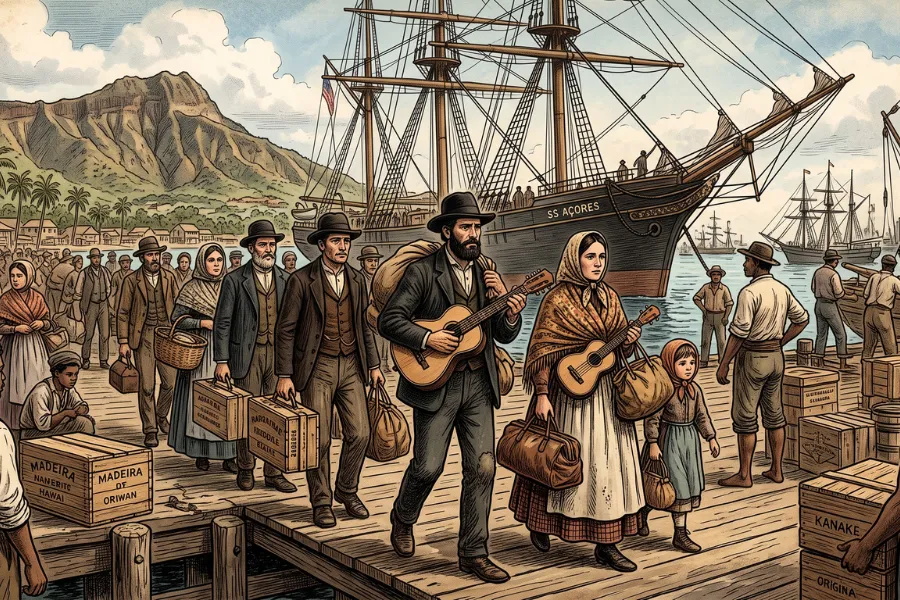
The story of ukulele history begins during the late nineteenth century when Portuguese immigrants arrived in Hawaii from the island of Madeira.
Many Portuguese workers traveled to Hawaii to work on sugar plantations. Along with their families, they brought their traditions, musical culture, and several small string instruments.
Among the most important instruments were:
These instruments became the inspiration for what would later become the Hawaiian ukulele.
Several talented Portuguese craftsmen settled in Hawaii and started making musical instruments.
The most famous names include:
These craftsmen combined Portuguese woodworking techniques with Hawaiian materials to create the first authentic ukuleles.
Their contribution remains one of the most important chapters in the history of the instrument.
One of the most interesting parts of ukulele history is the origin of its name.
The Hawaiian word ukulele is commonly translated as “jumping flea.”
There are different explanations behind this unique name.
One popular theory suggests that the fingers of skilled musicians moved so quickly across the strings that they resembled the movement of a flea.
Another theory links the name to an energetic British officer whose lively performances impressed Hawaiian audiences.
Although historians continue discussing its exact origin, “jumping flea” remains the most accepted meaning.
As the instrument became more popular, it quickly became part of Hawaiian culture.
King Kalākaua played an important role in promoting Hawaiian music and traditional arts. During his reign, the ukulele became a regular feature in royal celebrations, public festivals, and cultural ceremonies.

King Kalākaua believed that music helped preserve Hawaiian traditions.
He encouraged:
His support helped establish the ukulele as a national symbol of Hawaii.
The ukulele also became closely connected with hula dancing.
Its rhythmic sound perfectly accompanied traditional Hawaiian songs and dance performances, making it an essential part of Hawaiian entertainment.
The design of the ukulele has changed considerably since it first appeared.
Early models were handcrafted from native Hawaiian woods using traditional techniques.
As demand increased, manufacturers introduced new materials and construction methods.
Early instruments commonly featured:
Today, vintage koa ukuleles are highly valued by collectors.
Modern ukuleles are built using several different materials, including:
Each material affects the instrument’s tone, durability, and appearance.
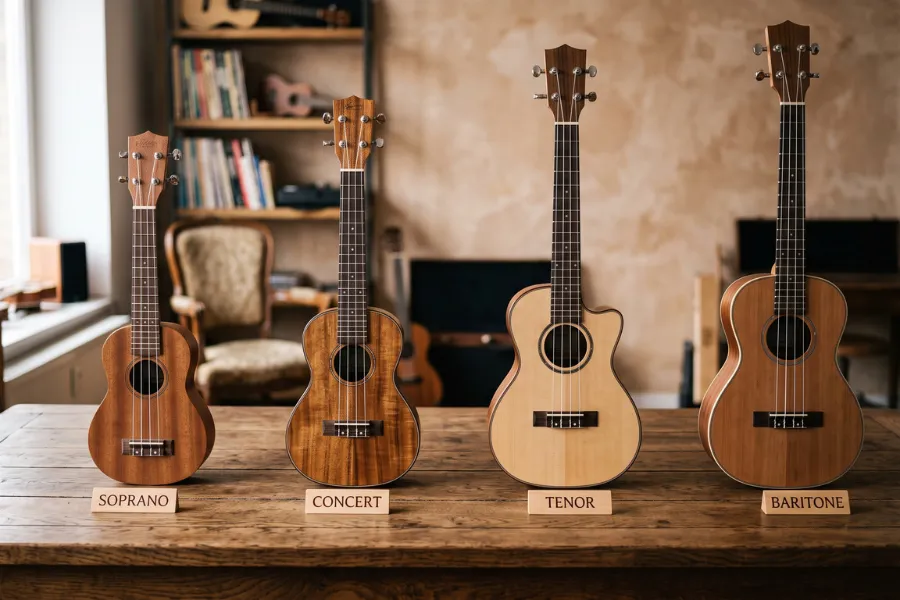
As the instrument evolved, manufacturers introduced different sizes to suit various playing styles.
The soprano is the smallest and most traditional ukulele.
It produces the bright, classic Hawaiian sound.
The concert ukulele offers a larger body and more space for comfortable finger placement.
Professional performers often choose the tenor because it provides richer tones and greater volume.
The baritone is the largest standard ukulele.
Its deeper sound resembles that of a guitar.
The early 1900s marked an important turning point in ukulele history.
Hawaiian musicians began performing internationally, introducing audiences to Hawaiian music and culture.
Tourists visiting Hawaii also purchased ukuleles and carried them home, helping spread the instrument across the world.
International exhibitions further increased public interest.
The 1920s became one of the most successful periods in ukulele history.
Hawaiian music became fashionable throughout the United States.
Radio stations, theaters, music publishers, and performers introduced millions of people to the ukulele.
Families loved the instrument because it was:
Schools also started using ukuleles for music education.

Although electric guitars became increasingly popular after World War II, the ukulele remained an important instrument.
Television entertainers and musicians continued performing with it, helping preserve its popularity.
While its commercial success slowed for a period, the ukulele remained deeply connected to Hawaiian traditions.
The twenty-first century has brought a remarkable revival in ukulele history.
Several factors have contributed to its renewed popularity.

Thousands of online tutorials now help beginners learn from home.
Platforms like YouTube, Instagram, and TikTok have introduced millions of people to ukulele performances.
Modern manufacturing has made quality ukuleles accessible to almost everyone.
Many schools now include ukuleles in classroom music programs because students can learn basic chords quickly.
Many talented artists have influenced the popularity of the ukulele.
Some of the most well-known musicians include:
Their performances demonstrated that the ukulele can be used in folk, jazz, classical, blues, pop, and modern music.

The ukulele is now played in countries across every continent.
Some of the largest ukulele communities are found in:
Music festivals, workshops, competitions, and online communities continue expanding its popularity.
Technology has transformed the way people build, learn, and perform with the ukulele.
Important innovations include:
Keeping the instrument in tune has become faster and easier.
Students can learn from professional teachers anywhere in the world.
Amplified models allow musicians to perform on large stages.
Modern recording equipment enables artists to create professional-quality music from home.
Here are some fascinating facts:
Understanding ukulele history helps us appreciate how different cultures can influence one another through music.
The instrument represents a beautiful combination of Portuguese craftsmanship and Hawaiian creativity. It also shows how migration, tradition, and innovation can create something unique that inspires people worldwide.
Whether played at home, in classrooms, on concert stages, or during cultural celebrations, the ukulele continues to bring joy to millions of musicians.

The ukulele history is a remarkable journey that began with Portuguese immigrants and flourished in Hawaii before becoming a global musical phenomenon. Over the years, the instrument has evolved in design, sound, and popularity while remaining deeply connected to its Hawaiian roots.
Today, the ukulele is celebrated for its simplicity, versatility, and rich cultural heritage. From traditional Hawaiian performances to modern pop music, it continues to unite people through its warm, uplifting sound. As new generations discover this charming instrument, the story of the ukulele continues to grow, ensuring its legacy will endure for many years to come.