Physical Address
4676 Railroad Street Marquette
MI 49855
Physical Address
4676 Railroad Street Marquette
MI 49855
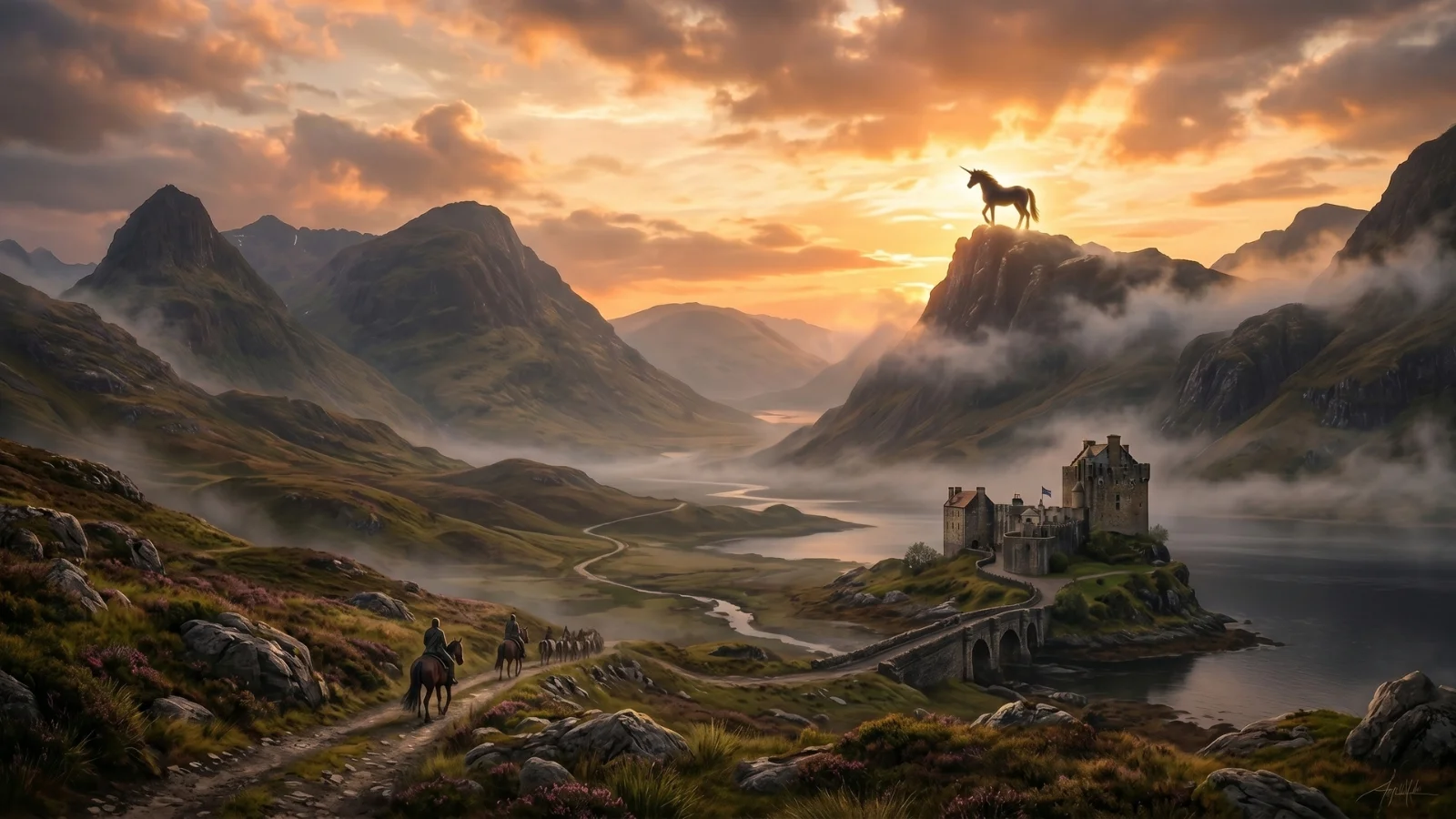
Yes, a mythical beast represents an entire country. There’s a real historical reason behind it, rooted in Scottish royalty, Celtic beliefs, and symbols of power and independence.
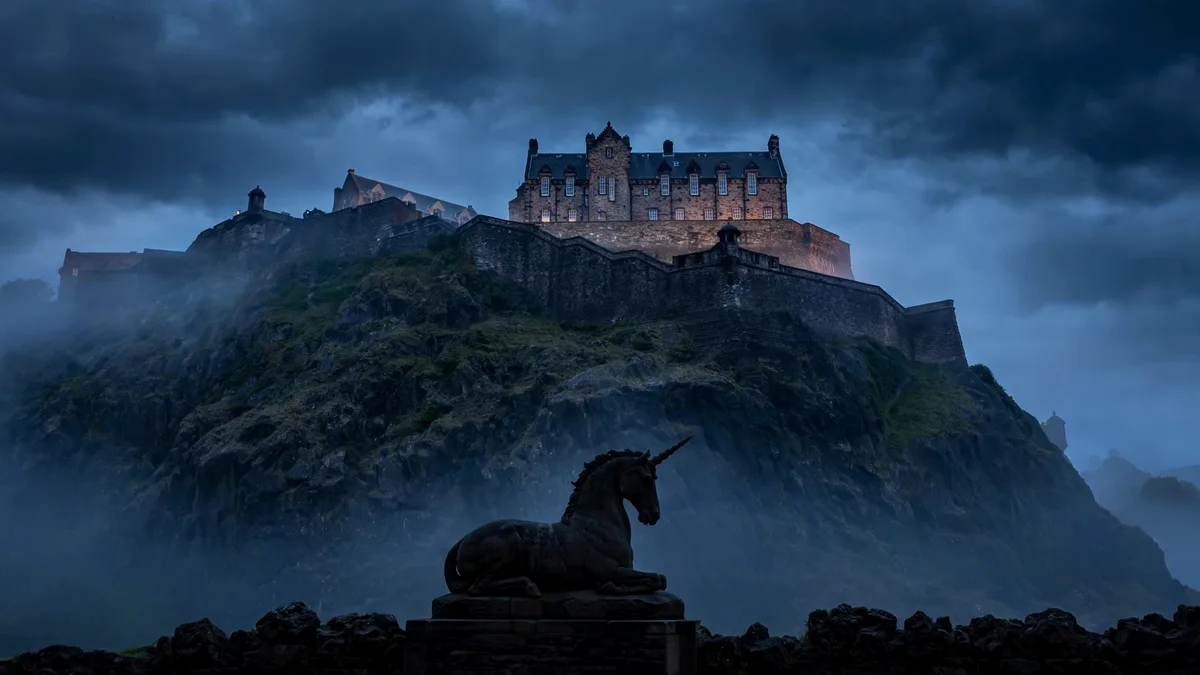
If asked to guess Scotland’s national animal, you might say red deer, golden eagle, or even the Loch Ness Monster. A unicorn is the last thing most people expect.
But it’s no random choice. You’ll find unicorns on royal buildings, old coins, modern passports, and city monuments. They were picked for deep reasons that say a lot about Scotland’s identity and spirit. The choice is surprising at first glance, but the history behind it runs deep.
Long before it became Scotland’s national animal, the unicorn held meaning across the ancient world. One-horned, horse-like creatures show up in Middle Eastern art from around 6,000 years ago. The myths of India, China, and Persia all describe similar beasts: wild, fast, impossible to tame.
The Greek physician Ctesias wrote of fierce one-horned wild asses in India over 2,300 years ago. As travelers pushed further, unicorn reports kept coming — from Tibet to the Congo. Every report described a powerful, proud, hard-to-find creature.
In Celtic myths, the unicorn stood for purity, power, healing, and above all freedom: no creature could be captured against its will. For a nation famous for fierce independence, it was the perfect emblem. The unicorn’s story grew alongside celebrations like the ancient Celtic festival of Samhain, when the veil between worlds was said to be thin.
Legend holds that William the Lion first put the unicorn on the Scottish royal coat of arms in the 12th century. By the early 15th century, James II had formally adopted it. Through the 15th and 16th centuries it appeared on coins, shields, and royal seals.
By the reign of James VI, the Royal Coat of Arms showed two chained unicorns standing beside a rearing lion. It was a striking image of royal power under guard.
In images across Scotland, unicorns are almost always bound with a gold chain. This wasn’t defeat — it was the opposite.
In Celtic folk tradition, only a Scottish king (or a pure, noble virgin) could tame a unicorn. The chains showed off the great power of the Scottish monarchy. Only the greatest rulers could subdue the most untameable creature alive.
In 1603, James VI of Scotland inherited the English throne as James I. This event is known as the Union of the Crowns. The new British coat of arms swapped one Scottish unicorn for England’s lion, placing the two side by side.
The symbolism ran deep. In medieval folklore, the lion and unicorn were sworn enemies. Each fought to be king of beasts — the lion ruling by force, the unicorn by grace. The nursery rhyme (“The lion and the unicorn were fighting for the crown…”) captures this old rivalry.
Some read the chained unicorn as Scotland’s defeat; others see the older Scottish idea of tamed wild power. The interpretation often depends on your politics.
Scotland’s long fight against being conquered mirrors the unicorn’s refusal to be tamed. It stands for dignified, noble strength rather than brute force. And Scotland’s storytelling tradition has always welcomed the extraordinary.
Even the collective nouns carry the same spirit: a group of unicorns was traditionally called a blessing — and some lists add a marvel or a glory. Those words describe Scotland every bit as well as they describe the beast.
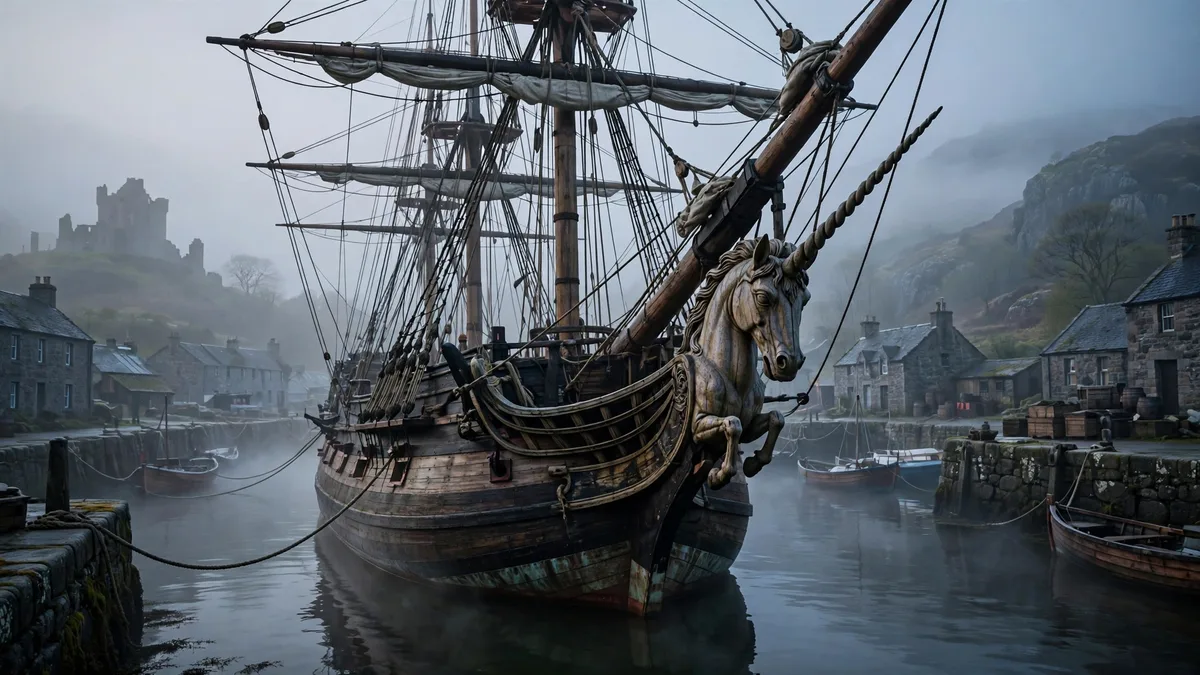
Ready to go unicorn-spotting? Read our guide on where to see unicorns in Scotland.
National Unicorn Day falls on 9 April every year.
For centuries, people believed unicorns existed — likely mistaking real animals seen from far away. Candidates include the prehistoric Elasmotherium (a giant rhinoceros-like beast), the Indian rhinoceros, and most famously the narwhal. Its spiraling tusk was traded across Europe from the 1200s as genuine “unicorn horn,” prized for supposed healing powers. Denmark’s 17th-century king’s throne was built entirely from narwhal tusks.
By the 1800s most people accepted unicorns weren’t real. But by then, the unicorn had stood for Scotland for centuries — and its power had only grown.
Scotland is not the only country with a legendary beast on its crest. Several nations chose creatures from myth instead of real animals — usually because the stories behind them matched the national character.
| Country | National Animal | What It Symbolizes |
|---|---|---|
| Scotland | Unicorn | Purity, independence, untamable freedom |
| Wales | Red dragon | Strength, ancient Celtic power |
| Bhutan | Druk (thunder dragon) | Protection, the voice of thunder in storms |
| China | Chinese dragon (loong) | Wisdom, good fortune, imperial authority |
| Indonesia | Garuda (mythical bird) | Virtue, knowledge, national unity |
Notice the pattern: every one of these creatures is powerful, proud, and impossible to control. Real animals like lions and eagles say “we are strong.” Mythical animals say something deeper — “we are different, and our story is one of a kind.” That is exactly the message Scotland wanted to send.
Legends rarely come from nowhere. Historians think several real animals fed the unicorn stories that reached Scotland.
The narwhal. This Arctic whale grows a single spiraled tusk up to 3 meters long. Viking traders sold these tusks across Europe as “unicorn horns,” and royal courts paid fortunes for them. A king holding a narwhal tusk could honestly claim to own a unicorn horn — and many did.
The Arabian oryx. Seen in profile, this desert antelope’s two long straight horns line up into one. Ancient travelers who glimpsed it from the side described a single-horned beast. Like other ocean and desert mysteries — for instance, scientists are still unraveling whether sharks even sleep — the truth turned out stranger than the legend.
Elasmotherium. This extinct Ice Age rhinoceros stood 2 meters tall at the shoulder with a single enormous horn. It lived across Eurasia until about 39,000 years ago — recent enough that early human stories may have preserved its memory.
None of these is a horse with a magic horn. But each one shows how real sightings, passed from traveler to traveler, grew into the unicorn Scotland eventually crowned.
Search the phrase “killer unicorn” and you will find Scotland everywhere. The nickname comes from old bestiaries — medieval books of beasts — that described the unicorn as a creature no hunter could take alive. It was said to fight to the death rather than be captured, goring lions, elephants, and armed men with its horn.
Modern writers picked up the dramatic label, and it stuck. The truth is kinder than the nickname: the “killer” part was never about cruelty. It was about refusal to surrender — the same quality Scotland saw in itself. A beast that would rather die free than live in chains made the perfect emblem for a nation that felt the same way.
Scotland’s national animal is the unicorn. This mythical creature stands for fierce independence, noble spirit, and rich heritage — for over six centuries. From Celtic mythology to the Royal Coat of Arms to Edinburgh’s streets, it’s far more than a fairy-tale figure.
Next time you visit Scotland, keep your eyes open. Unicorns are everywhere — you just have to know where to look.
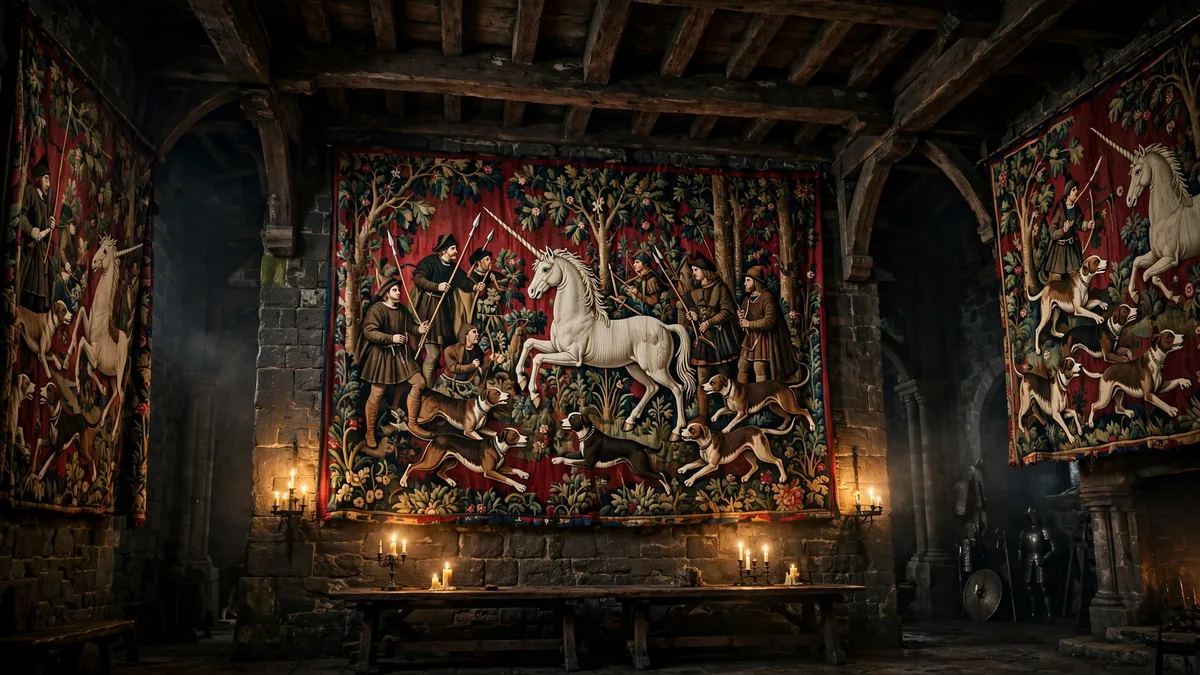
Scotland’s national animal is the unicorn, a mythical horned creature that has been associated with Scottish royalty and Celtic mythology for over 600 years.
The unicorn was chosen for its symbolic qualities in Celtic mythology: purity, power, independence, and the inability to be tamed or conquered. These were values that resonated deeply with Scottish national identity.
The unicorn first appeared on the Scottish Royal Coat of Arms in the 12th century under King William I. It was formally adopted by King James II in the early 15th century and has remained Scotland’s national animal ever since.
The chains are a symbol of royal power, not captivity. In Celtic tradition, only a Scottish king could tame a unicorn. The chains demonstrate the extraordinary strength and authority of the Scottish monarchy.
Scotland’s other national symbols include the thistle (national flower), the Saltire (national flag, a white diagonal cross on blue, believed to be the oldest flag in Europe), and St Andrew as the patron saint.
Notable locations include the Palace of Holyroodhouse, Edinburgh Castle, St Giles’ Cathedral, Stirling Castle, HMS Unicorn in Dundee, and the mercat crosses in towns such as Culross and Falkland.
Yes. National Unicorn Day is celebrated on 9 April every year, with events, social media activity, and plenty of unicorn-themed fun across Scotland and beyond.
Wales has the red dragon, Bhutan has the Druk thunder dragon, China honors the loong (Chinese dragon), and Indonesia claims the Garuda, a mythical bird-man. Like Scotland’s unicorn, each was chosen for symbolic power rather than biology.
Not literally — “killer unicorn” is a dramatic modern nickname. Old legends described the unicorn as fierce and untamable, which is why Scotland chose it as a symbol of purity, power, and a refusal to surrender.