Physical Address
4676 Railroad Street Marquette
MI 49855
Physical Address
4676 Railroad Street Marquette
MI 49855

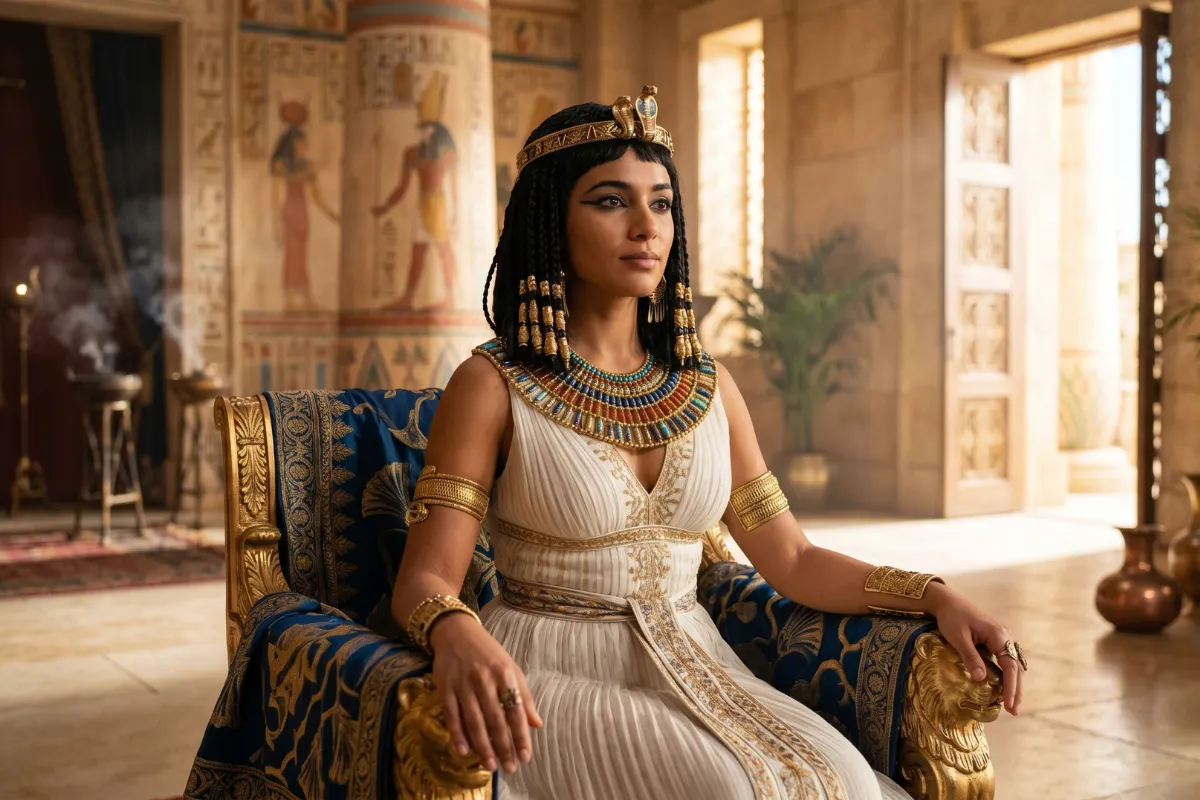
Beauty trends come and go. New creams hit the shelves every month, and influencers swear by a new “miracle” routine every week. Yet somehow, the beauty secrets of a queen who lived more than 2,000 years ago still inspire us today.
Cleopatra VII, the last active ruler of ancient Egypt, was famous for her smarts and her charm — but also for her elegant looks. Roman writers who were not even her fans could not stop writing about her. Her natural habits gave her glowing skin and healthy hair, and modern dermatology is finally catching up to what she seemed to know all along.
So what did her routine actually look like? Let us walk through it, piece by piece — and see what we can still use today.
Cleopatra VII was the last active ruler of ancient Egypt, and the last of the Ptolemaic dynasty — a Greek-speaking family that had ruled Egypt for nearly 300 years. She came to the throne around 51 BC, when she was about 18 years old, and she ruled until her death in 30 BC.
She was far more than a pretty face. Cleopatra spoke at least seven languages, studied mathematics, philosophy, and medicine, and personally led her country’s political dealings with Rome — the greatest power of her time. She negotiated with Julius Caesar and Mark Antony face to face, and she ran Egypt’s economy with a sharp mind.
Her fame as a beauty legend comes partly from Roman writers, who described her charm and presence in glowing terms even while working against her politically. In ancient Egypt, beauty was not just about looks — it was tied to power, divinity, and respect. A queen who looked radiant was seen as a queen favored by the gods.
In ancient Egypt, beauty meant health, status, and purity. It was not shallow — it was part of daily life, religion, and medicine. Both men and women wore makeup, used oils, and took their bathing routines seriously.
The basic building blocks of an Egyptian beauty routine were:
Egyptians were among the first people in history to treat beauty as a daily practice rather than an occasional luxury. They understood that healthy skin came from a mix of what you put on your body and how you lived. It is a lesson we are still learning today — much like the lessons hidden in ancient wonders like the pyramids themselves (see what country has the most pyramids for a fun twist on that history).
No one wrote down Cleopatra’s exact morning routine, of course. But by combining what we know about royal Egyptian life, surviving recipes, and writings from her era, historians can reconstruct a believable picture of how her day may have looked. Here is one version of it.
Cleopatra likely started her day by washing her face and body with water mixed with natron — a natural salt the Egyptians used as a cleanser and mild deodorant. Then came oil cleansing: rubbing plant oils (like almond or olive oil) into the skin to lift away dirt and old makeup, then wiping it off. It sounds backward, but oil dissolves oil — and this is the same principle behind modern oil cleansers.
After cleansing, she would have applied a light layer of oil or a honey-based mixture to lock in moisture before facing the hot Egyptian sun.
The Egyptian sun was brutal, so reapplying protective oils during the day made sense. Egyptians also used kohl around the eyes not just for looks — the dark line actually helped cut down sun glare, like the black paint athletes wear under their eyes today.
Evenings were for the deeper treatments: a milk bath or milk-and-honey mask to exfoliate, followed by richer oils massaged into the skin and hair. This was also when perfumes and scented oils were applied, so a queen would smell as good as she looked at evening gatherings.
The whole routine followed the same logic modern dermatologists recommend: cleanse, treat, moisturize, protect. She just did it with ingredients from her garden and kitchen instead of a lab.
Two of the most famous items in Cleopatra’s skincare cabinet were honey and aloe vera — and both are still bestsellers today.
Raw honey was used as a face mask, a cleanser, and a wound healer. The Egyptians valued it for good reason: honey draws moisture into the skin, which keeps it soft and plump. It also has natural antibacterial qualities, which helped keep breakouts and small cuts clean in a time before antibiotics.
A simple honey mask — spread on, left for 15 minutes, rinsed off — would have left the skin smooth and glowing. Many people still do exactly this today.
Aloe vera grew easily in Egypt’s climate, and the Egyptians called it the “plant of immortality.” The clear gel inside its leaves cools and calms irritated skin, which made it perfect for soothing sunburn and dryness. Cleopatra reportedly used aloe vera gel on her face and body to keep her skin soft and calm.
Today, aloe vera is in countless after-sun gels and moisturizers — for the same reason it worked 2,000 years ago.
The single most famous of all cleopatra beauty secrets is the milk bath. According to ancient accounts, Cleopatra bathed in milk — sometimes said to be donkey’s milk — to keep her skin young and smooth.
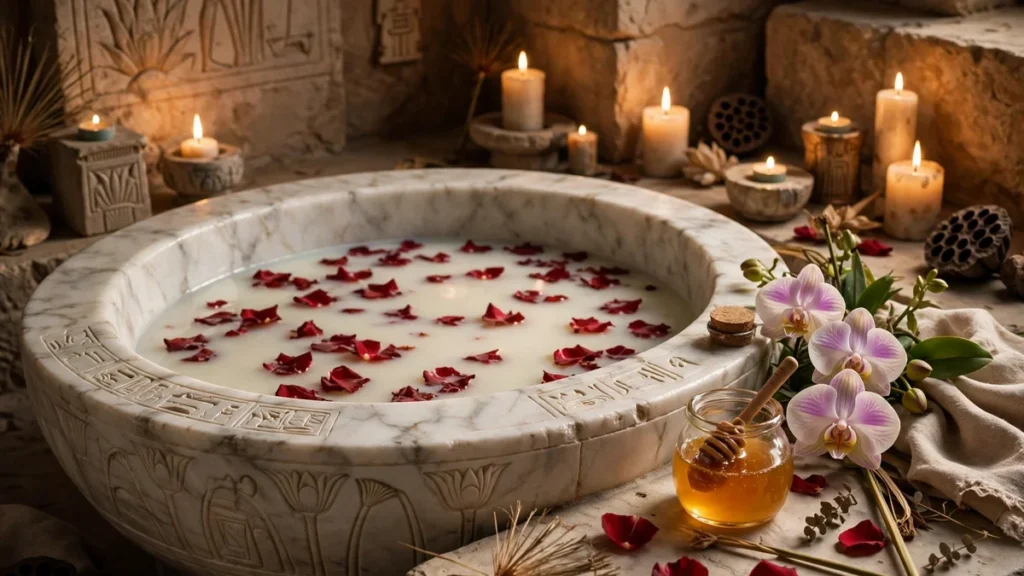
Milk contains lactic acid, a gentle exfoliant. Lactic acid loosens the bonds between dead skin cells on the surface, so they wash away easily. The result: softer, brighter, smoother-looking skin. Modern dermatologists call lactic acid an AHA (alpha hydroxy acid), and it is a star ingredient in today’s exfoliating lotions, peels, and masks.
Cleopatra did not know the chemistry, but she knew the result. Her skin reportedly stayed remarkably smooth — and now we know why.
The bath was not just plain milk. Historical accounts suggest it was a blend of:
It was part skincare treatment, part royal ritual — and probably one of the most relaxing moments of her day.
Here is the fun part: modern dermatology can explain almost every item in Cleopatra’s routine. Her beauty secrets were not magic — they were early chemistry.
None of this means her routine was perfect by modern standards — some ingredients, like the lead sometimes found in ancient kohl, would never pass today’s safety tests. But the core ideas were sound, and science has confirmed most of them.
Oils were the backbone of Egyptian skincare. They cleaned, moisturized, and protected — and Cleopatra’s routine made heavy use of them.
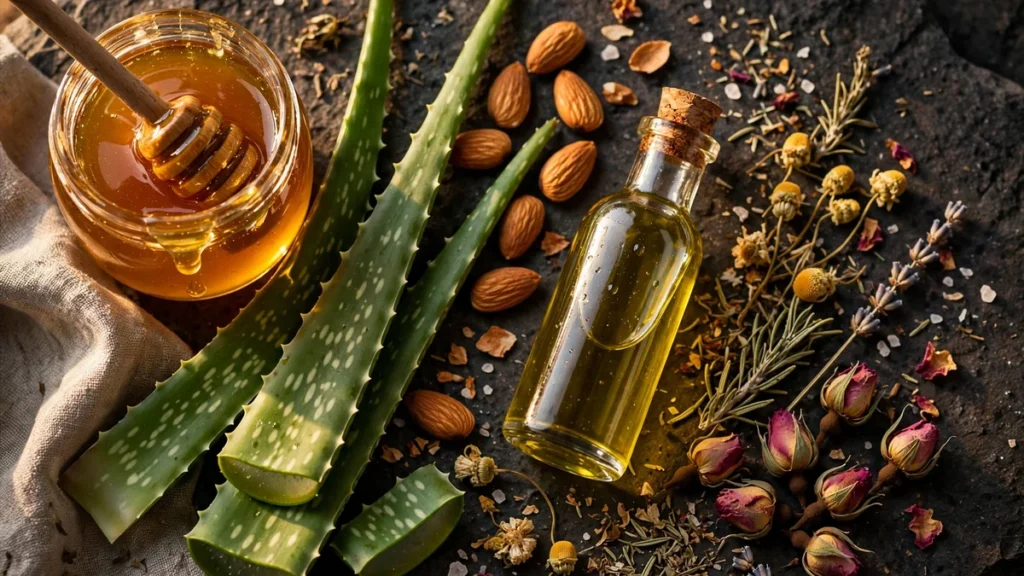
Olive oil was used as a cleanser, a moisturizer, and a hair treatment. Rich in healthy fatty acids and vitamin E, it kept skin soft and helped protect it from the dry desert air. Egyptians also mixed olive oil with herbs and fragrances to make scented body oils.
Almond oil is lighter than olive oil, so it was perfect for the face. It absorbs quickly, softens the skin, and is gentle enough for the delicate area around the eyes. Cleopatra reportedly used almond oil to keep her skin smooth and her complexion even.
Castor oil deserves a mention too — thick and rich, it was a favorite for hair treatments and for conditioning the eyebrows and lashes.
In ancient Egypt, hair was a status symbol. Royalty and the wealthy took hair care seriously — and Cleopatra was no exception.
Her hair routine likely included:
Elaborate wigs were also common in ancient Egypt — even among royalty. In the hot climate, many Egyptians kept their natural hair short or shaved for cleanliness and coolness, then wore beautifully crafted wigs made from human hair for ceremonies and public appearances. So yes, Cleopatra may well have worn wigs — and hers would have been among the finest in the kingdom.
Nothing says “Cleopatra” like the dramatic, winged eye makeup. But in her world, it was far more than fashion.
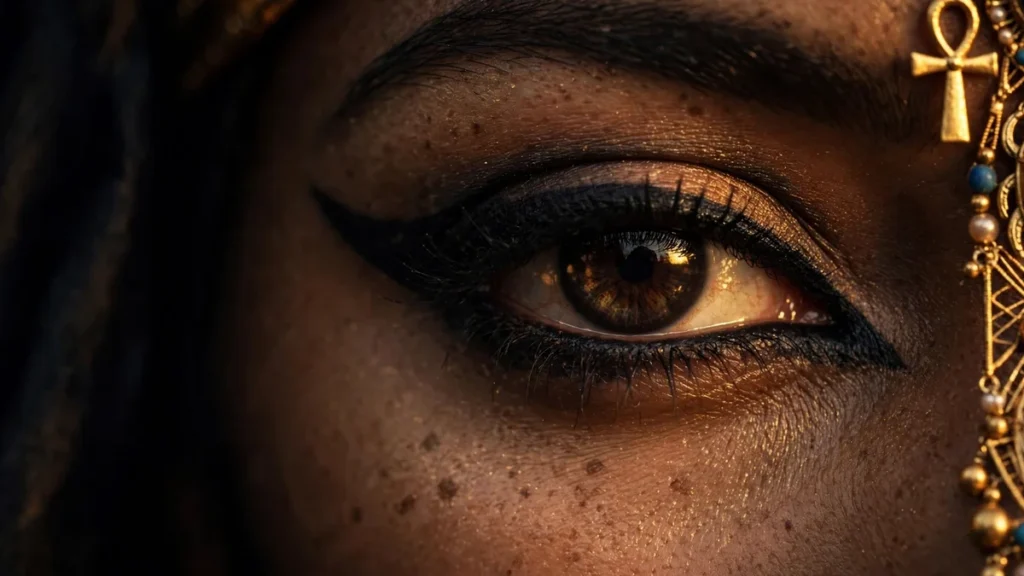
Kohl — the dark eyeliner she famously wore — was made from ground minerals. It framed the eyes beautifully, but it also served real purposes: cutting down sun glare and carrying cultural and religious meaning. The almond-shaped eye, outlined in black, was linked to the Eye of Horus — a powerful Egyptian symbol of protection and good health.
Her full makeup kit included:
Both men and women wore this makeup, and it was reapplied daily. It was beauty, sun protection, and spiritual symbolism all in one.
It is amazing how closely ancient Egyptian cosmetics match the products in a modern makeup bag. Here is a side-by-side look:
| Ingredient | Used For | Modern Equivalent |
|---|---|---|
| Kohl (ground minerals) | Eyeliner, sun-glare protection | Eyeliner / eye black |
| Red ochre | Lipstick and blush | Lipstick / cream blush |
| Malachite (green mineral) | Eyeshadow | Green eyeshadow |
| Henna | Nail and hair dye | Hair dye / nail stain |
| Natron salt | Cleanser and deodorant | Soap / deodorant |
| Scented plant oils | Moisturizer and perfume | Body oil / perfume |
The tools have changed, but the goals have not: defined eyes, healthy color in the cheeks and lips, clean skin, and a pleasant scent. Cleopatra would recognize the purpose of almost everything on a modern vanity table.
Smelling good was part of looking good in ancient Egypt. Cleopatra was famous for her fragrances, and scent played a real role in her famous charm — ancient writers claimed her perfume could be smelled before her ships were even seen.
Her signature scent was likely kyphi — a celebrated Egyptian perfume-incense made from a rich blend of ingredients including honey, wine, resins, myrrh, and fragrant herbs and flowers. Kyphi was burned as incense in temples, but it was also worn as a personal perfume.
Alongside kyphi, she would have used scented oils — plant oils infused with rose, lotus, frankincense, and myrrh — applied to the skin, hair, and clothing. In a world without daily showers for most people, a queen who smelled like flowers and spice made an unforgettable impression.
Interestingly, our sense of smell is deeply tied to memory and emotion — which may be part of why her presence was so legendary. (Curious how the brain handles strange sensations? Read what causes déjà vu for another look at how the mind plays tricks on us.)
Cleopatra’s glow did not come from products alone. The Egyptian royal diet was built on fresh, simple foods:
This was a diet naturally rich in vitamins, minerals, and antioxidants — the same nutrients dermatologists link to healthy skin today. Staying hydrated in the desert heat was also essential, and the Egyptians took it seriously.
There is a wellness lesson here too: rest and balance matter. Just as animals slow down and conserve energy through the seasons (see how do animals hibernate), the human body repairs its skin best during deep rest. Cleopatra’s evening rituals doubled as wind-down time — beauty sleep is not just a saying.
Strip away the royal drama, and Cleopatra’s routine teaches a few timeless lessons:
Modern beauty brands are finally catching on: lactic acid peels, honey masks, aloe gels, and oil cleansers are everywhere. The queen was simply 2,000 years early.
Inspired to try a little ancient Egyptian self-care? You can — with a few modern safety notes.
Think of it as inspiration, not a prescription. Take the ideas that science supports, and leave the rest in the history books.
And if your body surprises you along the way — say, with a sudden shiver during a cold rinse — that is just biology doing its thing. (Here is why we get goosebumps, if you are curious.)
History is full of mysteries as fascinating as a queen’s beauty cabinet. If you enjoyed this trip into the ancient world, you might also like do sharks sleep — a look at one of the ocean’s strangest habits — or why do we dream, the science behind what happens in your mind each night. And for a splash of seasonal color, here is why leaves change color every autumn.
Her glowing skin came from a simple, consistent routine: milk baths rich in lactic acid for gentle exfoliation, raw honey masks for moisture, aloe vera gel to soothe the skin, and plant oils like almond and olive oil to lock in hydration. Good nutrition, plenty of water, and daily cleansing completed the picture.
According to ancient accounts, yes. She is said to have bathed in milk — sometimes described as donkey’s milk — mixed with honey, rose petals, and essential oils. Milk contains lactic acid, a natural exfoliant that removes dead skin cells, so the practice had real skincare benefits.
Her main oils were olive oil, almond oil, and castor oil. Olive oil was used for cleansing and moisturizing, almond oil — lighter and gentler — was favored for the face, and thick castor oil was used for hair treatments and conditioning the brows and lashes.
Honey is a natural humectant, meaning it draws moisture into the skin and keeps it there. It also has antibacterial properties that helped keep the skin clear and helped small cuts heal. Egyptians used it in face masks, cleansers, and even wound care.
Many of them are. Modern dermatology confirms that lactic acid exfoliates, honey moisturizes and fights bacteria, aloe vera soothes irritation, and plant oils protect the skin barrier. Today’s versions — lactic acid serums, honey masks, aloe gels, oil cleansers — are the direct descendants of her routine.
Ancient Egyptian kohl was made from finely ground minerals, most commonly galena (a lead-based mineral) mixed with plant oils or animal fat to form a paste. It created the dramatic dark eye look, reduced sun glare, and carried religious meaning as a symbol of protection. Modern eyeliners recreate the look safely without lead.
She very likely did, at least on formal occasions. Elaborate wigs were common in ancient Egypt, even among royalty — many Egyptians kept their natural hair short for cleanliness and coolness in the desert heat, then wore finely crafted wigs made from human hair for ceremonies and public appearances.
A milk bath is generally safe for most people, but skip raw or unpasteurized milk if your skin is sensitive or broken, and always patch test first. For the same exfoliating benefit with more predictable results, dermatologists recommend modern products containing lactic acid, which deliver the active ingredient in a tested formula.