Physical Address
4676 Railroad Street Marquette
MI 49855
Physical Address
4676 Railroad Street Marquette
MI 49855

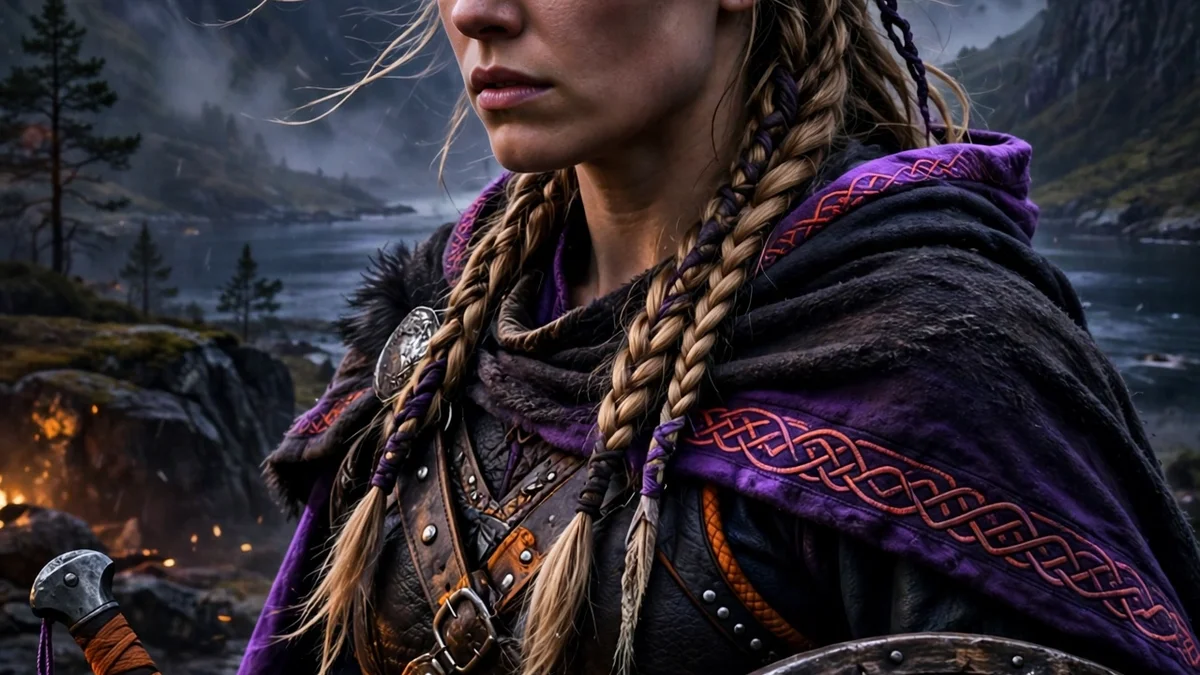
Yes, Viking warrior women were real. Archaeological evidence — including a famous 10th-century grave in Birka, Sweden containing a female skeleton buried with swords, axes, arrows, and war horses — proves women fought as warriors. Norse sagas tell of shieldmaidens (female warriors) like Lagertha, who fought alongside men. While not as common as male warriors, female fighters were respected in Viking society, which gave women more rights and independence than most contemporary cultures.
For over a century, archaeologists assumed a magnificent Viking grave discovered in Birka, Sweden was a male warrior’s burial. The grave contained everything a high-ranking fighter would need in the afterlife: a sword, an axe, a knife, arrows, shields, two horses, and even a gaming board suggesting military strategy skills.
In 2017, DNA analysis shocked the world: the skeleton was female.
This was not a woman buried with her husband’s weapons. The skeletal analysis showed no signs she was anything but a warrior herself. The grave’s richness indicated high military rank. Suddenly, the sagas’ tales of female warriors had hard scientific backing.
The Birka warrior forces us to rethink everything we assumed about Viking gender roles.
Norse sagas and poems mention shieldmaidens (skjaldmaer) — women who chose the warrior’s life. These were not myths about goddesses; they were stories about human women who fought.
The most famous shieldmaiden is Lagertha, described in the Danish historian Saxo Grammaticus’s writings from around 1200 CE. According to Saxo, Lagertha was a skilled warrior who fought alongside the legendary Viking Ragnar Lothbrok. She was reportedly an exceptional fighter whose courage matched any man’s.
While historians debate how much of Ragnar’s story is historical versus legendary, Lagertha’s tale reflects a real cultural memory: the Norse knew and respected female warriors.
The Volsunga Saga tells of Brynhildr, a shieldmaiden (sometimes described as a Valkyrie) who defied Odin himself. As punishment, Odin put her into a magical sleep surrounded by fire. The hero Sigurd braved the flames to wake her. Her story blends warrior culture with deep tragedy.
The Saga of Hervor tells of a young woman who insisted on becoming a warrior despite her family’s objections. She sailed to a haunted island, confronted her dead father’s ghost, and demanded his magical sword Tyrfing. She got it — and became a feared warrior and later a queen.
Multiple Norse sources mention women fighting:
These are not isolated mentions. Female warriors appear across different types of sources — histories, sagas, and foreign accounts — suggesting they were a recognized (if uncommon) reality.
Honesty requires nuance. Female Viking warriors existed, but they were not the norm. Most Viking fighters were men. The evidence suggests:
Think of it this way: female Viking warriors were like female knights in medieval Europe — rare, remarkable, but real. The difference is that Norse culture respected them rather than treating them as freaks.
Viking society gave women extraordinary rights compared to most of the medieval world:
Legal independence: Norse women could own property, inherit land, initiate divorce, and run businesses. A woman did not need a man’s permission to manage her affairs.
No chivalry restrictions: Unlike later medieval culture, Norse society had no ideology that women were too delicate for combat. Strength was admired regardless of gender.
Practical necessity: In a society where men were often away raiding or trading for months, women had to defend farms and families. Martial skills were practical, not just symbolic.
Religious models: The Norse worshipped powerful goddesses (Freyja the warrior-goddess, the Valkyries who chose the slain) and believed in female seeresses with great spiritual authority. Divine female power normalized human female power.
Female warriors used the same weapons as men: swords, axes, spears, bows, and shields. The Birka grave contained a full warrior’s kit with no “female” modifications. Viking martial culture did not have separate “women’s weapons.”
Training likely started young, as it did for boys. Viking children — male and female — learned to handle weapons as part of growing up in a warrior society. The sagas describe shieldmaidens who trained alongside men from childhood.
Above human shieldmaidens were the Valkyries — Odin’s supernatural warrior women who chose which warriors would die in battle and which would live. They rode flying horses, wore armor, and served mead to the honored dead in Valhalla.
The Valkyries show how deeply warrior women were embedded in Norse imagination. The gods themselves employed female warriors for their most important task: selecting the bravest fighters for the final battle.
Myth: “Shieldmaidens are just feminist fantasy.”
Reality: The Birka DNA evidence, multiple saga references, and foreign accounts confirm real female warriors. This is archaeology, not wishful thinking.
Myth: “All Viking women were warriors.”
Reality: Most Norse women were farmers, traders, craftspeople, and mothers — just as most men were not full-time warriors either. Female fighters were a respected minority.
Myth: “Warrior women were only in myths.”
Reality: While some saga shieldmaidens may be legendary, the Birka grave and other archaeological finds prove historical female warriors existed.
Myth: “Viking society was fully gender-equal.”
Reality: Norse women had more rights than most medieval women, but men still dominated political leadership and the most prestigious warrior roles. It was relatively equal, not fully equal.
One of the most striking historical accounts of a Viking warrior woman comes from the Vinland sagas — the stories of Norse exploration in North America around the year 1000 CE. Freydis Eiriksdottir, daughter of Erik the Red and half-sister of Leif Eriksson, led her own expedition to Vinland (likely Newfoundland, Canada).
According to the Saga of Erik the Red, when the Norse camp was attacked by Indigenous peoples, the Viking men fled in panic. Freydis — who was pregnant at the time — refused to run. She picked up a fallen warrior’s sword, bared her chest, and slapped the flat of the blade against it, screaming a battle cry. The attackers, unnerved by this fearless display, retreated.
Whether every detail is true or embellished, the saga presents Freydis as a leader whose courage shamed the men around her. She embodies the Viking ideal that bravery matters more than gender — and more than physical advantage.
Viking children grew up in a warrior culture where weapon skills were basic life skills, like swimming or farming. Boys and girls alike would have handled practice weapons from a young age. The sagas suggest several paths to becoming a shieldmaiden:
Family training: Fathers, brothers, or uncles teaching daughters alongside sons. In a society where farms needed defending, a daughter who could wield an axe was an asset.
Formal fosterage: Norse children were often sent to other households for upbringing. A girl fostered in a warrior household would learn warrior skills.
Personal choice: Sagas like Hervor’s show young women actively choosing the warrior’s path against family wishes, seeking out training and opportunities.
Necessity: When men were away raiding, women defended homesteads. Some who discovered a talent or taste for combat may have pursued it further.
There were no “warrior schools” — learning was practical, hands-on, and integrated into daily life. A shieldmaiden’s training looked much like a young male warrior’s: practice with wooden weapons, hunting, wrestling, and eventually real combat experience.
Popular culture often depicts shieldmaidens in impractical “sexy warrior” outfits. The reality was far more sensible. Female Viking warriors wore the same armor as men: padded gambesons, chainmail where available, helmets, and round shields. There is zero archaeological evidence for gendered battle dress.
In daily life, Norse women wore long dresses with apron-dresses and brooches, with hair in practical styles. A shieldmaiden heading into battle would have dressed for function, not appearance — likely in male-style tunics and trousers for mobility, as several saga descriptions suggest.
The famous “valkyrie” imagery of winged helmets is pure 19th-century romantic invention. Real Viking helmets (for all genders) had no horns or wings.
Yes. DNA analysis of the Birka grave (2017) confirmed a high-ranking warrior buried with full weapons was female. Multiple sagas, histories, and foreign accounts describe shieldmaidens. They were uncommon but real and respected.
Lagertha appears in Saxo Grammaticus’s Danish history as a skilled shieldmaiden who fought with Ragnar Lothbrok. Historians debate whether she was a real person or a legendary figure, but her story reflects genuine Norse cultural memory of female warriors.
The same as men: swords, axes, spears, bows, knives, and round shields. The Birka female warrior’s grave contained a complete weapons kit identical to male warriors’ graves.
With respect. Sagas portray them as remarkable but legitimate warriors. Norse culture admired courage regardless of gender, and women had enough legal independence to choose the warrior’s path.
Both. Some saga shieldmaidens (like Brynhildr) are partly mythical, but archaeological evidence (Birka and other graves) proves real women fought as warriors. The myths reflect a historical reality.
Shieldmaidens were human women who chose to fight as warriors. Valkyries were supernatural beings serving Odin who chose which warriors died in battle. Some figures (like Brynhildr) blur the line between the two.
Probably yes. Norse women’s legal rights, the absence of “female fragility” ideology, and practical needs (defending homes during men’s absences) created more opportunities than in most medieval societies.
Archaeologists assumed weapon graves were male for over a century without testing. The 2017 DNA analysis of the Birka grave shattered this assumption, prompting re-examination of other graves. Bias, not evidence, hid the truth.