Physical Address
4676 Railroad Street Marquette
MI 49855
Physical Address
4676 Railroad Street Marquette
MI 49855

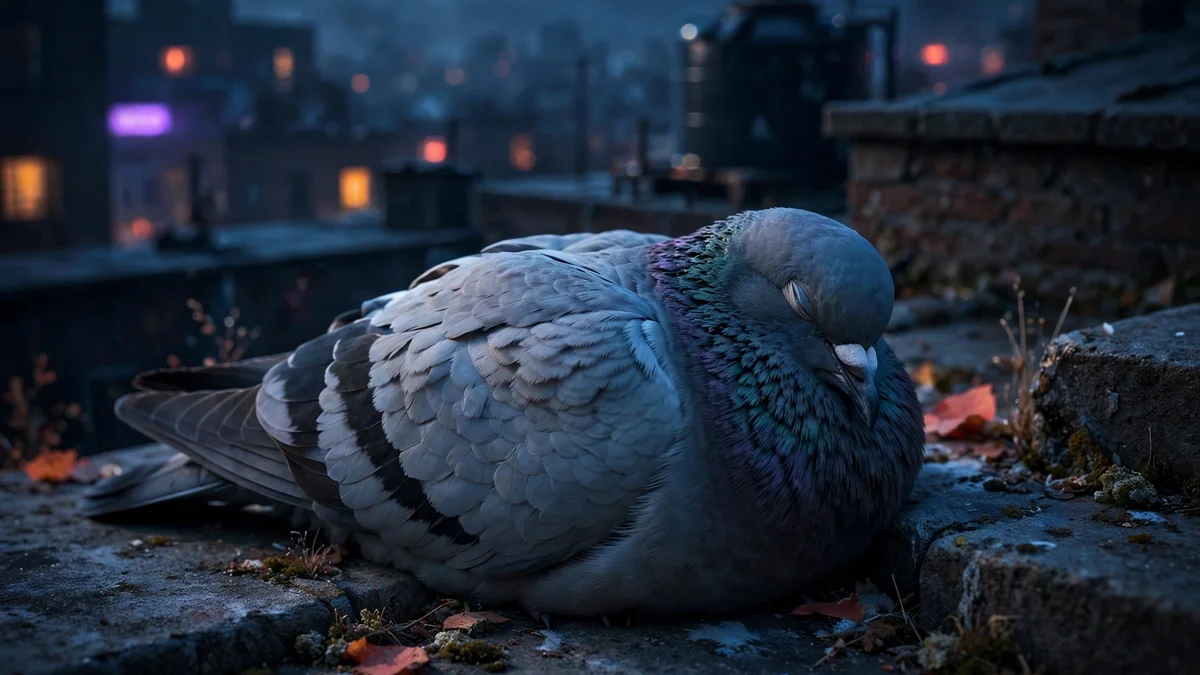
Yes, pigeons sleep — about 10 hours a day, mostly at night. They roost in sheltered spots like ledges and bridges, often in flocks. Pigeons can sleep with one half of their brain awake and one eye open, called unihemispheric sleep, staying alert for predators. They also experience REM sleep.
Pigeons are diurnal, meaning they are active during the day and rest at night, just like humans. An average pigeon sleeps roughly 10 hours out of every 24, though this varies with the season. In winter, when nights are long, they sleep more. In summer, they sleep less and spend longer hours foraging.
Unlike humans, pigeons don’t sleep in one solid block. Their rest is broken into many short naps mixed with brief alert periods. A pigeon might doze for a few minutes, snap awake to check for danger, then drift off again. This pattern is common in prey animals that can’t afford to be fully unconscious for long.
Baby pigeons, called squabs, sleep much more than adults — up to 20 hours a day in their first weeks. They need the extra rest for rapid growth, just like human infants.
Wild rock pigeons — the ancestors of city pigeons — slept on cliff ledges and in caves. City pigeons kept the habit but swapped cliffs for buildings. Look up at dusk and you’ll see them gathering on:
Pigeons prefer spots that are high off the ground, sheltered from wind and rain, and near their daytime feeding areas. Once a pigeon picks a roosting spot, it tends to return to the same place every night. They are creatures of habit.
Flocks roost together. There is safety in numbers — more eyes to spot an owl or a cat. Pigeons on the edge of the group sleep lighter than those in the middle, taking turns as unofficial lookouts.
One of the strangest things about pigeon sleep is that they can literally sleep with one eye open.
Birds, marine mammals, and some reptiles can put one half of their brain to sleep while the other half stays awake. This is called unihemispheric slow-wave sleep. The awake half keeps the opposite eye open and watching.
For pigeons, this is a survival superpower. A pigeon roosting on a ledge can rest its body while half its brain monitors for predators. If a hawk swoops in, the awake half triggers instant escape — no groggy waking-up period.
Researchers have shown that pigeons choose which side sleeps based on the situation. A pigeon on the edge of a flock, more exposed to danger, keeps the outward-facing eye open. The brain half connected to that eye stays alert while the other half sleeps. Pigeons in the safe middle of the group sleep more deeply with both eyes closed.
Pigeons experience both slow-wave sleep and REM (rapid eye movement) sleep — the stage where humans dream most vividly.
Bird REM sleep looks different from ours. In pigeons, REM episodes are very short — just a few seconds at a time — compared to minutes in humans. But the brain patterns are similar: fast, active waves that look like waking brain activity.
During REM, sleeping pigeons sometimes twitch their wings, bob their heads, or make soft sounds. Watching a dreaming pigeon, you might see its beak move as if pecking invisible seeds.
Scientists can’t ask a pigeon what it dreams about, but the leading guess is that they replay daytime experiences — flight paths, feeding spots, flock interactions. In other birds, like zebra finches, researchers have found that sleeping brains replay the neural patterns of daytime birdsong. Pigeons likely do something similar with their navigation memories.
Pigeons don’t only sleep at night. During the day, especially after a big meal, you’ll see pigeons doing what looks like dozing — head tucked, eyes half-closed, feathers fluffed.
These daytime naps are light and brief. The pigeon stays ready to bolt. You’ll notice one eye often stays open during these rests — that’s the unihemispheric trick again.
Pigeons also “sunbathe” — lying on their sides with one wing spread in sunny spots. This looks like sleeping, but it’s actually about feather maintenance. The heat helps kill feather parasites. A sunbathing pigeon is relaxed but alert.
A sleeping pigeon has a classic look: head turned and tucked into the feathers between the wing and back, body feathers fluffed up, one leg tucked into the belly feathers.
Each part of this posture has a job:
That toe-locking trick is remarkable. A flexor tendon runs from the leg muscles through the toes. When the bird crouches to sleep, the tendon tightens and the toes grip. The pigeon’s own body weight keeps the grip locked. It takes conscious muscle effort to let go — so a sleeping pigeon physically cannot fall off its perch.
Pigeons are light sleepers by design. Anything unusual — a sudden noise, a shadow passing overhead, vibrations on their perch — snaps them awake in a fraction of a second.
Their biggest nighttime threats are owls and cats. An owl can snatch a sleeping pigeon off a ledge silently. This is why the flock-roosting and one-eyed-sleep strategies matter so much.
City noise generally doesn’t bother them. Pigeons living near train stations or busy roads learn to sleep through the rumble. But a new, sharp sound — a car alarm, a dog barking close by — triggers instant alertness.
Homing pigeons can fly hundreds of miles in a day, and for years people wondered if they napped on the wing like some seabirds do. Frigatebirds, for example, are known to sleep briefly while soaring.
For pigeons, the answer is almost certainly no. Pigeon flight requires constant active flapping and navigation — there’s no gliding phase long enough for real sleep. Long-distance homing pigeons fly during daylight and rest at night, breaking marathon journeys into day-long stages with sleep stops.
Some researchers have suggested pigeons might grab “micro-naps” of a few seconds during flight using unihemispheric sleep, but there’s no solid evidence. Unlike frigatebirds that soar for hours, pigeons work too hard in the air to sleep.
| Feature | Pigeons | Humans |
|—|—|—|
| Hours per day | ~10 | 7–9 |
| Sleep style | Many short naps | One long block |
| One-sided brain sleep | Yes | No |
| REM sleep | Yes (very brief) | Yes (long cycles) |
| Eyes open while sleeping | Often one eye | No |
| Can fall off bed/perch | No (tendon lock) | Yes |
Sleep does the same jobs for pigeons as for us: the brain processes the day’s learning, the body repairs itself, and energy stores rebuild.
For pigeons, memory processing during sleep may be especially important. Homing pigeons memorize complex landscapes, magnetic patterns, and sun positions to navigate. Sleep likely helps lock in these navigation memories — similar to how human sleep strengthens learning.
Young pigeons learning to fly and navigate sleep even more than adults, supporting the idea that sleep and learning are tightly linked in these birds.
Pigeons evolved to sleep in natural darkness, but city lights never fully turn off. Researchers studying urban pigeons have found that artificial light at night disrupts their rest in measurable ways.
Pigeons roosting near bright streetlights or illuminated billboards sleep about an hour less per night than pigeons in darker spots. Their sleep is more fragmented — more brief awakenings, less deep rest. The pineal gland, which tracks light to regulate sleep hormones, gets confused by the constant glow.
Some city pigeons adapt by choosing darker roosts — the undersides of bridges, deep building alcoves, or spots shielded by structures. Given a choice, they pick the darkest available perch, showing they know what their bodies need.
Interestingly, pigeons in the brightest areas sometimes shift toward more daytime napping to compensate for lost nighttime sleep. It’s a flexible system, but the research is clear: even tough city birds sleep best in real darkness.
Pigeons sleep mainly at night — about 10 hours — with additional short naps during the day. They are diurnal birds, active in daylight and resting after dark.
They roost on building ledges, under bridges, on rooftops, and in trees — anywhere high, sheltered, and familiar. Most return to the same spot every night.
Yes — they can sleep with one eye open using unihemispheric sleep, where half the brain rests while the other half stays alert. The open eye is always the one facing outward toward potential danger.
They experience REM sleep with brain patterns similar to dreaming in mammals, including twitching and soft sounds. Scientists believe they likely replay daytime experiences like navigation routes.
A tendon in their legs automatically locks their toes around the perch when they crouch. Their body weight keeps the grip tight — it takes active effort to release, so sleeping pigeons can’t fall.
Yes. Squabs sleep up to 20 hours a day in their first weeks, dropping to adult patterns as they grow and fledge.
Pigeons seek shelter under overhangs and bridges during heavy rain, but light rain doesn’t stop them. Their feathers have waterproof oils, and fluffed sleeping posture sheds water well.
Yes, and they usually do. Tucking one leg into their belly feathers reduces heat loss, and the tendon-locking mechanism keeps them stable on the single standing leg.