Physical Address
4676 Railroad Street Marquette
MI 49855
Physical Address
4676 Railroad Street Marquette
MI 49855

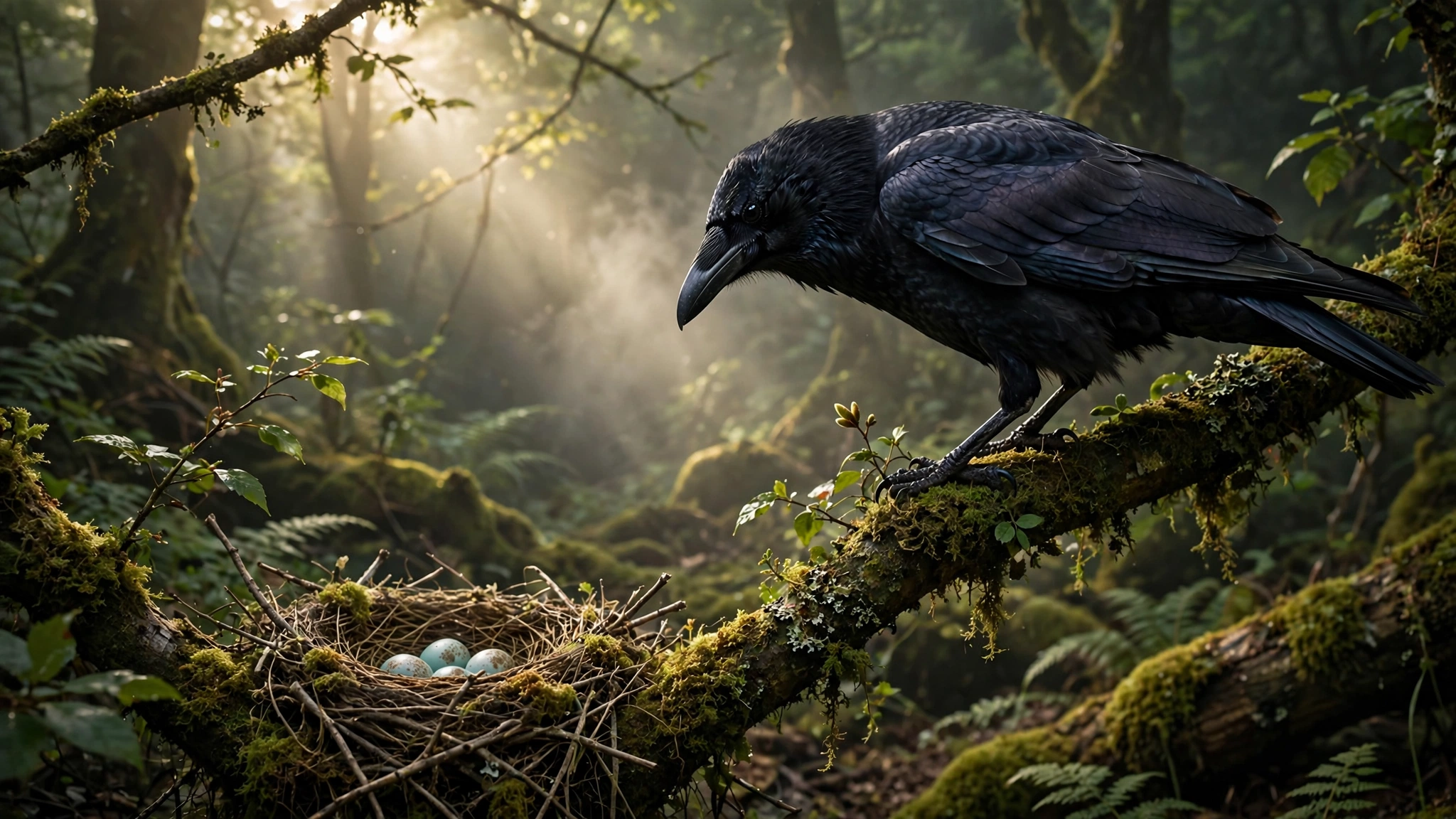
Crows have a reputation problem. To some people they’re clever, charismatic birds; to others they’re nest-raiding villains that terrorize songbirds. The truth, as usual, is more interesting than either caricature.
Yes, crows eat other birds — but *why* they do it, *how often*, and what it reveals about their remarkable intelligence tells a much bigger story. Let’s get into it.
The most common way crows eat other birds is by raiding nests. A crow will spot an unguarded nest, swoop in, and eat the eggs — or the helpless nestlings inside. This isn’t random cruelty; it’s efficient foraging. Eggs and baby birds are packed with protein and fat, and they can’t fight back or run away.
Crows are patient strategists about it. They watch parent birds, learn their routines, and strike when the nest is unguarded. Some crows even work in pairs — one distracts the parent birds while the other raids the nest. That’s not instinct alone; that’s planning.
It’s rarer, but it happens. Crows occasionally kill small, sick, or injured adult birds. They’re also known to harass and mob larger birds — not always to eat them, but to drive them away from territory or food. A healthy adult songbird is usually too quick for a crow to catch in open flight, so most crow-on-bird predation targets the defenseless: eggs and nestlings.
Crows are major scavengers. They readily eat dead birds they find — roadkill, window-strike victims, winter casualties. This is actually an important ecological service: crows clean up carcasses that might otherwise spread disease. When you see a crow pecking at a dead bird, it’s not murder — it’s cleanup.
Crows are omnivores in the truest sense. Their diet is one of the most varied in the bird world:
This dietary flexibility is a big reason crows thrive almost everywhere humans do. While specialized birds struggle when their one food source disappears, crows just switch to something else.
| Food Source | Urban Crows | Rural/Wild Crows |
|---|---|---|
| Human garbage | Major staple | Rare |
| Nest eggs/nestlings | Common | Common |
| Insects | Moderate | Major staple |
| Carrion (roadkill) | Very common | Moderate |
| Nuts/seeds | Moderate | Major staple |
| Agricultural crops | Occasional | Common (corn, grain) |
Raising baby crows takes enormous energy. A breeding pair needs protein-rich food to feed fast-growing chicks, and eggs and nestlings are among the most calorie-dense foods available. From the crow’s perspective, a nest full of eggs is a high-value, low-effort meal — the equivalent of finding a free buffet.
Crows aren’t the only nest raiders — not even close. Jays, magpies, raccoons, snakes, squirrels, and even other songbirds raid nests. Nest predation is one of the main reasons most songbirds lay multiple eggs and nest multiple times per season: it’s an evolutionary arms race, and high reproductive rates are the prey’s defense.
This is the question angry gardeners always ask. The scientific consensus: crows are rarely the main driver of songbird declines. Studies consistently show that habitat loss, window collisions, outdoor cats, and pesticides kill far more songbirds than crows do. (Domestic cats alone kill an estimated 1.3–4 billion birds per year in the US — crows don’t come close.)
Crows and songbirds have coexisted for millions of years. Songbirds evolved alongside nest predators; what they *didn’t* evolve alongside is habitat destruction and glass skyscrapers.
What makes crow predation remarkable isn’t the eating — it’s the thinking behind it. Crows are among the smartest animals on Earth:
A brain that can recognize your face years later and teach its children to distrust you is a brain that plans its hunting strategically. When a crow raids a nest, it’s not a mindless act — it’s a calculated decision by one of nature’s smartest foragers.
All corvids (the crow family, which also includes ravens, rooks, magpies, and jays) share the omnivorous, opportunistic lifestyle. If you’re asking “do crows eat other birds,” the answer applies across the whole family.
If you want to help nesting birds in your yard, chasing crows is far less effective than these proven steps:
Crows are native wildlife doing what they’ve done for millennia. The songbirds in your garden evolved with them — and will keep evolving with them, as long as we don’t destroy the habitat they both need.
You’ve probably seen a group of crows harassing a hawk or owl — this behavior is called mobbing, and it’s one of the crow’s most entertaining traits. A dozen crows will gang up on a much larger predator, dive-bombing and screaming until it leaves. They do the same to cats, and occasionally to people they’ve decided they don’t like (remember the face-recognition research above — hold a grudge against a crow at your peril). Mobbing is defense, not hunting: the goal is to drive the threat away, not to eat it. But it shows the same boldness and coordination that makes crows such effective nest raiders.
Yes. Raiding nests for eggs is one of the most common ways crows eat other birds. Eggs are high in protein and fat, making them valuable food — especially when crows are feeding their own chicks.
Yes, crows eat nestlings (baby birds still in the nest). They typically strike when parent birds are away, and sometimes work in pairs with one crow distracting the parents while the other raids.
Rarely. A healthy adult songbird is usually too agile for a crow to catch. Crows occasionally kill sick, injured, or very small adult birds, but most crow predation targets eggs and nestlings.
Crows do prey on songbird nests, but research shows they are not a primary driver of songbird population declines. Habitat loss, domestic cats, window collisions, and pesticides have far larger impacts.
Crows are omnivores that eat insects, carrion, eggs, nuts, seeds, fruits, small mammals, fish, and human garbage. Their exact diet shifts with season and location — dietary flexibility is their superpower.
Yes. University of Washington researcher John Marzluff demonstrated that wild American crows recognize individual human faces, remember threatening people for years, and even teach the recognition to other crows that never met the person.
Ravens (*Corvus corax*) are larger than crows, with deeper voices, wedge-shaped tails, and shaggier throat feathers. Both are highly intelligent corvids and opportunistic omnivores. Ravens are generally wilder; crows adapt more readily to cities.
Provide dense native shrubbery for nesting cover, keep cats indoors, and avoid disturbing active nests. Chasing crows is less effective than addressing the bigger threats: cats, windows, pesticides, and habitat loss.
*Love clever animals? Discover why birds fly in V formation — another feat of avian brilliance — or learn how many ants are in a colony for more hidden-world science. And if animal rest puzzles you, do sharks sleep explores sleep in a very different creature.*