Physical Address
4676 Railroad Street Marquette
MI 49855
Physical Address
4676 Railroad Street Marquette
MI 49855

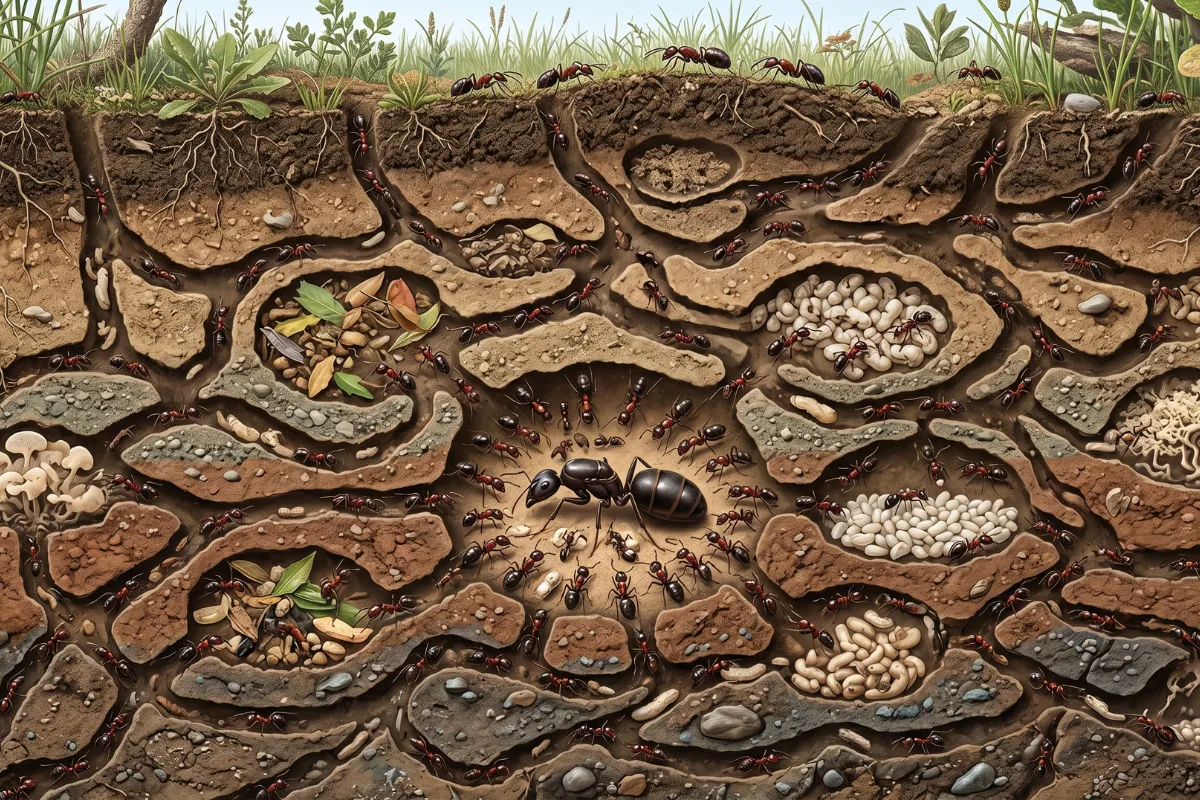
How many ants are in a colony? This is one of the most common questions people ask when learning about social insects. Ants live in well-organized groups. These can have a few dozen members or even millions. The exact number varies by species, habitat, food availability, and nest age.
These tiny insects are among the most successful creatures on Earth. They work together to gather food, protect their nest, and care for young ants. As a result, their colonies can survive for many years and continue growing over time. Some nests stay small all their lives, others grow into huge underground networks.
Moreover, different ant species follow different social structures. A colony with one queen grows steadily. In contrast, colonies with several queens can have larger populations. Environmental conditions also play a significant role. Warm climates, abundant food, and safe nesting sites usually support larger groups.
In this guide, you will learn how ant colony sizes differ by species. You’ll find out what factors affect their populations. Plus, you’ll see why some ant societies grow very large. You’ll learn fun facts about queens, workers, and the amazing system that helps ants succeed in almost every ecosystem globally.
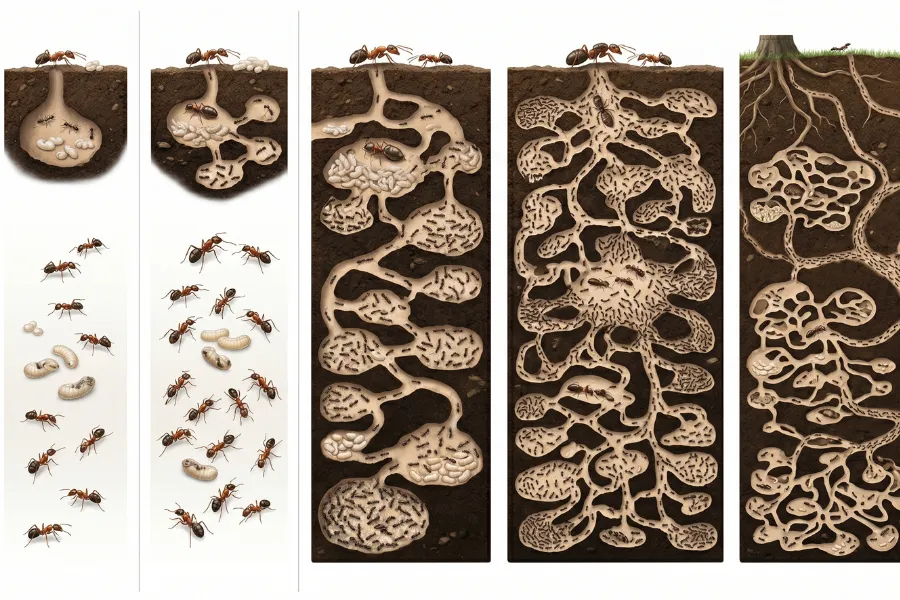
The size of an ant colony varies greatly. Some contain only a few dozen ants, while others include millions.
| Colony Type | Estimated Population |
|---|---|
| Small Colony | 20–500 ants |
| Medium Colony | 500–10,000 ants |
| Large Colony | 10,000–100,000 ants |
| Super Colony | Hundreds of thousands to millions |
Therefore, there is no single answer for every species. Most common backyard colonies contain a few thousand individuals.
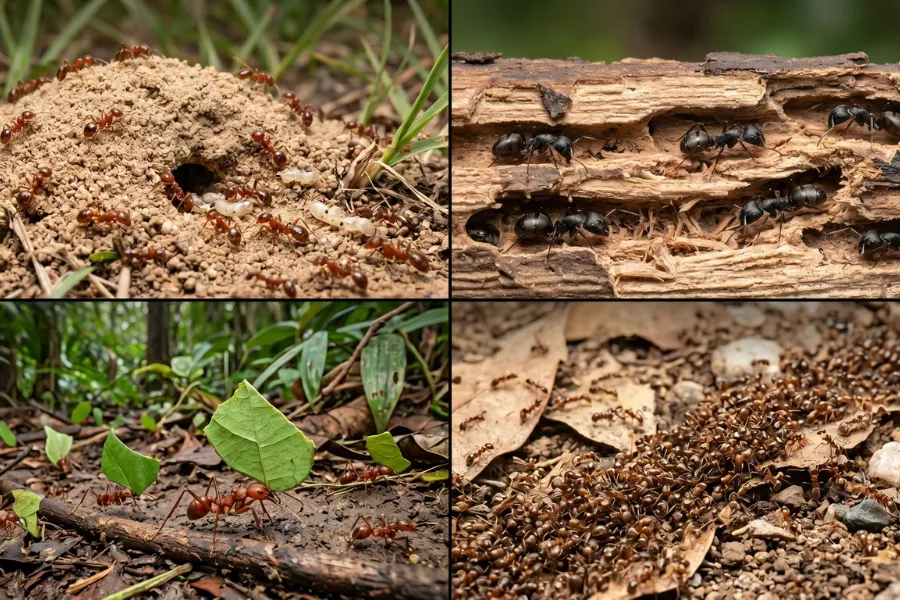
Different species build communities of different sizes.
Fire Ant colonies often contain between 100,000 and 500,000 workers. In favorable conditions, their numbers may increase even further.
Carpenter Ant groups are usually smaller. Most nests contain between 3,000 and 15,000 members.
Leafcutter Ant societies are among the largest in the insect world. Some nests support several million workers.
Argentine Ant populations can form interconnected supercolonies spanning vast areas. These networks may contain millions or even billions of ants.
Several elements determine how large a nest can become.
A steady food supply supports population growth. Colonies with easy access to insects, seeds, or sugary substances generally expand faster.
Warm temperatures encourage activity and reproduction. Consequently, tropical regions often host larger populations than colder environments.
Young colonies start with only a queen and a small number of workers. Over time, the population gradually increases.
Birds, spiders, reptiles, and other predators can reduce colony numbers. Therefore, survival rates influence long-term growth.
A healthy queen lays more eggs. As a result, the colony can produce additional workers and expand more quickly.
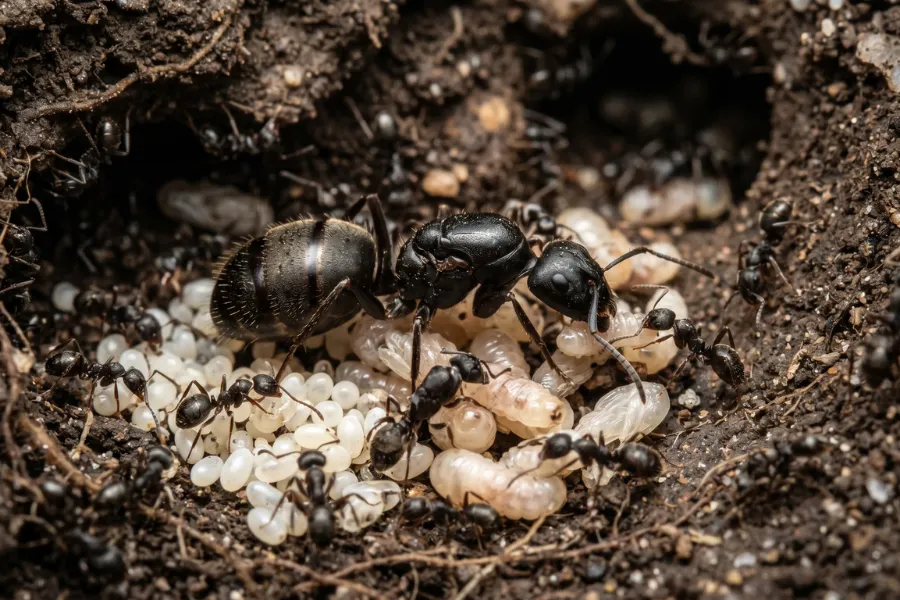
The queen is the foundation of the colony. Her primary responsibility is reproduction.
A mature queen can lay hundreds or even thousands of eggs. This constant production allows the colony to maintain and increase its workforce.
Many queens live for years. Some species have queens that survive for decades, giving colonies long-term stability.
As the queen continues producing offspring, the population grows. Consequently, older nests are often much larger than younger ones.
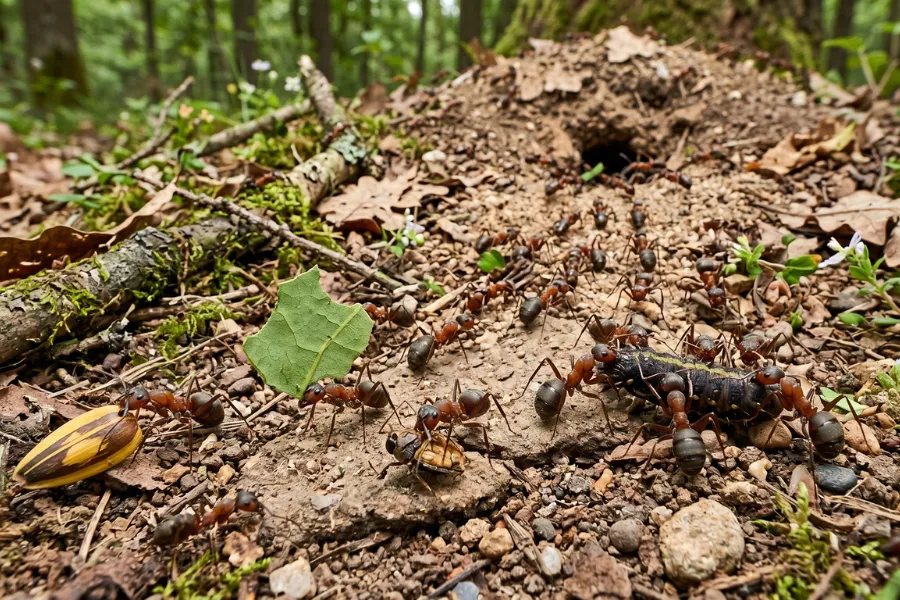
Worker ants make up the majority of the population.
Workers search for food and transport it back to the nest. This task supports every member of the colony.
They build tunnels, repair damage, and keep living areas clean.
Larvae and pupae require constant attention. Workers feed and protect developing ants until adulthood.
Many workers act as defenders. They guard entrances and respond quickly to threats.
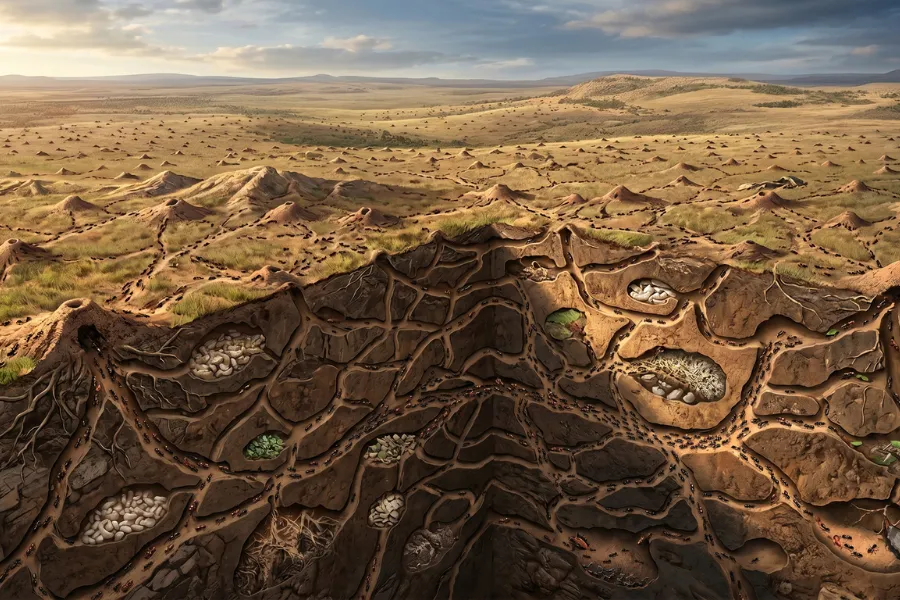
Not every colony reaches enormous numbers. However, certain conditions encourage exceptional growth.
Some species contain several queens in one nest. Because multiple queens lay eggs simultaneously, the population increases faster.
Reliable access to nutrition reduces competition and supports continuous reproduction.
Protected nesting locations and mild weather create ideal conditions for expansion.
Some species establish multiple linked nests. Together, these networks function as a single social unit and support huge populations.
Several ant societies have reached extraordinary sizes.
Argentine ants are famous for forming supercolonies that stretch across large geographic regions. These interconnected groups can contain countless workers and numerous queens.
Leafcutter ants construct extensive underground chambers. Some nests house millions of workers dedicated to maintaining fungus gardens.
Ants adapt easily to many habitats. This is why they are one of the most common insect groups on Earth.
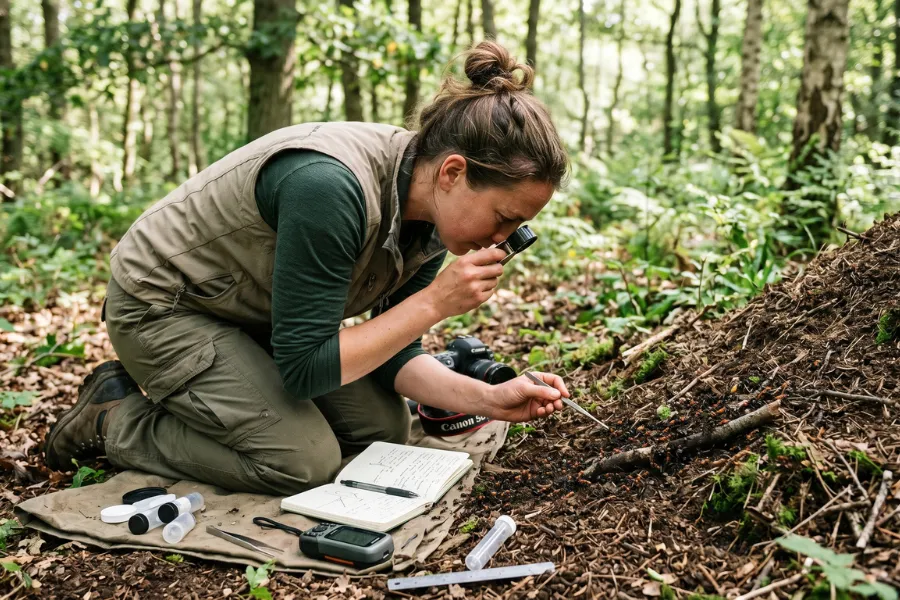
Counting every ant individually is impossible in large colonies. Therefore, researchers use several methods.
Scientists count ants in a small area. Then, they estimate the total population based on those counts.
The size of tunnels and chambers often helps researchers calculate colony populations.
Monitoring worker traffic provides useful clues about colony strength and activity levels.
The number of ants in a colony varies by species and environment. Small nests might have just a few dozen ants. In contrast, large colonies can house hundreds of thousands or even millions. Population size depends on food, climate, nest age, and queen productivity. Every ant society depends on teamwork, organization, and cooperation to thrive. Colony numbers may vary a lot, but these traits are essential for survival and growth. Ants have a remarkable social structure. This is one reason they are among the most successful insects on Earth.
Most colonies contain between 1,000 and 10,000 ants, although numbers vary by species.
Some Argentine ant supercolonies stretch for hundreds of miles. They can have millions or even billions of ants.
Many species have a single queen, while others may contain multiple queens.
No. Colony size depends on species, food resources, climate, and nest age.
Growth rates differ, but many colonies take years to reach their peak population.
Workers collect food, protect the nest, care for the young, and keep the colony organized.