Physical Address
4676 Railroad Street Marquette
MI 49855
Physical Address
4676 Railroad Street Marquette
MI 49855


Many new parents wonder, can newborns have bad dreams when they see their baby cry, twitch, or make unusual facial expressions during sleep. These behaviors often raise concerns, especially during the first few months of life.
Sleep plays a vital role in early brain development. However, understanding what happens inside a newborn’s mind during sleep can be challenging. Researchers continue to study infant sleep patterns, dreaming, and neurological development to provide clearer answers.
In this guide, you’ll learn what science currently knows about newborn dreams, why babies cry during sleep, and how parents can support healthy sleep habits from birth.
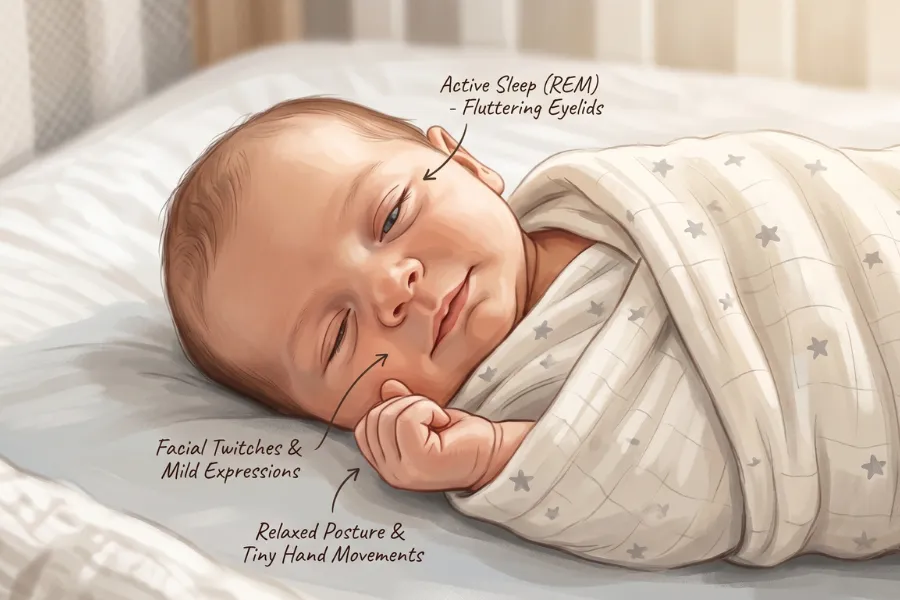
The short answer is that experts do not know for certain. Scientists believe newborns spend a large amount of time in rapid eye movement (REM) sleep, the stage most associated with dreaming in older children and adults.
However, newborn brains are still developing. Because of this, researchers cannot confirm whether infants experience dreams in the same way adults do. More importantly, there is little evidence suggesting that newborns experience true nightmares.
Most sleep specialists agree that nightmares typically appear later in childhood when imagination, memory, and emotional processing become more advanced.
Studies show that newborns spend nearly half of their sleeping time in active or REM sleep. During this stage, parents may notice:
These actions do not automatically indicate a bad dream. Instead, they often reflect normal brain activity as the nervous system develops.
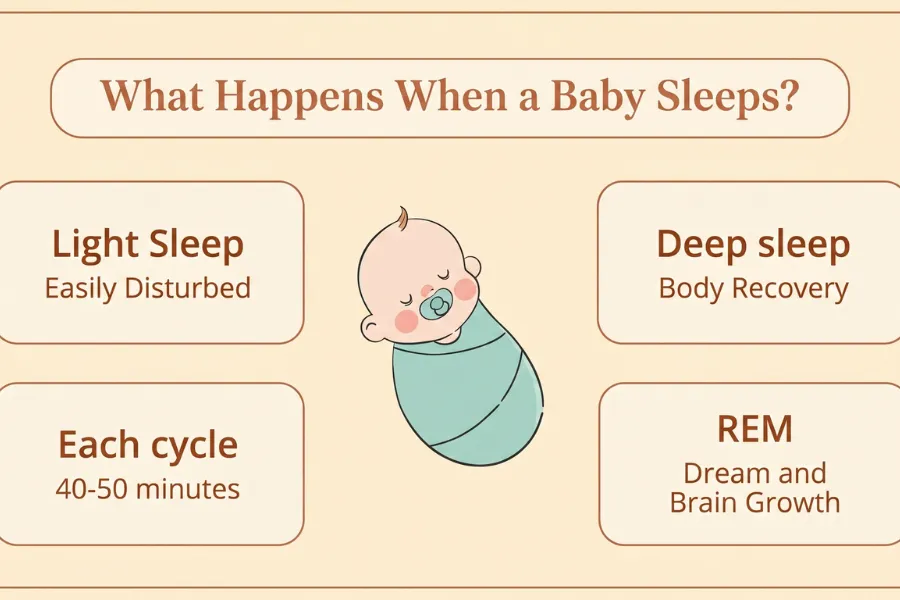
Newborn sleep differs significantly from adult sleep. Babies cycle between active and quiet sleep more frequently throughout the day and night.
Because their sleep cycles are shorter, newborns often appear restless even while sleeping soundly.
Active sleep resembles REM sleep in adults. During this stage, babies may:
These behaviors are completely normal and usually do not signal discomfort.
Quiet sleep is deeper and calmer. During this phase:
This stage supports physical growth and recovery.
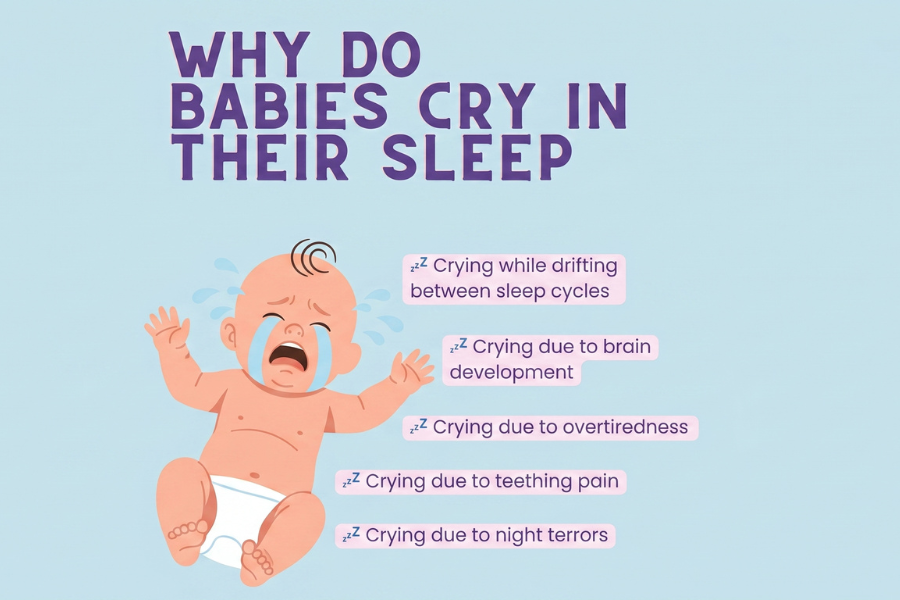
Parents frequently assume crying during sleep means a nightmare. In reality, several other explanations are more likely.
Newborns wake often because their stomachs are small. Hunger remains one of the most common reasons for sleep disturbances.
Babies regularly move between sleep stages. During these transitions, they may briefly cry, fuss, or make noises without fully waking up.
Gas, reflux, or mild digestive issues can interrupt sleep and cause temporary fussiness.
The Moro reflex often causes sudden arm movements and brief crying episodes. This reflex is a normal part of infant development.
Most experts believe nightmares become possible after a child develops stronger memory, imagination, and emotional awareness.
Nightmares are uncommon in newborns. They generally appear between ages two and six years.
At this stage, children can:
As these abilities grow, dreams become more complex and emotionally meaningful.
Many normal sleep behaviors can look alarming to first-time parents.
A sleeping newborn may:
These expressions often occur during active sleep and are not signs of fear.
Small jerks and twitches are common. They usually reflect neurological development rather than emotional distress.
Short crying episodes during sleep often stop without intervention. Many babies settle naturally within seconds.
Although nightmares are unlikely, several factors can affect how well a newborn sleeps.
A safe sleep environment encourages longer and more restful sleep.
Consider:
Following safe sleep recommendations also reduces sleep-related risks.
Regular feeding schedules help babies feel secure and reduce unnecessary waking caused by hunger.
An overtired baby may struggle to settle and stay asleep.
Common signs include:
The newborn brain undergoes rapid growth during the first year of life.
Neural connections form continuously as babies:
Because cognitive abilities remain limited at birth, researchers believe newborn dream experiences differ greatly from those of older children and adults.
Nightmares typically require memory and emotional interpretation.
Newborns have not yet developed the sophisticated memory systems needed for complex dream narratives. This is one reason experts doubt that newborns experience true bad dreams.
Most sleep behaviors are harmless. However, certain situations may require medical attention.
Contact a pediatrician if your baby experiences:
Professional evaluation can identify underlying medical issues if necessary.
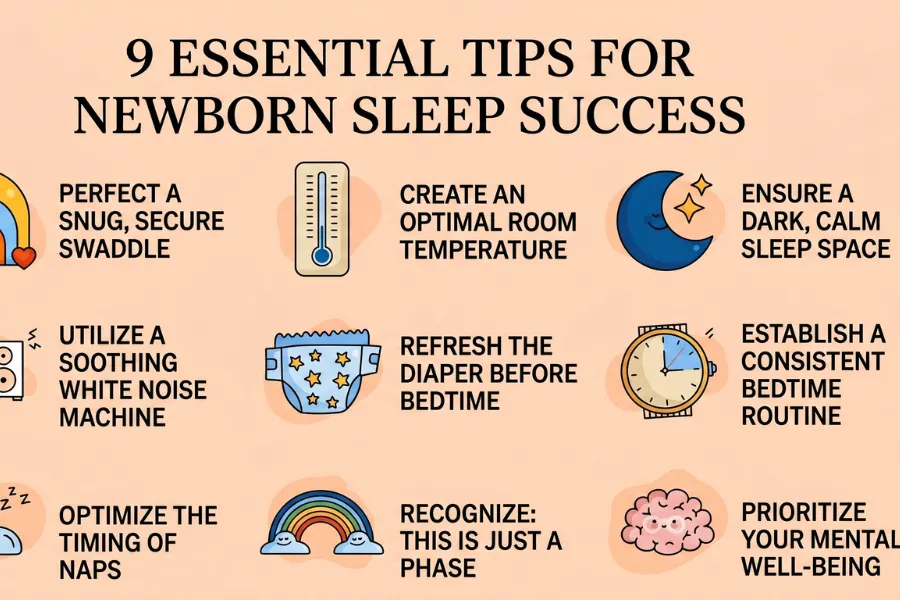
Healthy sleep habits benefit both babies and parents.
Always place babies on their backs for sleep. Keep the sleep area free from:
Expose your baby to natural daylight during waking hours. At night, keep interactions calm and quiet.
Even young infants benefit from predictable patterns.
A routine may include:
Consistency helps babies feel secure.
Most sleep crying results from normal sleep transitions, hunger, or reflexes.
While adorable, newborn smiles often occur automatically during sleep development.
Researchers believe infant dream experiences, if present, are very different from adult dreams.
So, can newborns have bad dreams? Current scientific evidence suggests that true nightmares are unlikely during the newborn stage. Although babies spend significant time in REM sleep, their brains are still developing the memory and emotional systems needed for complex dream experiences.
Crying, twitching, smiling, and movement during sleep are usually normal parts of infant development. By understanding newborn sleep patterns and creating a safe sleep environment, parents can feel more confident and less worried about these common behaviors.
Researchers believe newborns may experience some form of dreaming during REM sleep, but the exact nature of those dreams remains unknown.
Sleep transitions, hunger, gas, and reflexes are the most common reasons for crying during sleep.
Nightmares generally begin between two and six years of age when imagination and emotional processing become more developed.
Yes. Small twitches and jerky movements are common and usually reflect normal neurological development.
Not always. Many babies settle on their own. Observe briefly before intervening unless the crying becomes persistent.
Yes. Researchers believe REM sleep supports learning, neural growth, and healthy brain development during infancy.