Physical Address
4676 Railroad Street Marquette
MI 49855
Physical Address
4676 Railroad Street Marquette
MI 49855

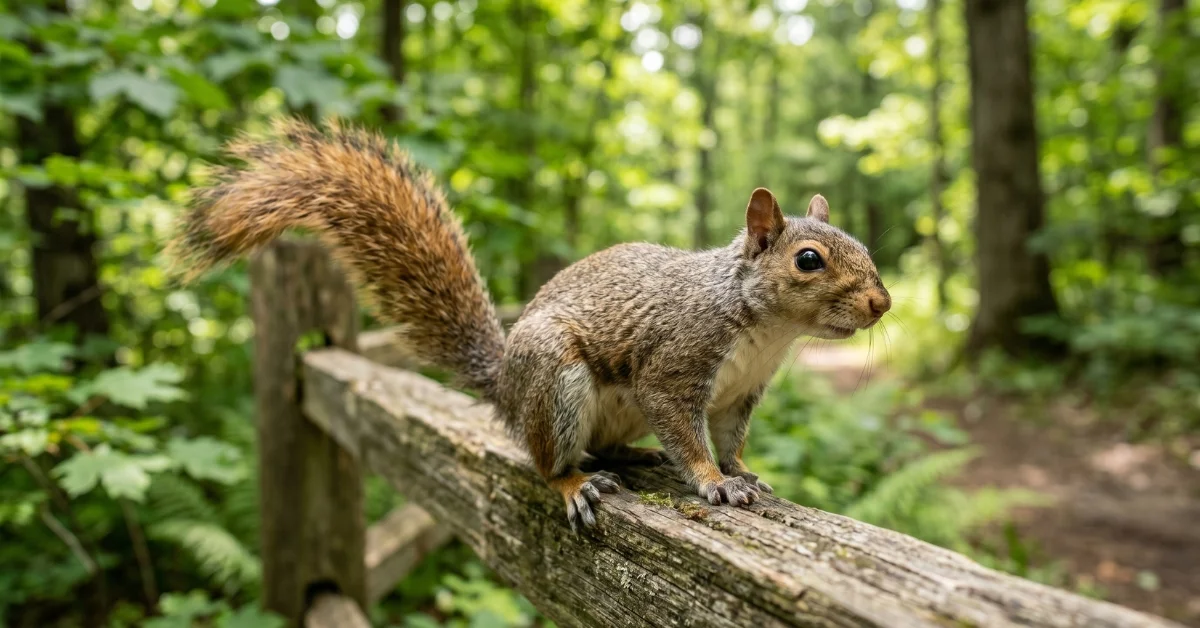
Have you ever watched a squirrel in your backyard and noticed its tail moving in quick, sharp flicks? It looks almost like a tiny flag waving in the wind. But that tail is doing much more than just moving around.
Squirrels flick their tails on purpose. Each flick sends a message. It can mean danger is near. It can mean “back off, this is my space.” It can even say “I see you” to a hawk or a fox.
Most people walk past squirrels every day without ever thinking about what those tail flicks mean. But once you understand the signals, you will never look at a squirrel the same way again.
This blog covers every reason why squirrels flick their tails — from science-backed facts to common myths. Whether you are a curious nature lover, a student, or just someone who spotted a squirrel today, this guide is for you.
Let’s dive in.
When a squirrel flicks its tail, it is sending a signal. The tail acts like a communication tool. It helps squirrels talk to each other without making a sound.
A tail flick can mean many things:
The speed, direction, and pattern of the flick all carry meaning. A slow wave is different from a fast, sharp snap. Scientists have studied these movements for years and found real patterns behind each one.
The key thing to know is this: a squirrel flicking its tail is always doing it for a reason. It is not random. It is a form of body language, and it works very well in the wild.
Squirrels are social animals. They live near each other and often share the same trees and food zones. So they need ways to talk.
The tail is one of their main tools for this. When one squirrel spots something important — like a new food source or a stranger entering the area — it will flick its tail to send a message to nearby squirrels.
This kind of communication is fast and silent. In the wild, making noise can attract predators. So tail flicks let squirrels share information without putting themselves in danger.
Think of it like texting, but with a tail.
A mother squirrel might also use her tail to signal her young ones. She can tell them to stay still, come close, or run away — all through tail movements.
One of the most common reasons a squirrel flicks its tail is to warn others about danger.
When a squirrel senses something wrong — like a nearby cat, dog, or person — it will start flicking its tail rapidly. This is a clear alarm signal. It tells other squirrels: “Something is not right. Be careful.”
At the same time, the squirrel might also make a sharp chirping or chattering sound. The tail flick and the sound together make the warning stronger and harder to miss.
This warning system is very useful in a group. One squirrel spots the threat first. It flicks its tail. Other squirrels see it and get ready to run or hide. The whole group stays safer because of one squirrel’s tail.
This is why you will often see squirrels flicking their tails in a park when you walk too close. They are not showing off. They are sending a warning.
This is one of the most interesting reasons and many people have never heard of it.
When a squirrel spots a predator, like a hawk or a fox, it sometimes flicks its tail directly at the predator. This behavior is called a predator awareness signal, or the “I see you” behavior.
Why would a squirrel signal a predator on purpose? It seems risky, but it is actually very smart.
By flicking its tail, the squirrel is saying: “I know you are there. You cannot sneak up on me. You have lost the element of surprise.”
Most predators rely on surprise attacks. Once they know they have been spotted, they often give up the hunt. There is no point in chasing something that is already ready to run. So the squirrel’s tail flick can actually stop the attack before it starts.
Studies have found that California ground squirrels do this with rattlesnakes. They even heat up their tails to make the signal stronger, because rattlesnakes can detect heat. It is a brilliant survival trick.
Squirrels are very protective of their territory. They guard their food, their nests, and their space.
When another squirrel comes too close, the resident squirrel will often flick its tail as a warning. The message is clear: “You are in my space. Leave now.”
This kind of tail flicking is usually slow and deliberate. It is not the quick, panicked flick of danger. It is firm and steady, a clear boundary signal.
If the other squirrel does not leave, the tail flicking may get faster and more intense. It can also be followed by chasing, chattering, or even a small fight.
You can often spot this behavior around bird feeders. Two squirrels competing for the same food will often flick their tails at each other before one of them backs down.
Not every tail movement is a communication signal. Sometimes the squirrel’s tail is just doing its physical job.
Squirrels are incredible jumpers. They leap between branches, run along thin fences, and land on tiny spots with amazing accuracy. The tail helps make this possible.
As a squirrel jumps or runs, its tail moves to help it stay balanced. It works like a rudder on a boat or the tail of an airplane. If the squirrel leans too far to one side, the tail swings the other way to correct it.
This kind of tail movement looks different from a warning flick. It is smoother and flows with the body’s movement. It does not have the sharp, snapping quality of an alarm signal.
Next time you watch a squirrel jump from branch to branch, look at how its tail moves mid-air. You will see it shifting and adjusting the whole time.
Squirrels have feelings or at least emotional states, that affect their behavior. And the tail often reflects those states.
Here are some examples:
Understanding these emotional signals can help you read a squirrel’s mood from a distance. If its tail is flicking fast and sharp, the squirrel is stressed or irritated. If it is slow and twitchy, it is curious or cautious.
This is a lesser-known reason, but scientists have found it to be real.
Squirrels can use their tails to help control their body temperature. The large, fluffy tail has a good blood supply. On hot days, the squirrel can move blood into the tail and release heat from the body through it.
When this happens, you might see the squirrel moving its tail in a slow, fanning motion. This is not a warning flick. It is the squirrel’s way of cooling down.
On cold days, the squirrel does the opposite. It wraps its tail around its body like a blanket, keeping warmth close to its core.
So the tail is both a communication tool and a survival tool. It helps squirrels stay alive in hot and cold weather.
This is a great question. Can we really call tail flicking a language?
In a simple sense — yes. It fits the basic idea of a language: it sends messages that others can understand.
But it is not a language like English or Spanish. Squirrels do not have grammar or thousands of words. Their “language” is made up of a small set of signals. Each signal has a clear and specific meaning.
Scientists call this animal signaling. It includes sounds, movements, smells, and other behaviors that carry meaning between animals of the same species.
Squirrel tail flicking is one of the most studied examples of animal signaling. Research has shown that:
So while it may not be a language in the full human sense, it is a real and rich system of communication. And it works very well for squirrels.
Not exactly! There are over 200 species of squirrels in the world, and they do not all communicate the same way.
Here are a few key differences:
Gray squirrels (common in North America and the UK) use tail flicking a lot for both alarm signals and territorial displays. Their flicks are sharp and easy to spot.
Fox squirrels tend to be bolder and slower-moving. Their tail signals are often slower and less frequent than gray squirrels.
Ground squirrels (like the California ground squirrel) are famous for their predator awareness signals. They use their tails to send heat signals to snakes, which is a unique adaptation not seen in tree squirrels.
Red squirrels are highly territorial and use very aggressive tail flicking during disputes over food and space.
The core meanings are similar across species — danger, territory, emotion — but the style and intensity can vary. Think of it like different accents of the same language.
Squirrels flick their tails more in certain situations and seasons.
Peak times for tail flicking include:
Time of day also matters. Squirrels are most active in the early morning and late afternoon. This is when you are most likely to see frequent tail flicking.
There are a few common myths about squirrel tails that are worth clearing up.
Myth 1: “Squirrels flick their tails when they are happy.” This is not really true. Tail flicking is mostly tied to stress, danger, territorial behavior, or communication — not happiness. A relaxed, content squirrel is usually still and quiet.
Myth 2: “The tail flick is random and meaningless.” False. As we have seen, every flick has a purpose. It is a real signal with real meaning.
Myth 3: “Only scared squirrels flick their tails.” Not true. Fear is just one reason. Squirrels also flick when they are curious, irritated, territorial, or trying to communicate with other squirrels.
Myth 4: “If a squirrel flicks its tail at you, it wants food.” Actually, the opposite is more likely true. A squirrel flicking its tail at you is probably telling you to back off. It sees you as a potential threat.
Scientists have spent years studying squirrel tail behavior, and their findings are fascinating.
One of the most famous studies focused on California ground squirrels and rattlesnakes. Researchers at UC Davis discovered that squirrels heat up their tails before waving them at snakes. Rattlesnakes have heat-sensing organs, so the heated tail makes the signal louder and clearer. This was the first time scientists recorded an animal using heat as part of a communication signal.
Another study by researchers at Princeton University looked at gray squirrel tail flicking in response to aerial vs. ground predators. They found that the tail movements were different depending on the type of threat. Ground threats (like a fox) got a different tail response than aerial threats (like a hawk). This showed that squirrels can communicate specific information — not just a general “danger” alarm.
A study published in the journal Animal Behaviour found that squirrels adjust their tail signals based on who is watching. If other squirrels are nearby, the signal is stronger. If the squirrel is alone, it may flick its tail less. This suggests a level of social awareness that scientists find very interesting.
These studies show that squirrel tail behavior is not simple. It is complex, flexible, and deeply connected to their survival.
At its core, tail flicking is a survival tool. It helps squirrels stay alive in a world full of predators, competition, and changing conditions.
Here is how it contributes to survival:
1. It keeps the group safe. One squirrel’s alarm signal protects many. The whole group benefits from fast, silent communication.
2. It stops attacks before they happen. The “I see you” signal stops predators from wasting energy on prey that is already ready to run. Both the squirrel and the predator benefit from avoiding a pointless chase.
3. It reduces physical fights. Instead of fighting over territory or food, squirrels can often settle disputes with tail signals alone. This saves energy and reduces injury.
4. It helps with mating. Tail signals during courtship help squirrels find healthy mates and signal their fitness.
5. It helps with temperature control. The tail’s role in heating and cooling directly supports the squirrel’s health and energy levels.
Every flick of that fluffy tail is part of a larger survival system built over millions of years of evolution. It is simple to watch, but incredibly complex in what it achieves.
Q: Why does a squirrel flick its tail at me?
A: The squirrel likely sees you as a potential threat. It is sending a warning signal, telling you (and any nearby squirrels) that something suspicious is close.
Q: Is it bad if a squirrel flicks its tail at you?
A: No, it is not bad. It just means the squirrel is aware of you and is choosing to communicate that awareness. You are not in any danger.
Q: Does tail flicking mean a squirrel is angry?
A: It can mean irritation or stress, but not always anger in the human sense. It is more about alertness and communication than emotion.
Q: Do squirrels flick their tails when they sleep?
A: No. Tail flicking is an active, awake behavior. Sleeping squirrels are still.
Q: Can you train a squirrel to stop flicking its tail?
A: No. Tail flicking is an instinct. It is built into their biology and cannot be trained away.
Q: Do baby squirrels flick their tails?
A: Young squirrels develop this behavior as they grow. Newborns do not flick their tails, but juveniles start practicing the behavior as they become more aware of their environment.
Q: Why do squirrels flick their tails so fast?
A: Fast flicking usually means higher urgency, a closer threat or a stronger emotional state. The speed of the flick is part of the signal itself.
Here is a quick summary of everything we covered:
Squirrels are small animals, but they are far smarter than most people give them credit for. That little tail flick you see in the park is not just a cute movement. It is a survival signal. It is communication. It is biology at work.
The next time you see a squirrel flicking its tail, pause for a moment. Ask yourself: Is it warning others? Is it telling a predator “I see you”? Is it keeping its balance mid-jump? Or is it just annoyed that you are standing too close to its favorite oak tree?
The answer is probably in the speed and pattern of the flick. Now you have the knowledge to read it.
Understanding animals like squirrels makes the world around us richer and more interesting. There is a whole silent conversation happening in your backyard every day — and squirrel tails are a big part of it.
Did you find this article helpful? Share it with a fellow nature lover or leave a comment below with your squirrel tail stories!