Physical Address
4676 Railroad Street Marquette
MI 49855
Physical Address
4676 Railroad Street Marquette
MI 49855

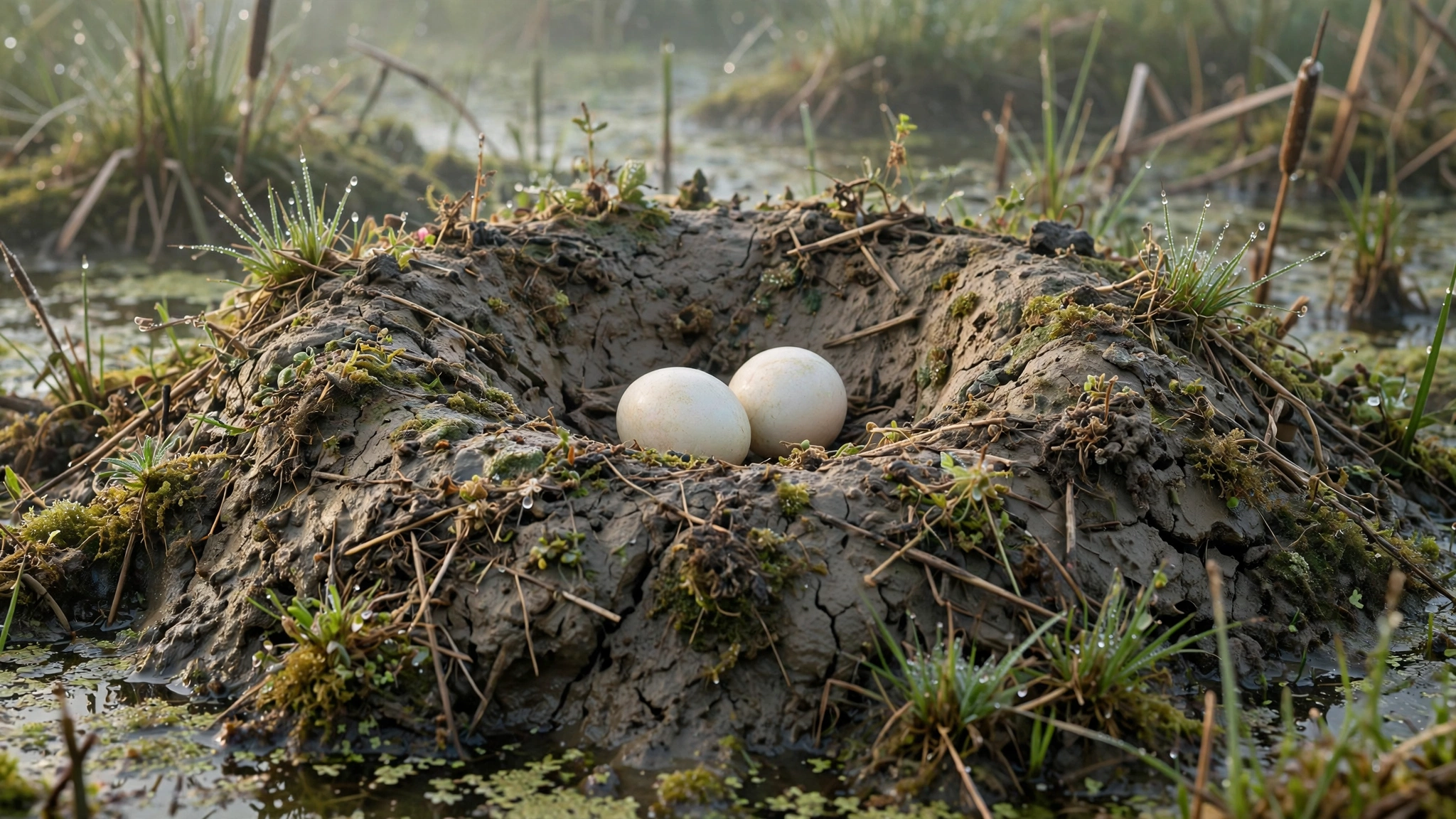
It is a strange question, but a fair one. Flamingo eggs exist. Chickens lay eggs and we eat those. So can you eat a flamingo egg? The short answer is that while the egg itself would not poison you, eating one is illegal in nearly every country, deeply unethical, and could damage a fragile breeding cycle that produces just one egg per pair per year.
But the question opens up a fascinating story. Flamingo eggs were once considered a delicacy. They have a strange and dramatic history involving egg collectors, remote salt lakes, and conservation battles. And the eggs themselves are remarkable objects, built to survive in some of the harshest nesting environments on Earth.
Let us look at what flamingo eggs are really like, why eating them is off the table, and the wild history of humans and flamingo eggs.
A flamingo egg is larger than a chicken egg but smaller than you might expect for such a tall bird. It measures about 3 to 3.5 inches long, roughly the size of a goose egg. The shell is a chalky white, sometimes with a faint blue or pink tint. It feels rougher and more porous than a chicken eggshell.
Inside, a flamingo egg looks much like any other bird egg: a yolk surrounded by white. The yolk is large relative to the egg’s size because flamingo chicks need a rich energy supply. They hatch in harsh environments and must grow quickly.
Each flamingo egg weighs around 4 to 5 ounces. That sounds small until you remember the chick inside must survive on some of the most chemically extreme lakes on the planet, places so salty or alkaline that almost nothing else can live there.
Here is the key fact that makes eating flamingo eggs so damaging: a flamingo pair lays just one egg per year. Not a clutch of six like a chicken. Not even two or three. One single egg, once a year, during a short breeding season.
If that egg is lost, stolen, or fails to hatch, the pair usually does not try again until the following year. Some pairs skip breeding entirely in bad years when water levels or food are poor. This slow reproduction rate means flamingo populations grow very slowly and recover from losses very slowly.
Compare that to chickens, which can lay 250 or more eggs per year. Taking a chicken egg barely dents the supply. Taking a flamingo egg wipes out an entire year’s reproductive effort for that pair. It is the difference between picking an apple from a tree and cutting the tree down.
Flamingos are protected by law in virtually every country where they live. International agreements like the Convention on Migratory Species cover them, and most nations have their own wildlife protection laws with serious penalties for harming flamingos or taking their eggs.
In the United States, flamingos are protected under the Migratory Bird Treaty Act. In the European Union, the Birds Directive protects them. Across Africa, South America, and the Caribbean, national parks and wildlife reserves guard the major breeding colonies. Fines can reach thousands of dollars, and prison time is possible for serious offenses.
These laws exist because flamingo populations were devastated in the past by exactly the kind of exploitation the question imagines. Egg collecting, hunting for feathers, and habitat destruction pushed several species to the brink. Legal protection was the response, and it has worked. Most flamingo species are now stable, though some remain vulnerable.
Even where enforcement is weak, eating a flamingo egg is ethically indefensible to conservationists. Each egg represents an enormous parental investment. Flamingos build elaborate mud nests, take turns incubating for nearly a month, and then feed the chick with a special red secretion called crop milk for months.
Stealing that egg does not just remove a potential chick. It wastes all the energy the parents spent courting, mating, nest-building, and incubating. In a species that breeds this slowly, every egg matters to the population.
There is also a practical selfish reason to leave them alone. Flamingos are a major draw for ecotourism in places like Kenya’s Rift Valley lakes, the Yucatan in Mexico, and the Camargue in France. A living flamingo colony generates far more value over time than any egg ever could.
In the 1800s and early 1900s, flamingo eggs were eaten as a luxury food. Wealthy collectors and travelers in Africa and South America prized them. Egg collecting, known as oology, was a fashionable hobby among Victorian naturalists, and flamingo eggs were among the most sought-after specimens.
Expeditions to remote breeding colonies were organized specifically to harvest eggs. Collectors would travel for weeks to reach isolated salt lakes, then gather thousands of eggs. Some were eaten fresh. Others were blown out, the shells preserved as trophies, the contents discarded or cooked.
The scale of this harvesting was staggering. At some colonies, collectors took nearly every egg in a season. Combined with hunting adult flamingos for their pink feathers, which were used in women’s hats, the pressure on populations was enormous.
Historical accounts of flamingo egg taste are rare and unreliable. A few 19th-century travelers described them as rich and fishy, which makes sense given the flamingo diet of tiny shrimp, algae, and brine flies. The yolk would have been deeply colored and strongly flavored.
One account from a British naturalist called them “not unpleasant but distinctly marine,” which is about as enthusiastic as the historical record gets. Nobody described them as delicious. They were eaten for novelty and status, not flavor.
Modern food science suggests a flamingo egg would taste intense and probably unpleasant to most people. The compounds that make flamingos pink, carotenoids from their diet, would concentrate in the yolk. The result would likely be a powerfully fishy, salty egg. There are far better eggs available from domestic birds.
By the mid-1900s, the damage was obvious. Several flamingo breeding colonies had been abandoned. Species like the Andean flamingo, already limited to high mountain lakes, were in serious trouble. Conservationists pushed for legal protection, and one by one, countries acted.
The recovery has been one of wildlife conservation’s quieter successes. Greater flamingos now number in the hundreds of thousands. Even the vulnerable Andean and puna flamingos have stabilized in protected areas. This recovery happened because humans stopped taking eggs and started guarding colonies instead.
Eating a flamingo egg today would undo, in one small way, more than half a century of protection work.
| Feature | Flamingo Egg | Chicken Egg | Goose Egg |
|---|---|---|---|
| Edible? | Technically yes, illegal to take | Yes | Yes |
| Eggs per year | 1 | 250+ | 30-50 |
| Size | ~3.5 inches, 4-5 oz | ~2.5 inches, 2 oz | ~3.5 inches, 5 oz |
| Legal to harvest | No (protected worldwide) | Yes | Yes |
| Taste (reported) | Rich, fishy, intense | Mild | Rich, stronger than chicken |
| Conservation impact of taking one | Wipes out a year’s breeding | Negligible | Low |
Flamingos do not just lay their eggs anywhere. They build cone-shaped nests out of mud, rising above the surface of shallow, often caustic water. These nests can be a foot tall, lifting the precious single egg above water that might be too salty, too alkaline, or too hot for it to survive.
Both parents take turns building the nest, a process that takes days. They scoop mud with their bills and pile it into a volcano shape with a hollow on top. The engineering is impressive: the nest must be tall enough to avoid flooding but stable enough not to collapse.
This is parental care at its most dedicated. Compare it to how ants organize their colonies with collective effort. Flamingo pairs pour weeks of work into a single egg.
After the chick hatches, the parents feed it something extraordinary. Both male and female flamingos produce a bright red secretion called crop milk in their digestive tracts. They regurgitate this nutrient-rich substance directly into the chick’s mouth.
Crop milk is so rich in the pigments that make flamingos pink that feeding parents actually lose their color. They turn pale, even white, while raising a chick. The pink goes into the baby instead. Once the chick is independent, the parents eat, recover, and slowly turn pink again.
This sacrifice shows how much each chick costs its parents. An egg is not just an egg to a flamingo. It is months of faded feathers, thousands of hours of incubation, and a year’s worth of reproductive effort.
People sometimes ask whether flamingos could be farmed for eggs the way chickens are. The answer is no, for practical reasons even before the legal ones. Flamingos need huge flocks, specialized wetland habitats, and specific diets to breed. They are slow, fussy, and produce one egg a year. No farm could make it work economically.
Chickens were domesticated over thousands of years specifically for egg production. Flamingos were never domesticated at all. They remain wild animals with wild needs, even in zoos.
The question is a bit like asking whether we could farm shark eggs. Technically imaginable, practically absurd, and legally prohibited.
Technically the egg is edible and would not poison you, but you must never eat one. Flamingos are protected by law worldwide, they lay only one egg per year, and taking an egg harms conservation efforts. Penalties include heavy fines and possible prison time.
Rare historical accounts describe them as rich, fishy, and distinctly marine, reflecting the flamingo’s diet of shrimp and algae. They were eaten in the 1800s as a novelty delicacy, not because they tasted good. Modern experts expect the flavor would be intense and unpleasant.
Flamingos invest enormous parental effort in each chick, including building mud nests, month-long incubation, and months of feeding crop milk. Producing one high-investment chick per year is their evolved strategy, suited to harsh, unpredictable wetland environments.
Yes, in virtually every country. Flamingos are covered by international treaties and national wildlife laws. In the US, the Migratory Bird Treaty Act applies. In the EU, the Birds Directive applies. Penalties vary but can include thousands in fines and imprisonment.
Yes. In the 1800s and early 1900s, Victorian egg collectors harvested thousands of flamingo eggs from remote colonies. Some were eaten as luxury food; others had their shells preserved as specimens. This exploitation helped push several flamingo populations toward collapse.
About 3 to 3.5 inches long and 4 to 5 ounces in weight, roughly the size of a goose egg. The shell is chalky white, sometimes with a faint blue or pink tint, and feels rougher than a chicken eggshell.
Crop milk is a bright red, nutrient-rich secretion that both flamingo parents produce to feed their chick. It is so full of pink pigments that the parents temporarily lose their own pink color while feeding. The chick gets the pink instead.
Most flamingo species are currently stable thanks to legal protection, including the greater, Caribbean, and Chilean flamingos. The Andean and puna flamingos of South America’s high Andes remain vulnerable due to their limited range and threats to their fragile lake habitats.