Physical Address
4676 Railroad Street Marquette
MI 49855
Physical Address
4676 Railroad Street Marquette
MI 49855

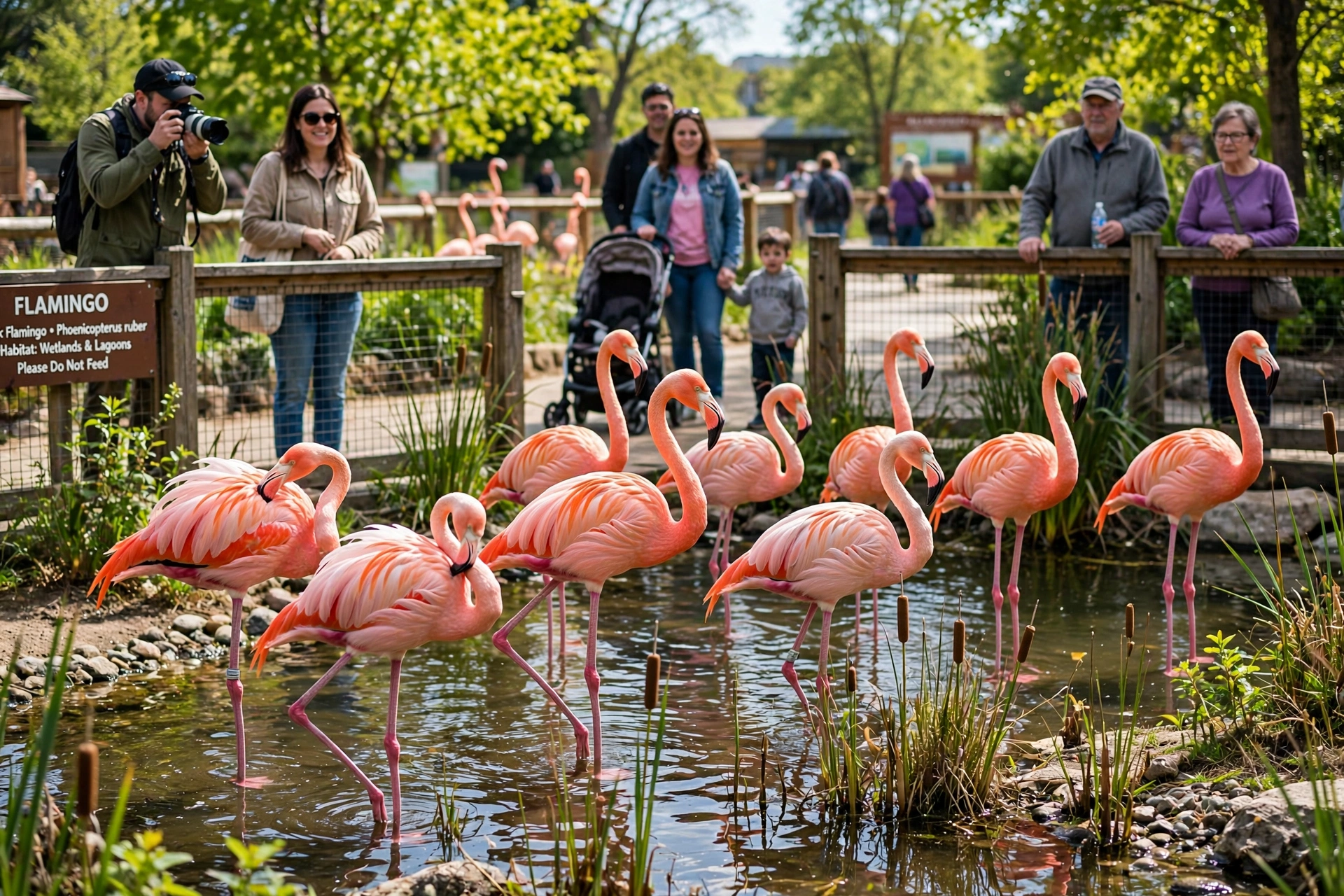
Stand in front of a flamingo enclosure at any zoo and look up. There is no roof. No net. Nothing stopping those big pink birds from spreading their wings and flying off into the sky. Flamingos are strong fliers in the wild, traveling hundreds of miles between feeding grounds. So why do they stay?
The answer is a mix of physical limitation and simple contentment. Most zoo flamingos have had a procedure done that makes flying impossible or very difficult. And even the ones that could technically fly often choose not to, because the zoo gives them everything they need: food, safety, and company.
It is a question that bothers a lot of visitors, and it touches on bigger questions about how zoos care for wild animals. Let us look at the real reasons, the methods zoos use, and what the science says about whether flamingos mind.
Before we talk about zoos, it helps to know what flamingos can do naturally. Wild flamingos are excellent fliers. They have to be. Their feeding grounds, shallow salty lakes and lagoons, are scattered across huge distances. A flamingo might need to fly hundreds of miles to find water with enough food.
When flamingos fly, they stretch their long necks straight out in front and their long legs straight out behind. They look like pink arrows cutting through the sky. Their wingspan can reach five feet across, and they flap in steady, powerful beats.
Flamingos usually fly at night, when the air is cooler and predators are less active. They travel in flocks, sometimes numbering in the thousands, and they can cruise at speeds around 35 miles per hour. Some populations migrate seasonally, following the rains that fill their shallow feeding lakes.
So yes, a healthy wild flamingo is a serious flying machine. The birds you see calmly standing in a zoo pond are the same species that crosses deserts and mountains in the dark. That is what makes the open zoo enclosure so puzzling at first glance.
The main reason most zoo flamingos cannot fly away is a procedure called pinioning. Pinioning is done when a flamingo chick is only a few days old. A veterinarian removes the tip of one wing, specifically the section that would grow the longest flight feathers. Without those feathers on one side, the bird cannot get enough lift to take off.
This is a permanent change. Once pinioned, a flamingo will never fly again. The procedure is done under veterinary care, and zoos that do it say it causes the chick minimal pain, similar to a quick medical procedure. The wound heals in days, and the bird grows up never knowing flight.
Pinioning is common in zoos around the world, not just for flamingos but for many large water birds: pelicans, cranes, storks, and swans are often pinioned too. For birds that would be stressed or injured by life in a covered aviary, pinioning allows them to live in open ponds that feel more natural.
Yes, very. Animal welfare groups have long argued that pinioning is cruel because it permanently takes away a natural behavior. Flying is not just transportation for birds. It is exercise, escape from danger, and a core part of how birds experience the world. Critics say no amount of pond space makes up for the loss of flight.
Zoos respond that pinioned birds live long, healthy lives and show no signs of distress about not flying. They point out that wild flamingos spend most of their time on the ground anyway, wading and feeding. Flight is mainly for traveling between sites, and zoo flamingos never need to travel because food comes to them.
Some countries have restricted or banned pinioning. In the United Kingdom, for example, zoos need special permission, and many have moved toward keeping flamingos in large netted aviaries instead. The debate continues, and practices are slowly changing in some parts of the world.
Some zoos use a different method called wing clipping. Instead of permanently altering the wing, keepers regularly trim the long flight feathers on one wing. This is like giving the bird a haircut. The feathers grow back during the next molt, so the clipping must be repeated, usually once or twice a year.
Clipping is less invasive than pinioning because nothing is permanently removed. If a zoo decided to stop clipping a flamingo, the bird would eventually regrow its feathers and be able to fly again. Many smaller zoos and private collections prefer clipping for this reason.
The downside is that clipping needs to be done regularly, which means catching and handling the birds. Flamingos are nervous animals, and being caught is stressful for them. Pinioned birds never need to go through that repeated handling.
Pinioning remains more common in large zoos, especially for flocks that have been there for many years. Once a bird is pinioned, the zoo never has to think about flight again. Clipping is more common in smaller facilities and in countries where pinioning faces legal restrictions.
Both methods achieve the same result: the flamingo stays on the ground. Neither method affects the bird’s ability to walk, swim, feed, or socialize. Flamingos do all of those things far more than they fly, even in the wild.
Here is something interesting: some zoos keep fully flighted flamingos in open enclosures, and the birds still do not leave. This happens because flamingos are deeply social and surprisingly home-loving once their needs are met.
A zoo flamingo gets regular meals of nutritious food without having to search. It faces no predators. It lives in a large flock, and flamingos are flock animals to their core. A lone flamingo that flew away would be leaving its entire social world behind. For a bird wired to stay with the group, that is a powerful reason to stay put.
There are stories of zoo flamingos that escaped during storms or through keeper error and then came back on their own, or were found waiting nearby. The famous case of a flamingo that escaped a Kansas zoo in 2005 and lived wild in Texas and Louisiana for years is the exception, not the rule. Most stay because they have no reason to go.
Flamingos raised in zoos from chicks often imprint on their home. They learn where food appears, where the safe resting spots are, and who their flock mates are. The zoo becomes their entire known world. Even if their wings worked perfectly, many would not think to leave.
This is similar to how cats form deep attachments to familiar places. Animals of many kinds prefer the safety of the known over the risk of the unknown.
| Method | Permanent? | How It Works | Pros | Cons |
|---|---|---|---|---|
| Pinioning | Yes | Wingtip removed as a chick | No repeated handling; bird never knows flight | Permanent; controversial |
| Wing clipping | No | Flight feathers trimmed regularly | Reversible; less invasive | Needs repeat handling; stressful |
| Netted aviary | N/A | Birds kept fully flighted under nets | Most natural; no procedure | Expensive; less open viewing |
| Open enclosure, flighted | N/A | No procedure; birds choose to stay | Most ethical | Risk of escape; rare in practice |
This is the heart of the debate, and scientists have tried to answer it with data. Studies of zoo flamingo behavior look at signs of stress: feather plucking, aggression, repetitive pacing, and breeding success. Healthy, content flamingos breed readily in captivity. Stressed ones do not.
The results are mixed but generally reassuring for large, well-designed flocks. Pinioned flamingos in big open ponds with proper flock sizes, good food, and clean water breed successfully, sometimes in large numbers. They perform natural behaviors: courtship dances, nest building, chick rearing, and synchronized feeding.
However, researchers also note that we cannot ask a flamingo how it feels about never flying. The absence of obvious stress signs is not proof of contentment. This is why the ethical debate continues even as the science shows pinioned flamingos can live healthy lives.
Welfare experts agree on what matters most for captive flamingos, regardless of flight status. The flock should be large, ideally dozens of birds, because flamingos are intensely social. The pond should be shallow with the right kind of muddy bottom for filter feeding. The diet must include the pigments that keep them pink.
Zoos that get these basics right tend to have calm, breeding flocks. Zoos that keep small groups in bare concrete pools tend to have problems, whether the birds are pinioned or not. Flight, it turns out, is only one piece of a much bigger welfare picture.
In recent years, more zoos have started building large netted aviaries for flamingos instead of pinioning. These aviaries can be enormous, covering acres, with the netting high enough that visitors barely notice it. Inside, flamingos can fly short distances, which is closer to natural behavior.
These aviaries are expensive to build and maintain, which is why the change is slow. But the trend is clear, especially in Europe. As public attitudes shift, more zoos are likely to follow.
If this issue matters to you, the best thing to do is ask questions. When you visit a zoo, ask the keepers how the flamingos are managed. Good zoos are happy to explain their practices and the reasoning behind them. Your interest encourages transparency and better welfare standards.
You can also support zoos that invest in large naturalistic habitats. Admission fees fund the improvements. The flamingos standing calmly in that open pond are the visible result of decades of evolving care standards, and visitor engagement helps push those standards higher.
Most zoo flamingos physically cannot fly because they have been pinioned (the tip of one wing removed as chicks) or have their flight feathers clipped regularly. Even fully flighted zoo flamingos often stay because they are well-fed, safe from predators, and bonded to their flock.
Pinioning is a veterinary procedure done on chicks a few days old, where the tip of one wing is removed. This prevents the longest flight feathers from growing on that side, making flight permanently impossible. It is common in zoos for flamingos, pelicans, cranes, and other large water birds.
Zoos say the procedure, done by a veterinarian on very young chicks, causes minimal pain and heals within days. Animal welfare groups argue that permanently removing the ability to fly is harmful regardless of the procedure’s pain level, because flight is a core natural behavior.
No. Pinioning is permanent. Once the wingtip is removed, the flight feathers on that side can never grow. This is different from wing clipping, where trimmed feathers grow back and the procedure must be repeated.
Some do. Wing clipping trims the long flight feathers on one wing without permanently altering it. The feathers regrow during molting, so clipping must be repeated once or twice a year. It is less invasive but requires catching the birds regularly, which stresses them.
Yes. Some modern zoos keep flamingos in large netted aviaries where the birds remain fully flighted. These aviaries are expensive to build, so they are still uncommon, but the practice is growing, especially in Europe where pinioning faces more restrictions.
Yes. The most famous case is a flamingo that escaped a Kansas zoo in 2005 during a storm and lived wild in Texas and Louisiana for over a decade. It was eventually spotted in 2019. Such cases are rare; most escaped flamingos are quickly recovered or do not survive long.
Scientists cannot know for sure. Pinioned flamingos in good enclosures show normal behaviors including breeding, which suggests they are not in obvious distress. However, critics argue that the absence of stress signs does not prove the birds are fully content without flight, and the ethical debate continues.