Physical Address
4676 Railroad Street Marquette
MI 49855
Physical Address
4676 Railroad Street Marquette
MI 49855

Quick Answer: If the Bronze Age collapse never happened, the great kingdoms of 1200 BC — Egypt, the Hittites, Mycenae — might have continued developing for centuries. We could have seen earlier iron technology, preserved writing systems, unbroken trade networks, and possibly faster scientific progress. But rigid palace economies might also have stifled the innovations (like the alphabet and democracy) that the collapse accidentally enabled.
History is full of “what if” questions, but few are as fascinating as this one: what if the Bronze Age collapse never happened? What if the great kingdoms of 1200 BC — the Hittites, the Mycenaeans, the Egyptians — had simply continued, growing and developing without interruption?
It is a fun thought experiment. But it is also a serious way to understand how much the collapse changed human history. By imagining what we lost, we can better appreciate what actually happened.
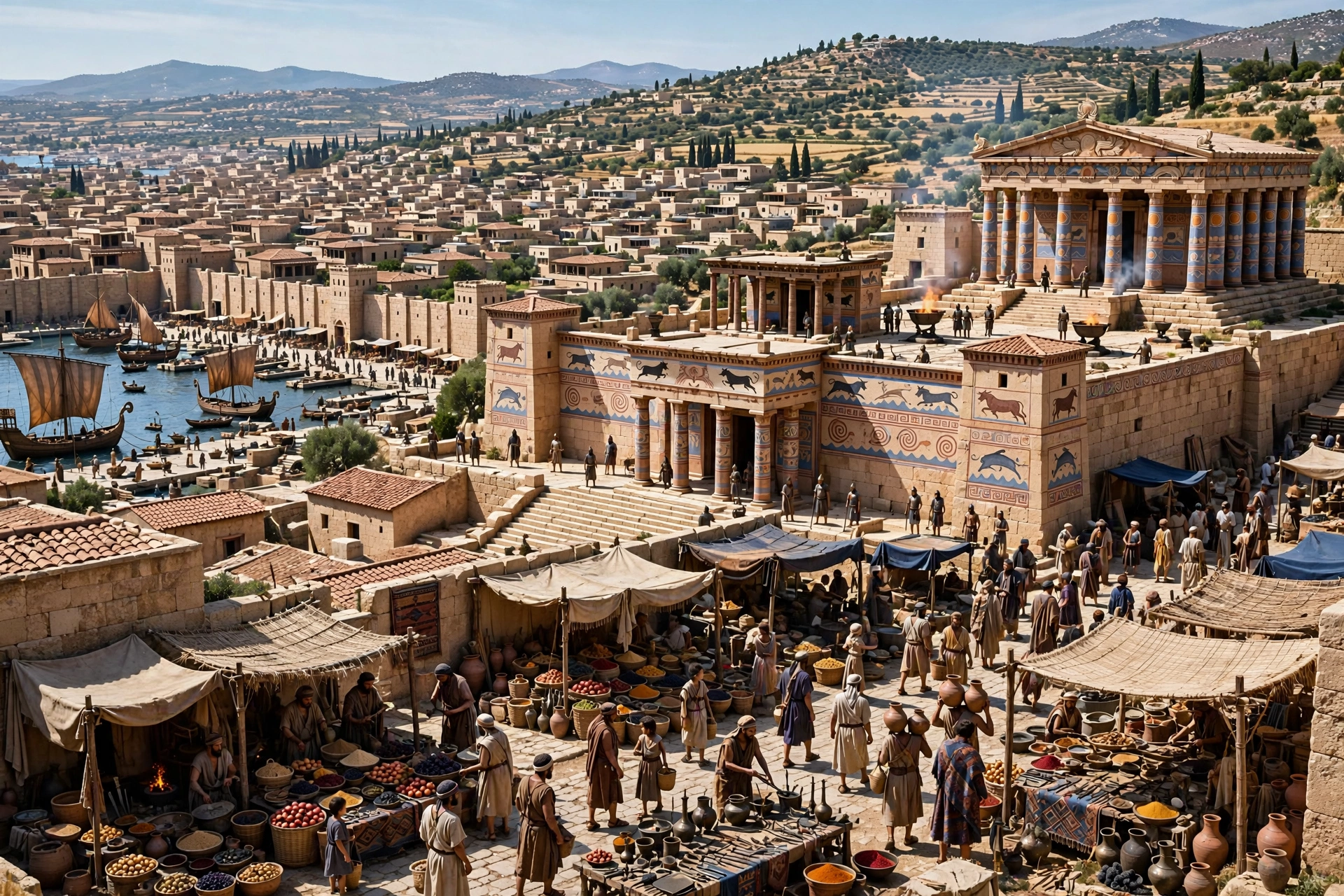
Before the collapse, the eastern Mediterranean had something remarkable: an international community. Kings wrote to each other as “brothers.” They exchanged gifts, arranged marriages, and negotiated treaties. The famous Amarna Letters — clay tablets from Egypt — show Pharaohs corresponding with kings of Babylon, Assyria, and the Hittites.
This was the world’s first diplomatic system. If it had continued, international relations might have developed centuries earlier than they did.
Bronze Age craftsmen were incredibly skilled. They made beautiful jewelry, sharp weapons, and detailed artwork. Egyptian doctors performed surgeries. Babylonian astronomers tracked the stars with impressive accuracy. Hittite engineers built massive fortifications.
Without the collapse, these traditions would have continued improving. Imagine 500 more years of unbroken technological development starting from 1200 BC.
Multiple writing systems were in use: Egyptian hieroglyphs, Mesopotamian cuneiform, Hittite scripts, and Mycenaean Linear B. Each was tied to palace administrations. If the palaces had survived, these scripts would have continued evolving.
We might never have gotten the alphabet — or gotten it much later. The simple Phoenician alphabet spread partly because the old complex systems died. In a world without collapse, writing might have remained the privilege of trained scribes for much longer.
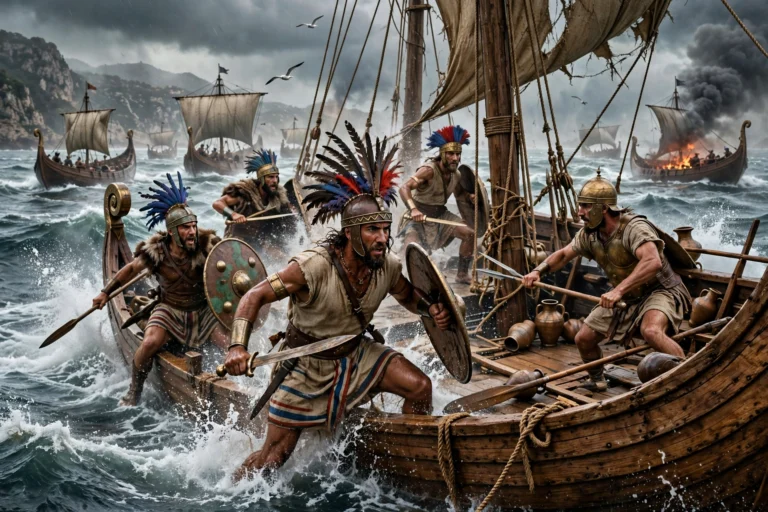
In this scenario, the Bronze Age kingdoms avoid disaster — perhaps the droughts are milder, or the Sea Peoples never migrate. Trade continues. Palaces stand.
Without the 300-year Dark Age, technological development continues unbroken. Ironworking — which was just beginning around 1200 BC — develops faster with palace workshops funding research. By 800 BC (when Greece was just relearning to write in real history), this alternate world might have:
Think of it this way: the collapse cost the Mediterranean world roughly 300 years of development. If we add 300 years to ancient progress, the classical civilization of Greece and Rome might have emerged around 1100 BC instead of 800 BC.
Following that logic, the Roman Empire might have peaked around 200 BC instead of 100 AD. And everything after — the Middle Ages, the Renaissance, the Industrial Revolution — could have happened centuries earlier.
Could humans have reached the moon by 1600 instead of 1969? It is impossible to say, but the thought is thrilling.
But there is a darker possibility. The Bronze Age palace systems were rigid and conservative. Kings controlled everything. Scribes recorded what the palace wanted. There was little room for new ideas that threatened the established order.
Without the collapse, these systems might have become even more entrenched. Innovation could have slowed, not accelerated. The palace economies might have grown bloated and corrupt, like later empires that lasted too long.
Some of history’s greatest innovations came BECAUSE of the collapse:
In this scenario, the world of 500 BC might look like a bigger, richer version of 1200 BC — but not necessarily a better or more advanced one.
Look at ancient China for a possible parallel. Chinese civilization maintained remarkable continuity for thousands of years, with centralized imperial government and a complex writing system. It produced extraordinary achievements — but some historians argue that its very stability slowed certain kinds of innovation compared to the competitive, fragmented world of ancient Greece.
A surviving Bronze Age might have been like this: stable, impressive, but conservative.
Some historians argue that the Bronze Age system was unsustainable. The palace economies were too rigid. The population was too dependent on fragile trade networks. Environmental pressures were building.
In this view, if the collapse had not happened in 1177 BC, it would have happened later — perhaps in 1100 or 1000 BC. The specific trigger (Sea Peoples, earthquakes, drought) mattered less than the underlying fragility.
If the kingdoms had grown even larger and more interconnected before falling, the eventual collapse could have been even more devastating. More people, more dependence on trade, further to fall.
Alternatively, a later collapse might have been milder if societies had developed more resilience in the meantime. We cannot know.
The real lesson of “what if” thinking is that the Bronze Age collapse was both a terrible tragedy and, accidentally, an opportunity. It destroyed lives, knowledge, and beauty on a massive scale. But it also cleared the way for new ideas that the old system would never have allowed.
We like to imagine history as steady progress — each century better than the last. The Bronze Age collapse reminds us that history moves in jumps, crashes, and unexpected turns. The 300-year Dark Age was a step backward that eventually enabled two steps forward.
The palace societies were impressive but fragile. The village societies that replaced them were poor but resilient. There is a trade-off between complexity and stability that every civilization must navigate — including ours.
| Aspect | Real History (Collapse Happened) | Scenario 1: Unbroken Progress | Scenario 2: Rigid Stagnation |
|---|---|---|---|
| Writing | Lost, then alphabet invented | Palace scripts continue | Complex scripts, low literacy |
| Government | City-states, then democracy | Great kings continue | Entrenched monarchies |
| Technology | 300-year setback, then iron age | Faster iron, earlier advances | Slow, palace-controlled |
| Trade | Collapsed, then rebuilt | Continues expanding | Continues but controlled |
| Culture | Homer, philosophy, science | Unknown — different path | Conservative traditions |
| Timeline to moon | 1969 | Possibly centuries earlier | Possibly later than 1969 |
Here is an uncomfortable thought: maybe the Bronze Age collapse, terrible as it was, was necessary for the world we know. Without it, there might be no alphabet, no democracy, no philosophy, no science as we understand them.
The classical Greek civilization that gave us so much — logic, theater, medicine, mathematics — grew from the ruins. It was a product of the Iron Age’s fragmented, competitive, questioning culture. That culture existed because the old order fell.
We should not romanticize disaster. The collapse meant starvation, violence, and the loss of irreplaceable knowledge. Countless people suffered and died. Beautiful things were destroyed forever.
Saying the collapse “led to good things” does not mean it was good. It means humans are resilient enough to build something new from ruins — a testament to us, not to the disaster.
A period around 1177 BC when major civilizations (Mycenaeans, Hittites, and others) fell within decades. Cities burned, trade stopped, and writing disappeared in some regions. Learn more about what happened after the collapse.
In Greece, about 300 years (roughly 1100 to 800 BC). Other regions recovered faster or slower.
It is impossible to know. The thought experiment suggests 300 years of lost progress, but history does not work like simple math. Different paths lead to different discoveries, not just faster versions of the same ones.
No — mainly the eastern Mediterranean and Middle East. Egypt survived (weakened), and several civilizations endured. China, India, and the Americas were on separate historical tracks.
Arguably the writing systems. When Linear B and other scripts were forgotten, centuries of records, knowledge, and literature vanished. The loss of literacy set back administration, science, and culture enormously.
Possibly, but there is little evidence they were trying. Palace economies were conservative by nature. Real reform might have required the kind of crisis that the collapse provided — though at a terrible price.
As a thought experiment, yes — it helps us understand causation and contingency. But historians are careful not to present speculation as fact. The value is in the questions, not definitive answers.
That complex societies are fragile, that recovery is possible but slow, and that destruction sometimes accidentally enables innovations the old order would never have allowed. It is a reminder to value both stability and adaptability.
Related: How Sea Peoples Toppled Empires