Physical Address
4676 Railroad Street Marquette
MI 49855
Physical Address
4676 Railroad Street Marquette
MI 49855

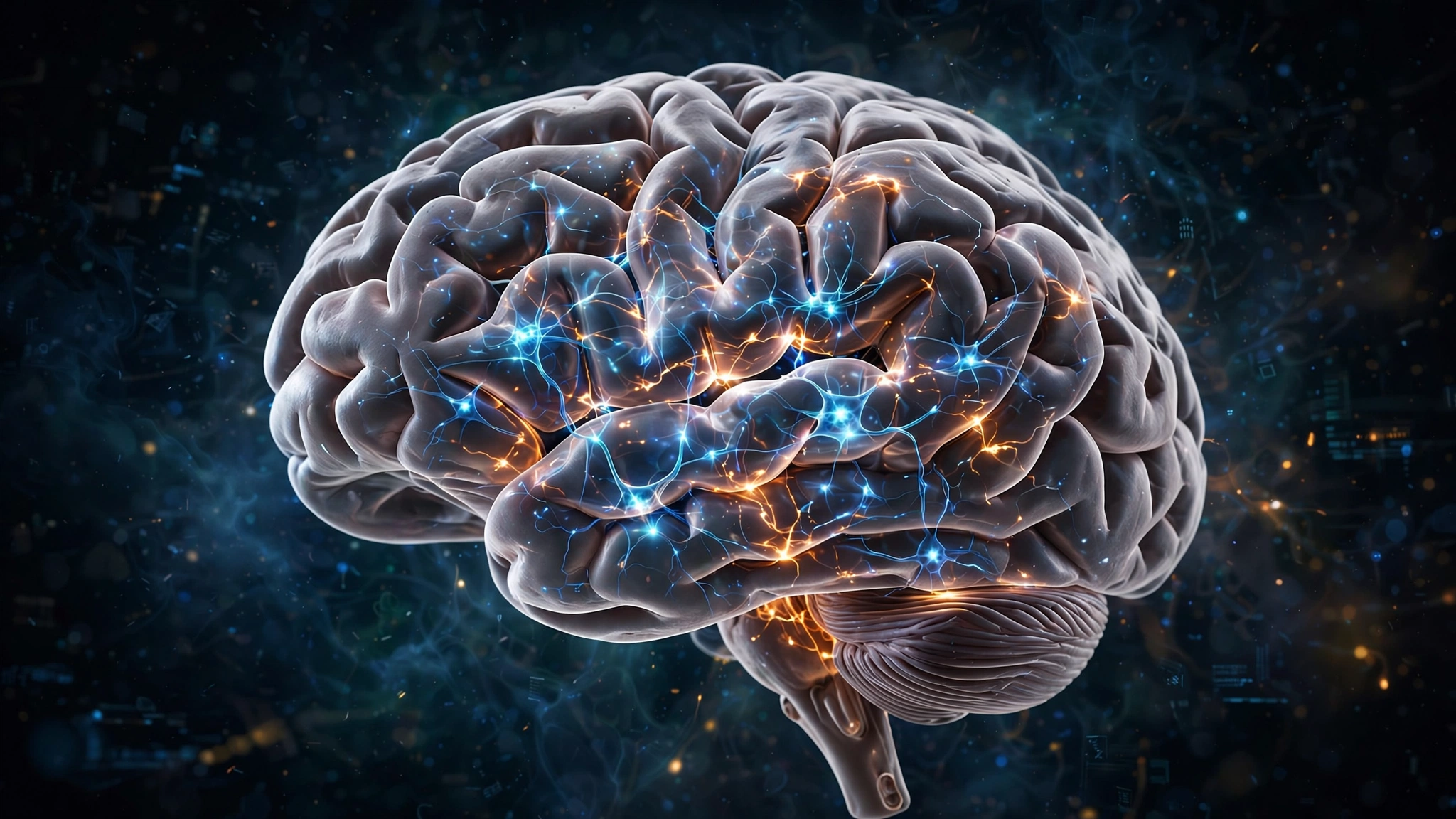
When your heart stops, you might assume everything shuts down at once. It does not. Your brain fights on for a few precious minutes, and what happens during that window is both fascinating and frightening.
Doctors often talk about a rough window of about four to six minutes. That is how long brain cells can survive without fresh oxygen before damage becomes severe and permanent. After roughly ten minutes without oxygen, the damage is usually so widespread that recovery is not possible.
This is why every second counts during a cardiac arrest. CPR does not restart the heart. It manually pushes oxygenated blood to the brain, buying those cells time. Each minute without CPR lowers the chance of survival by about seven to ten percent. Your brain is literally racing a clock you cannot see.
Here is something that unsettles many people. A person can be declared brain dead while machines keep their heart beating and their chest rising and falling. They look alive. Warm skin. A pulse. But the brain, the part that makes them who they are, has stopped working forever and will never restart.
Hospitals use strict tests to confirm brain death, including checking for any response to pain and any attempt to breathe on their own. It is one of the strangest lines in medicine: the body can continue, but the person is gone. For more unsettling true stories, read about the Somerton Man, whose death remains unexplained decades later.
Your brain is an energy hog. It makes up only about two percent of your body weight, yet it burns roughly twenty percent of the calories you consume each day. When food runs out, the brain does something drastic to keep itself alive.
During starvation, brain cells begin a process called autophagy, which literally means “self-eating.” Cells break down their own damaged parts and recycle them for energy. In small doses this is healthy housekeeping. But during extreme hunger, the brain starts consuming more of itself just to keep the lights on.
Animal studies have shown that after about a day without food, neurons begin breaking down their own structures at an increased rate. The brain is essentially sacrificing pieces of itself to protect its most critical functions.
Long-term malnutrition can actually shrink the brain. Brain scans of people who suffered severe starvation show measurable loss of brain tissue, especially in areas linked to memory and decision-making. Some of this damage can reverse with proper nutrition, but not all of it.
Your brain will also raid the rest of your body first. It triggers the release of stress hormones that break down muscle for fuel. The brain is the last organ the body lets fail, and it will cannibalize everything else to buy time.
If a surgeon touched your exposed brain with a finger, you would feel nothing. Not because of anesthesia, but because the brain itself has no pain receptors.
This strange fact makes awake brain surgery possible. Surgeons sometimes keep patients conscious during operations to remove tumors near areas that control speech or movement. The scalp and skull are numbed, the brain is exposed, and the patient stays awake, talking or counting, while the surgeon works directly on brain tissue.
Patients report feeling no pain from the brain being touched or cut. The pain they feel comes from the skin, muscle, and the membranes surrounding the brain, all of which are numbed beforehand.
That pounding headache is not your brain hurting. It cannot hurt. The pain comes from the blood vessels, muscles, and nerves in your head and neck. Migraines, for example, involve blood vessels and nerve pathways around the brain, not the brain tissue itself. Your brain is silently sitting inside the storm, feeling none of it directly.
Your memories feel like video recordings. They are not. They are reconstructions, and your brain edits them without asking permission.
Scientists can plant false memories in people with surprising ease. In famous experiments, researchers convinced ordinary adults that they had been lost in a shopping mall as children, complete with vivid details. About one in four participants “remembered” the event, describing details with confidence, even though it never happened.
Your brain fills gaps with plausible guesses and then presents the result as fact. Eyewitness testimony, once considered the gold standard in courtrooms, is now known to be unreliable for exactly this reason.
Each of your eyes has a blind spot where the optic nerve leaves the retina. There is a hole in your vision right now, and you cannot see it, because your brain paints over it with invented imagery based on the surroundings.
You can prove this with a simple test. Close one eye, hold your thumb up at arm’s length, and slowly move it sideways while staring straight ahead. At some point your thumb will vanish. Your brain simply decided it was not important and filled in the background. If your brain lies about something this basic, imagine what else it invents.
What happens in the brain in the final moments of life is one of the eeriest areas of neuroscience.
Studies on dying patients have recorded a surge of brain activity in the moments around death. In some cases, brain waves associated with memory recall and conscious processing spike just before and even briefly after the heart stops.
Some researchers think this surge could explain near-death experiences: the tunnel of light, the life review, the feeling of peace. It might be the brain’s final burst of activity, replaying memories as its systems shut down one by one.
Death is not a switch. It is a slow dimming. Different brain regions fail at different speeds. The outer layers responsible for complex thought tend to go quiet first, while deeper, older structures that control basic functions hold on longer. For a brief window, parts of the brain may still be active while the person appears completely gone.
The scariest facts about the brain are not about the brain itself, but about the things that can invade it.
Naegleria fowleri is a microscopic organism found in warm freshwater lakes and rivers. If water containing it goes up your nose, it can travel along the olfactory nerve directly into the brain. Once there, it destroys brain tissue, causing a condition that is fatal in over ninety-seven percent of cases.
Symptoms start like a bad headache and fever, then escalate within days to confusion, seizures, and coma. There is no reliable cure. The only real defense is keeping your head above water in warm freshwater, or using nose clips.
Toxoplasma gondii is a parasite that infects roughly one in three people worldwide, usually from undercooked meat or cat litter. It forms cysts in the brain that last for life. Most infected people never notice, but studies have linked the infection to subtle changes in behavior, slower reaction times, and increased risk-taking.
In rats, the parasite does something even more dramatic: it rewires their brains to lose their fear of cats, making them easier prey, which helps the parasite complete its life cycle. The idea that a microscopic organism can edit behavior from inside the brain is deeply unsettling.
| Common Belief | The Scary Truth |
|---|---|
| We only use 10% of our brains | False. Brain scans show nearly all of the brain is active across a day, even during sleep. |
| Brain cells never regrow | Mostly false. The hippocampus grows new neurons throughout life, though far slower than we lose them with age. |
| Bigger brains mean smarter people | Not exactly. Brain structure and connections matter far more than raw size. |
| The brain stops changing in adulthood | False. The brain rewires itself constantly, but it also becomes more vulnerable to damage over time. |
| Alcohol kills brain cells | Misleading. Heavy drinking damages the connections between cells and shrinks brain tissue, which can be worse. |
No. The brain tissue itself contains no pain receptors. Headaches and migraines come from blood vessels, muscles, nerves, and membranes surrounding the brain, not from the brain itself.
About four to six minutes before severe damage begins. After roughly ten minutes without oxygen, brain damage is usually permanent and widespread.
During starvation, brain cells increase autophagy, breaking down their own damaged components for energy. Severe malnutrition can cause measurable brain shrinkage, some of which may not fully reverse.
Yes. Studies show that about one in four people can be convinced they remember events that never happened. The brain reconstructs memories rather than replaying them, and it fills gaps with plausible inventions.
Naegleria fowleri is a microscopic organism in warm freshwater that can travel up the nose into the brain, destroying tissue. It is fatal in over 97 percent of cases, though infections are extremely rare.
Research has recorded surges of electrical activity in the brain around the time of death, including waves linked to memory. Different brain regions shut down at different speeds rather than all at once.
Toxoplasma gondii forms lifelong cysts in the brains of about one-third of people worldwide. It is linked to subtle behavior changes in humans and dramatically rewires rat brains to lose fear of cats.
No, this is a myth. Brain imaging shows that nearly all regions of the brain are active over the course of a day. Even simple tasks engage multiple brain areas at once.
*If you enjoy dark and mysterious topics, explore the most haunted places in the world or the chilling story of the Dyatlov Pass incident, where nine hikers died under impossible circumstances.*
Related: Creepy Facts About Mirrors
Related: Why Avoid Mirrors At 3Am