Physical Address
4676 Railroad Street Marquette
MI 49855
Physical Address
4676 Railroad Street Marquette
MI 49855

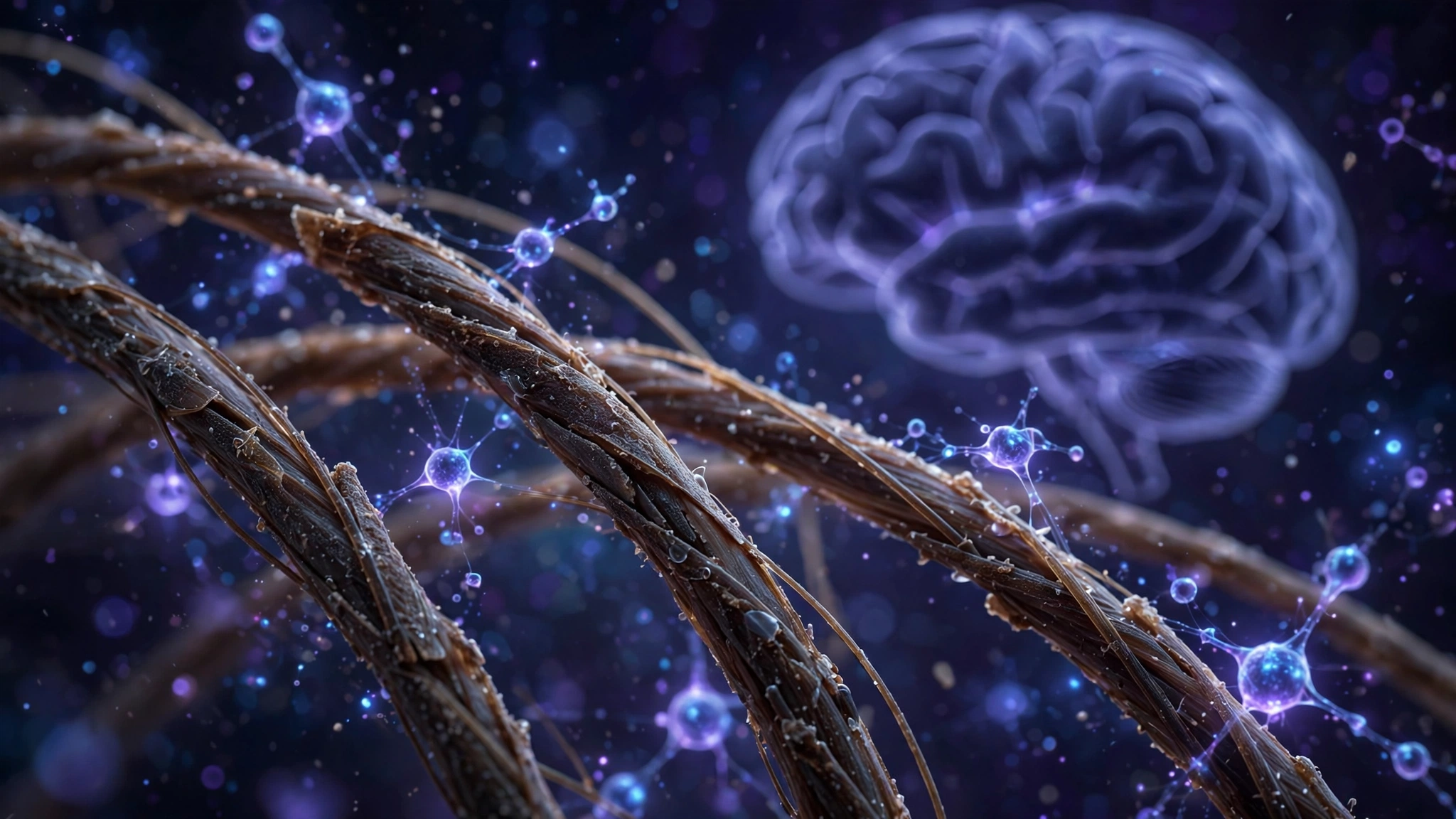
It’s a poetic idea: that your hair holds your memories — every summer, every heartbreak, every late night — woven into the strands. The notion pops up in folklore, alternative medicine, and spiritual traditions around the world. Some people even claim cutting their hair helped them “let go” of bad memories.
But what does science actually say? Let’s separate the myth from the genuinely fascinating truth — because while hair can’t remember your first kiss, it *can* snitch on what you ate, what drugs you took, and how stressed you were, months after the fact.
To understand why hair can’t hold memories, you need to know where memories live. Memories are stored in the brain — in networks of neurons (brain cells) connected by junctions called synapses. When you form a memory, specific patterns of neurons fire together, and the connections between them physically strengthen. This is often summarized as “neurons that fire together, wire together.”
Key structures involved include the hippocampus (which helps form new memories) and the cerebral cortex (where long-term memories are distributed). This entire system depends on living, electrically active brain tissue.
Here’s the critical fact: the visible part of your hair — the shaft — is dead. Hair is made of a protein called keratin, and by the time a strand emerges from your scalp, its cells have died and hardened. Dead keratin cannot fire electrical signals, cannot form synapses, and cannot encode information the way neurons do.
It’s like asking whether your fingernails remember things. They’re made of the same keratin. They don’t.
For hair to store memories, there would need to be some biological mechanism — some way for experiences to be written into keratin and later read back. No such mechanism exists, and no peer-reviewed study has ever demonstrated memory storage in hair. The idea fails the most basic test of science: there’s no plausible *how*.
Across cultures, hair carries deep symbolic meaning. Samson’s strength was in his hair. Buddhist monks shave their heads to renounce worldly attachment. Many people describe a dramatic haircut after a breakup as “shedding the past.” These are powerful *psychological* experiences — but they’re about what hair symbolizes, not what it contains.
If you’ve ever felt lighter after cutting your hair during a hard time, that’s real — it’s just not the hair releasing stored memories. Psychologists would explain it as a ritual of change: a visible, physical act that marks a psychological transition. The relief comes from the *decision* and the *symbolism*, the same way burning old letters can feel cathartic even though the paper held no actual emotions.
Part of the myth’s staying power is that hair genuinely *does* preserve a record of your life — just not your memories. When people hear that scientists can “read your history from your hair,” it’s easy to leap from “history” to “memories.” The truth is stranger and, in some ways, more impressive.
This is the most famous application. As hair grows (about 1 centimeter per month), chemicals circulating in your blood — including drugs and their metabolites — get incorporated into the growing hair shaft. Once locked in, they stay there.
That’s why hair follicle drug tests can detect substance use going back roughly 90 days (based on a 1.5-inch sample), far longer than urine tests. Employers, courts, and sports organizations use this method precisely because hair is such a reliable long-term record.
Scientists analyze the isotopes in hair — variants of elements like carbon, nitrogen, and hydrogen — to reconstruct diet and even geographic movements. Different foods and different regions’ water leave distinct isotopic signatures.
Archaeologists have used this on ancient mummies to determine what people ate centuries ago. In one famous application, researchers analyzed hair to track where unidentified individuals had lived based on the isotopic fingerprint of local water supplies.
Your hair also records stress. The hormone cortisol — released during stressful periods — accumulates in growing hair. Researchers can measure cortisol along a strand to create a month-by-month timeline of someone’s stress levels. This has been used in studies of everything from new parents to refugees.
Hair analysis has solved crimes and historical mysteries. Heavy metals like arsenic, lead, and mercury accumulate in hair, creating a permanent record of exposure. Hair samples from historical figures — including Napoleon Bonaparte — have been analyzed for arsenic, though the results and their interpretation remain debated among historians and scientists.
Emerging research explores whether hair can reveal markers of certain diseases or nutritional deficiencies. While this field is still developing, the principle is established: your hair is a timeline of your body’s chemistry.
| Feature | Memories | Hair Record |
|---|---|---|
| Where stored | Brain (neurons, synapses) | Hair shaft (keratin) |
| What’s recorded | Experiences, facts, skills, emotions | Chemicals: drugs, hormones, isotopes, toxins |
| How long it lasts | Can last a lifetime (or fade) | As long as the hair exists |
| Can you “read” it? | Through recall and brain imaging | Through chemical analysis in a lab |
| Is the tissue alive? | Yes — active neural networks | No — dead keratin |
| Can cutting it erase it? | No | The record goes with the hair |
There’s a real scientific concept that sounds a little like hair memory: epigenetics. Your experiences — stress, diet, trauma — can cause chemical changes to how your genes are expressed, and some of these changes can even be passed to offspring. But this happens in living cells with DNA, not in dead hair shafts. And it’s not memory in any meaningful sense — it’s gene regulation.
It’s worth noting that the hair *follicle* — the root beneath the skin — is living tissue with stem cells, blood supply, and nerve connections. But a follicle is not a neuron. It has no capacity to encode experiences as memories. Being alive is necessary for memory, but not sufficient — you need the specific architecture of a nervous system.
The idea that hair holds memories is a myth — but it’s a myth wrapped around a genuine scientific marvel. Your hair can’t remember your wedding day, but a forensic chemist could tell from it what medications you took that month, whether you were stressed, and what region’s water you drank.
In a way, the truth is better than the myth. Hair doesn’t store your *experiences* — it stores your *exposure*. It’s not a diary of your mind; it’s a diary of your body. And that diary is written in chemistry, readable by science, and far more reliable than memory itself.
Hair analysis isn’t just a neat party trick — it has real-world consequences. In courtrooms, hair evidence has helped convict the guilty and exonerate the innocent. In archaeology, it has rewritten our understanding of ancient diets, trade routes, and health. In medicine, researchers are exploring whether hair cortisol patterns could serve as early warning signs for chronic stress-related illness. The strand of hair you brush off your shoulder every morning is, to a scientist, a tiny time capsule — not of what you *remember*, but of what your body *endured*.
No. There is no scientific evidence that hair stores memories, and no biological mechanism by which dead keratin could encode them. Memories are stored in the brain’s neural networks.
Cutting hair cannot remove memories, since memories live in the brain, not in hair. However, many people find haircuts psychologically cathartic as a ritual marking a fresh start — the benefit is symbolic, not biological.
Hair tests can detect drug use (up to ~90 days), heavy metal exposure, cortisol/stress levels, nutritional patterns, and geographic origin through isotope analysis. They cannot detect memories, thoughts, or emotions.
Standard drug tests use a 1.5-inch sample covering ~90 days (hair grows ~0.5 inches/month). Longer hair preserves a longer timeline — archaeologists have analyzed centuries-old hair from mummies.
Hair samples attributed to Napoleon have tested positive for arsenic, but historians debate whether this proves poisoning — arsenic was common in 19th-century wallpaper, medicines, and hair products. The results are inconclusive.
Yes. Cortisol, the stress hormone, accumulates in growing hair. Researchers measure it along the strand to reconstruct stress timelines month by month.
The visible hair shaft is dead tissue made of keratin. Only the follicle beneath the skin is alive. This is why cutting hair doesn’t hurt — there are no living cells or nerves in the shaft.
The belief comes from hair’s deep cultural symbolism (identity, transformation, letting go), the real catharsis of symbolic haircuts, and confusion with genuine hair analysis science — which reads chemistry, not memories.
*Fascinated by what the body records? Read how many ants are in a colony for more hidden-world science, or do sharks sleep to learn how another animal’s biology defies expectations. For the science of the sleeping mind, see why we dream.*