Physical Address
4676 Railroad Street Marquette
MI 49855
Physical Address
4676 Railroad Street Marquette
MI 49855

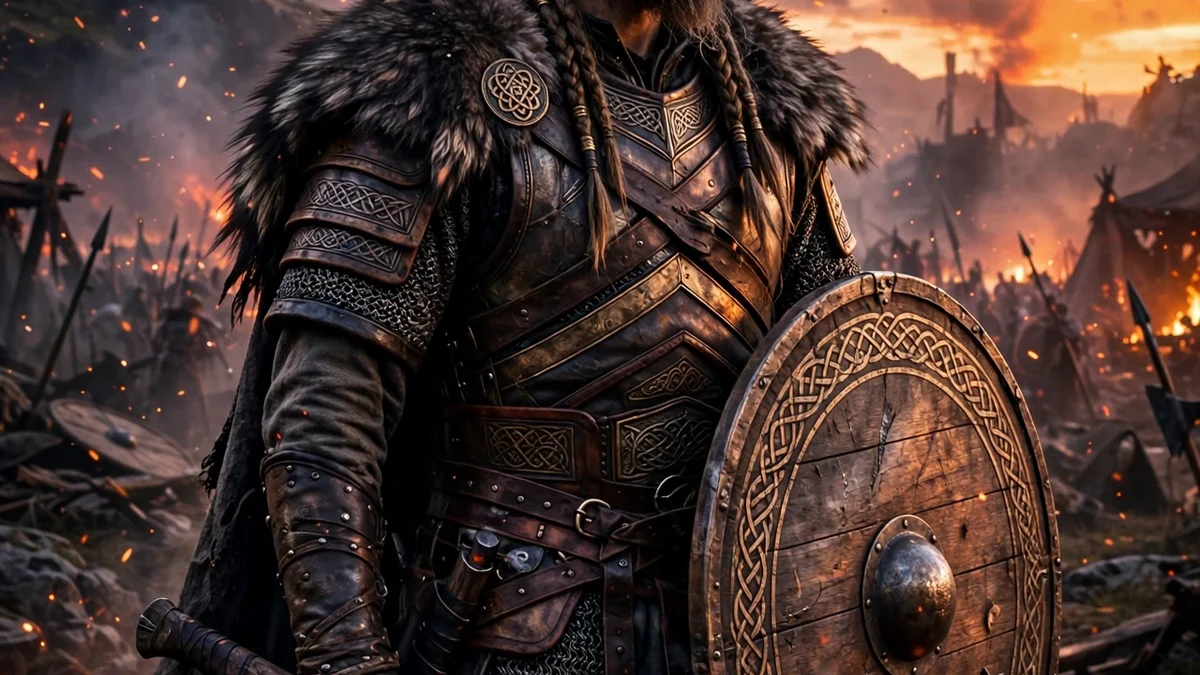
The Viking warrior code was an unwritten set of values governing Norse fighters: courage in battle, loyalty to one’s lord and comrades, honor above life itself, hospitality to guests, and keeping one’s word no matter the cost. Unlike the later medieval code of chivalry, the Viking code prized bold action over courtesy, and a glorious death in battle over a long peaceful life. These values come from Norse sagas, poems like Havamal, and the historical behavior of Viking warriors.
The Vikings never wrote down a “warrior code” the way medieval knights later wrote codes of chivalry. Their values were lived, not listed — passed down through stories, poems, and the example of great warriors. But across hundreds of sagas and poems, the same principles appear again and again, forming a clear ethical system.
Understanding this code means understanding what the Vikings admired, what they despised, and why they lived the way they did.
The single most important Viking value was courage — specifically, courage in the face of death. The Norse believed that how you died mattered more than how you lived. A warrior who died bravely in battle went to Valhalla, Odin’s great hall, to feast and fight until Ragnarok. A coward who died in bed went to Hel’s gloomy underworld.
This belief shaped everything. Vikings did not fear death; they feared a shameful death. Sagas are full of warriors who, when defeat is certain, throw away their shields and charge the enemy — because a glorious death beats a cowardly life.
The Havamal (“Sayings of the High One”), a poem of Odin’s wisdom, puts it directly: “Cattle die, kinsmen die, you yourself will die — but the reputation of a brave man never dies.” Your body is temporary. Your courage is eternal.
The core social unit of Viking warfare was the comitatus — a warlord and his sworn warriors. The lord provided weapons, armor, feasts, and treasure. In return, warriors gave absolute loyalty. This was not a casual arrangement; it was sacred.
A warrior who abandoned his lord in battle was the lowest of cowards. The sagas treat such betrayal as worse than death. In the poem “The Battle of Maldon” (about English warriors with Viking values), the fighters declare they will not leave their fallen lord — they would rather die beside him.
Loyalty extended to fellow warriors. You fought for the man beside you as much as for your lord. Deserting comrades, refusing to share danger, or claiming credit for another’s deed were deep shames. The war band was a brotherhood, and brotherhood meant shared risk.
Vikings swore oaths on sacred rings, on their swords, and in the names of gods. Breaking an oath was one of the worst crimes imaginable — it made you “nithing,” a person without honor, essentially dead to society.
The sagas show warriors keeping impossible promises at the cost of their lives, because breaking the oath would be worse than dying. Honor was not about feeling good; it was about being trustworthy when trust was hardest.
In Viking society, certain insults could not go unanswered. To call a man cowardly, to question his manhood, or to insult his family demanded either a retraction or a duel (holmgang). Ignoring such insults meant accepting them — and losing all honor.
This seems violent to us, but it made sense in a society without police or courts. Your reputation was your protection. If people believed you would not defend your honor, you became a target.
The Havamal devotes many verses to hospitality. The reason is practical and spiritual: in the harsh Norse world, travelers could die without shelter, and Odin himself was said to wander disguised as a beggar, testing people’s generosity.
A host was obligated to offer food, drink, a seat by the fire, and a place to sleep — even to strangers, even to enemies. Refusing hospitality was deeply shameful. Many saga conflicts begin when someone violates guest-law.
Guests had obligations too: to be respectful, not overstay, and not repay kindness with harm. The Havamal warns: “Do not mock a guest” — but also implies guests should know when to leave.
Viking leaders were expected to be generous — giving gifts, throwing feasts, and sharing treasure with their warriors. A stingy lord would lose followers quickly. The Havamal says: “A generous man is popular; wealth that is shared brings friends.”
This was not charity; it was politics. In a society without taxes or salaries, gift-giving was how leaders maintained loyalty. The best warriors followed the most generous lords.
Unlike some warrior cultures, the Vikings did not see trickery as dishonorable — if it served a worthy goal. Odin himself, the chief god, was a master of disguise and deception. Loki’s cleverness was admired even when his morals were not.
The distinction was this: using wit to win a battle was smart. Using wit to avoid a battle was cowardly. Cunning in service of courage was virtuous; cunning as a substitute for courage was shameful.
If someone killed your family member, you had a duty to take revenge — or to accept formal compensation (weregild, “man-price”). Ignoring a killing without either revenge or compensation was dishonorable. It signaled that your family could be harmed without consequence.
Viking revenge was not mindless violence. There were rules: you announced your intentions, you fought fairly, and you did not kill people who had sought sanctuary. The Icelandic sagas show elaborate legal proceedings around killings — revenge was justice, not murder.
The Havamal praises self-reliance relentlessly: “A man should be self-sufficient.” Vikings admired those who could survive alone, make their own way, and not beg for help. This value drove Viking exploration — sailing into unknown seas required supreme self-confidence.
But self-reliance did not mean isolation. It meant being a person others could rely on, not a burden. The ideal Viking was both independent and loyal — strong enough to stand alone, wise enough to stand together.
Archaeology and history confirm these values were real, not just stories:
The code was not perfect — Vikings could be brutal, treacherous, and cruel. But the ideals were real, and warriors genuinely tried to live by them.
People often compare the Viking code to medieval chivalry, but they differ sharply:
| Viking Code | Chivalry |
|—|—|
| Courage above all | Courtesy and mercy emphasized |
| Glorious death ideal | Protect the weak ideal |
| Cunning admired | Treachery condemned |
| Revenge is duty | Forgiveness is virtue |
| Gods are flawed like humans | God is perfect |
The Viking code is older, harsher, and more pragmatic. It was built for survival in a brutal world, not for courtly ideals.
The Viking code did not end at death — it shaped what warriors expected afterward. Those who died bravely in battle were believed to go to Valhalla, where they would feast, fight, and prepare for Ragnarok. This belief was not abstract comfort; it was a practical military doctrine.
A warrior who truly believed that cowardice meant a gloomy afterlife while bravery meant eternal glory would fight differently. The Viking code’s power came from this complete system: values in life, rewards in death, all reinforcing each other. It is one reason Viking armies were so feared — they genuinely did not fear dying.
Archaeology confirms this was lived belief, not just poetry. Warriors were buried with their weapons, sometimes with sacrificed horses or servants, positioned as if ready for battle. They expected to need their gear.
The code applied to shieldmaidens and warrior women as well. Norse women who chose the warrior’s path were judged by the same standards of courage, loyalty, and honor. The sagas show female warriors earning the same respect — or contempt, if they failed — as men.
This is notable because many warrior cultures had separate (usually lesser) expectations for women. The Vikings did not. A shieldmaiden who fought bravely earned a warrior’s honor; one who fled earned a coward’s shame. The code was about actions, not gender.
There was no single written document, but the sagas, poems (especially Havamal), and historical accounts reveal a consistent set of values: courage, loyalty, honor, hospitality, generosity, and revenge as justice. Scholars agree these formed a real ethical system.
Courage — specifically courage in facing death. The Norse believed a brave death led to Valhalla while cowardice led to shame. Everything else flowed from this: loyalty, honor, and reputation all required bravery.
Both prize courage, loyalty, and honorable death. But bushido emphasizes discipline, obedience, and aesthetic refinement, while the Viking code emphasizes bold individual action, generosity, and pragmatism. Vikings had no equivalent of seppuku’s ritual formality.
Shieldmaidens and warrior women like Lagertha lived by the same values of courage and honor. Norse women generally had more rights and independence than women in most contemporary cultures, and female warriors were respected, not exceptional curiosities.
An oath-breaker or coward became “nithing” — a person without honor. They could be outlawed, meaning anyone could kill them without penalty. In a society built on reputation, losing honor was social death.
Yes. The Havamal (“Sayings of the High One”) is a poem from the Poetic Edda, containing wisdom attributed to Odin. While written down in the 1200s, scholars believe much of it preserves much older oral tradition from the Viking Age.
Like any ethical system, it was an ideal more than a universal practice. Sagas are full of Vikings who break the code — oath-breakers, cowards, and traitors. The code mattered precisely because people sometimes failed to live up to it.
Christianity softened some values (revenge became less central, mercy more praised) but many Viking ideals — courage, loyalty, keeping one’s word — blended into Christian chivalry. The transition took centuries and was never complete.