Physical Address
4676 Railroad Street Marquette
MI 49855
Physical Address
4676 Railroad Street Marquette
MI 49855
Of all the strange stories in Norse mythology, few are stranger than this one: the king of the gods deliberately hung himself from a tree. He was not punished. No one forced him. He did it to himself, on purpose, because he wanted something that could not be bought, stolen, or given — the secret knowledge of the runes.
Odin was already the wisest of the gods. He had traded one of his eyes for a drink from the Well of Mimir. He collected knowledge the way other kings collect gold. But the runes — the magical alphabet that held the deepest secrets of the universe — were still beyond his reach. The runes did not reveal themselves to anyone who simply asked. They demanded a sacrifice.
So Odin made the ultimate sacrifice: himself, to himself. He offered himself to himself, hanging on the World Tree between life and death, until the runes finally showed themselves to him.
To understand why Odin did this, you need to understand what the runes were. The runes were the alphabet of the Germanic peoples — real letters carved into wood, stone, and metal. But in mythology, they were much more than writing. Each rune had magical power. Carved correctly and spoken correctly, runes could heal the sick, calm storms, win battles, make someone fall in love, or even bring the dead back to speak.
The runes were secrets of the universe itself — the hidden patterns behind how the world works. To know the runes was to have power over reality. That is why Odin wanted them so badly, and why they could not simply be taught. They had to be won through suffering.
The poems suggest the runes existed before Odin learned them — they were down in the depths below Yggdrasil, waiting for someone brave or desperate enough to reach for them. Odin did not invent the runes. He discovered them. There is an important difference: inventing is an act of creation, but discovering the runes was an act of courage. He had to go to the edge of death to find them.
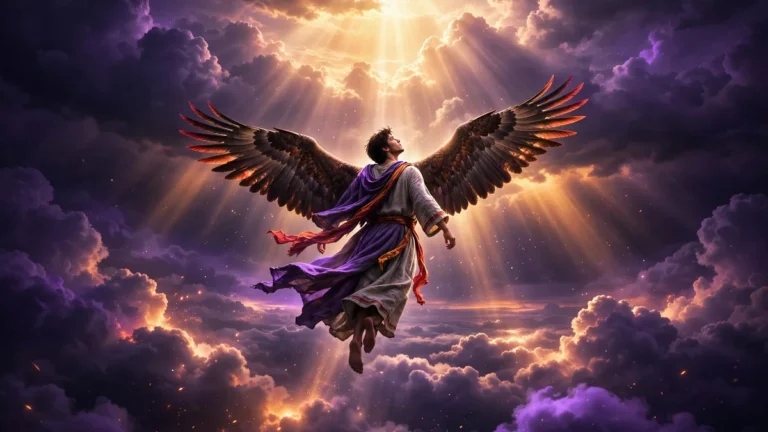
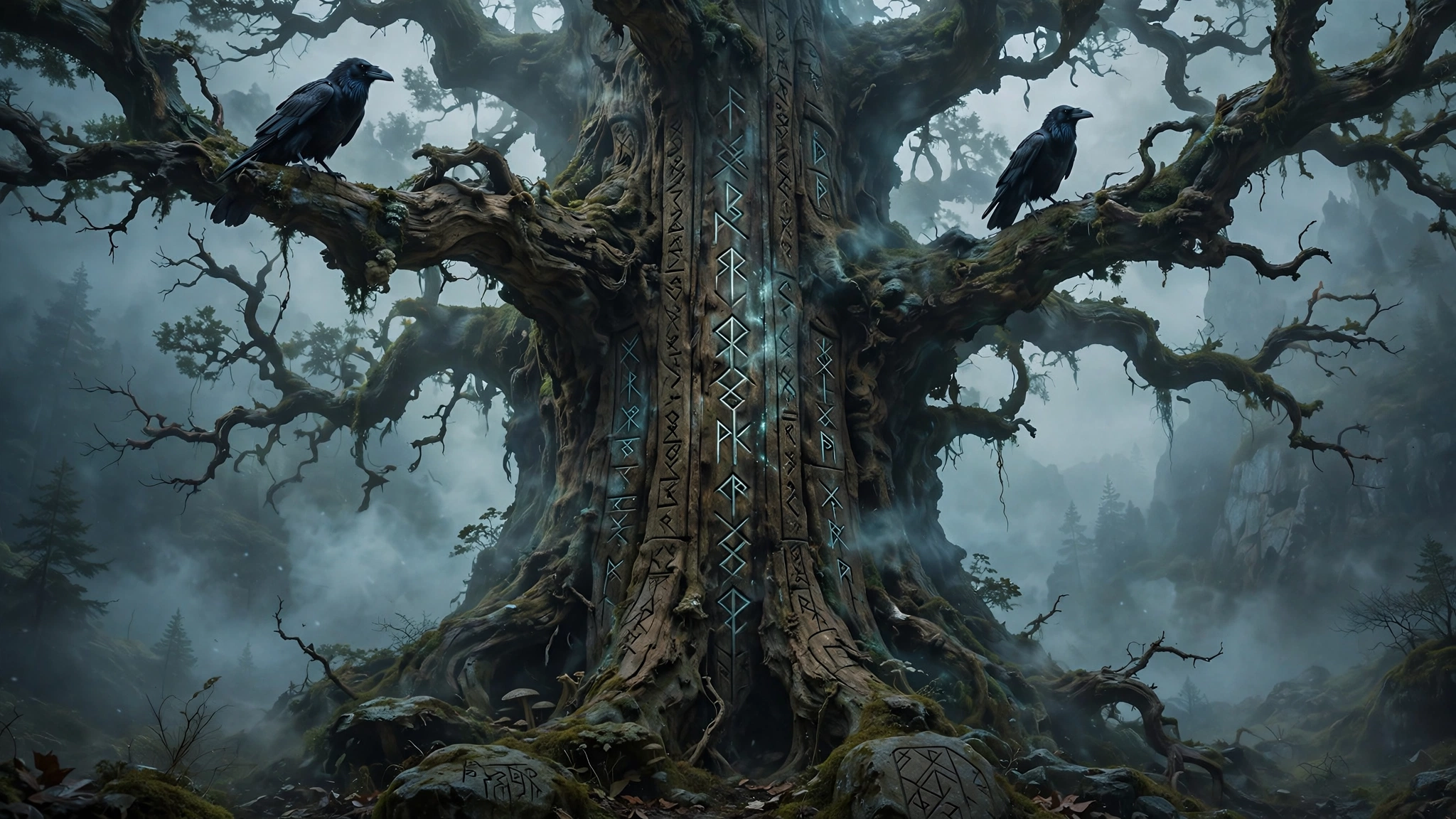
The story is told in the *Havamal*, a poem in the Poetic Edda* where Odin himself speaks. He describes what he did in his own words. First, he went to Yggdrasil, the World Tree. He chose a branch and put a noose around his neck. Then he took his spear — the famous spear Gungnir — and pierced his own side with it.
This was not a quick death. Odin did not want to die quickly. He wanted to hang in the space between life and death, suffering, for as long as it took. He gave himself to himself as a sacrifice — the sacrificer and the sacrificed were the same person, and the god receiving the sacrifice was also himself. It is one of the strangest religious ideas in any mythology.
For nine days and nine nights, Odin hung from Yggdrasil. He ate nothing. He drank nothing. No one helped him. No one even knew what he was doing — or if they did, they did not interfere. He hung there, wounded and starving, staring down into the dark depths below the tree.
The number nine is important in Norse mythology. There are Nine Worlds. Odin’s sacrifice lasted nine nights. His son Hermod rode for nine nights to reach the underworld. Nine was a sacred number — three times three, complete and powerful.
On the ninth night, something changed. Looking down into the depths, Odin finally saw them: the runes, glowing in the darkness below. With a scream of triumph and pain, he reached down and seized them. Then he fell from the tree.
He did not die. Instead, he was reborn — wiser, more powerful, and now master of runic magic. He had paid the price, and the universe had paid him back with its deepest secrets.
The Norse had a simple belief: nothing valuable comes for free. Odin had already learned this when he gave up his eye for wisdom at Mimir’s well. The runes were even more valuable than Mimir’s wisdom, so the price was even higher — his own suffering, his own life offered up.
This idea runs through all of Norse mythology. Thor must wear special gloves and a belt to handle his hammer. The gods must pay for everything they gain. Even at Ragnarok, the gods know they will die — and they fight anyway. The Norse admired courage and sacrifice more than comfort or safety.
There is another reason the sacrifice had to be hanging. In Norse belief, the space between life and death was where secret knowledge lived. The dead knew things the living did not. By hanging on the edge of death without fully dying, Odin could see what the dead see while still being alive to use the knowledge.
This is also why Odin is connected to the hanged and to gallows in other stories. He is the god of those who die by hanging, and he welcomes them. His own experience on the tree made him their patron.
Some scholars compare Odin’s hanging to the practices of shamans — spiritual leaders in many cultures who go into trances, suffer, or come close to death to gain visions and wisdom. The idea is the same: to learn the deepest truths, you must leave ordinary life behind for a while. Odin’s nine days on the tree are like a shaman’s vision quest, pushed to the absolute limit.
After his sacrifice, Odin knew all the runes and their magic. The *Havamal* lists eighteen magical songs or spells that Odin learned — charms for healing, for calming anger, for escaping chains, for winning love, for speaking with the dead. He became the greatest magician among the gods.
Remember that Yggdrasil means “Odin’s horse”? This name comes directly from the hanging. In old Norse poetry, a gallows was sometimes called a “horse” — the hanged man “rides” the gallows the way a rider rides a horse. Because Odin rode the tree during his sacrifice, the tree became known as his horse: Yggdrasil.
Odin’s sacrifice set an example. In the Viking Age, some warriors and leaders made sacrifices to Odin by hanging — sometimes hanging themselves, sometimes hanging animals or prisoners. These rituals were meant to honor Odin and win his favor. The god who sacrificed himself understood sacrifice better than anyone, and he rewarded those who followed his example.
| Story | Who Suffers | What They Gain | How Long |
|---|---|---|---|
| Odin on Yggdrasil | Odin himself | Wisdom of runes | Nine days/nights |
| Odin’s eye for Mimir | Odin (one eye) | Cosmic wisdom | Instant trade |
| Prometheus (Greek) | Prometheus | Fire for humans | Eternal punishment |
| Christ’s crucifixion | Jesus | Salvation for humanity | Three days |
The comparison with Prometheus is interesting. Both are stories about suffering to gain something precious. But Prometheus suffers to help humans, while Odin suffers to help himself. And unlike Prometheus, whose punishment never ends, Odin’s suffering has a purpose and an end — he gets what he came for.
Some scholars also see parallels with the story of Christ’s crucifixion, though the Norse story is older in its oral form. Both involve a divine figure pierced by a spear, hanging on wood, suffering for three or nine days, and then rising transformed. Whether one influenced the other is debated, but the similarities are striking.
Odin’s story is really about something we all understand: real knowledge is hard. Learning a skill, understanding a difficult idea, becoming wise — none of it comes easily. Odin’s nine days on the tree are an extreme version of the late nights, the failures, and the persistence that real learning requires.
Odin was the king of the gods, but he did not ask anyone else to suffer for his wisdom. He paid the price himself. In a way, the story says that true leaders do not send others to do the hard things — they do them first.
Odin stared into the depths below Yggdrasil — into darkness, death, and the unknown — and did not look away. The story suggests that wisdom comes not from avoiding dark things, but from facing them. You cannot understand the world if you only look at the pleasant parts.
For the full story of the tree itself, read our guide to what Yggdrasil is in Norse mythology. You might also enjoy the lost city of Atlantis and the true story of the Trojan Horse.
Yggdrasil means “Odin’s horse” because Odin “rode” the tree during his hanging, the way a rider rides a horse. In old Norse poetry, gallows were sometimes called horses.
Nine days and nine nights. Nine was a sacred number in Norse mythology — there are also Nine Worlds connected by the tree.
No. He came close to death — that was the point — but he survived. When he seized the runes on the ninth night, he fell from the tree transformed and wiser, not dead.
The runes were both an alphabet and a system of magic. Each rune had power — for healing, protection, love, victory in battle, and even speaking with the dead. Odin learned eighteen magical songs after his sacrifice.
There are striking parallels — a divine figure, pierced by a spear, hanging on wood, suffering for days, then rising transformed. Scholars debate whether one story influenced the other, but the Norse oral tradition is very old.
In Norse belief, the deepest knowledge could not be taught — it had to be earned through personal suffering. The runes revealed themselves only to someone willing to pay the ultimate price.
The Havamal (“Sayings of the High One”) is a poem in the *Poetic Edda* where Odin himself describes his sacrifice on Yggdrasil, along with wisdom about life, friendship, and magic.
Some did. Historical sources describe sacrifices to Odin by hanging — of animals, prisoners, and occasionally the sacrificers themselves. These rituals honored Odin and sought his favor, following his example.