Physical Address
4676 Railroad Street Marquette
MI 49855
Physical Address
4676 Railroad Street Marquette
MI 49855

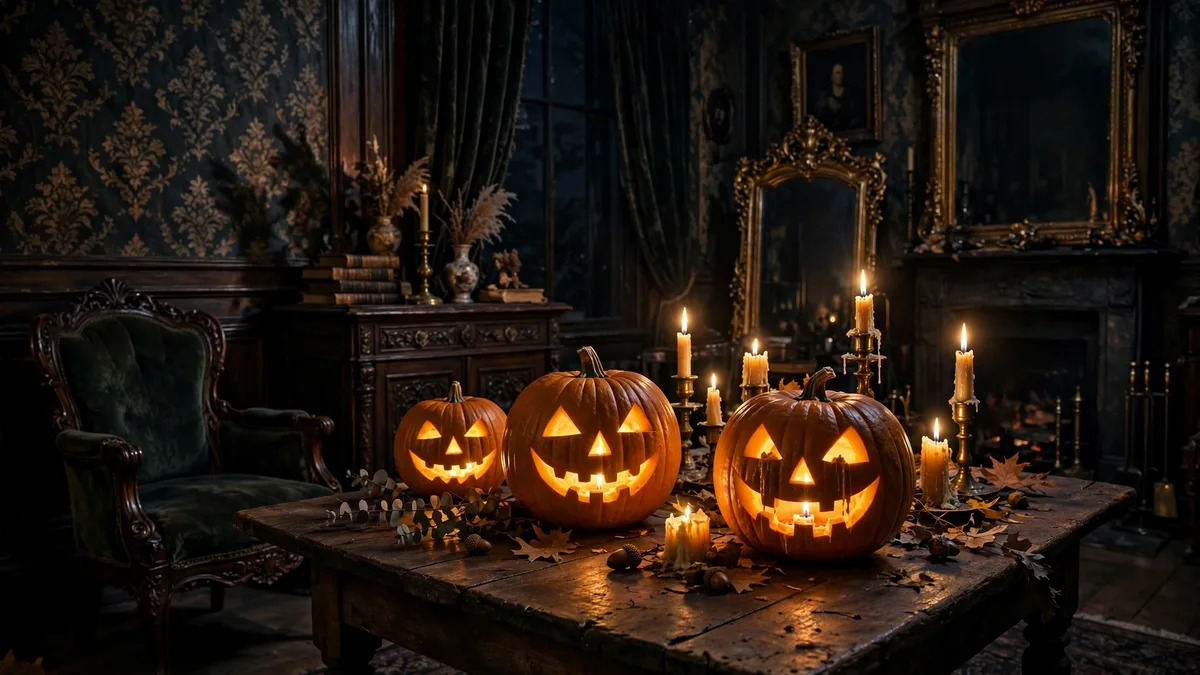
Forget trick-or-treating and plastic pumpkins. The victorian halloween traditions were stranger and spookier than anything we do today. People in the 1800s treated October 31 as a night when the future could be read like a book. Young women stared into mirrors hoping to see their future husbands. Brave guests grabbed burning raisins from dishes of fire. The holiday has ancient Celtic roots, but the Victorians made it their own. This list covers 15 of the creepiest customs, all drawn from real historical records.
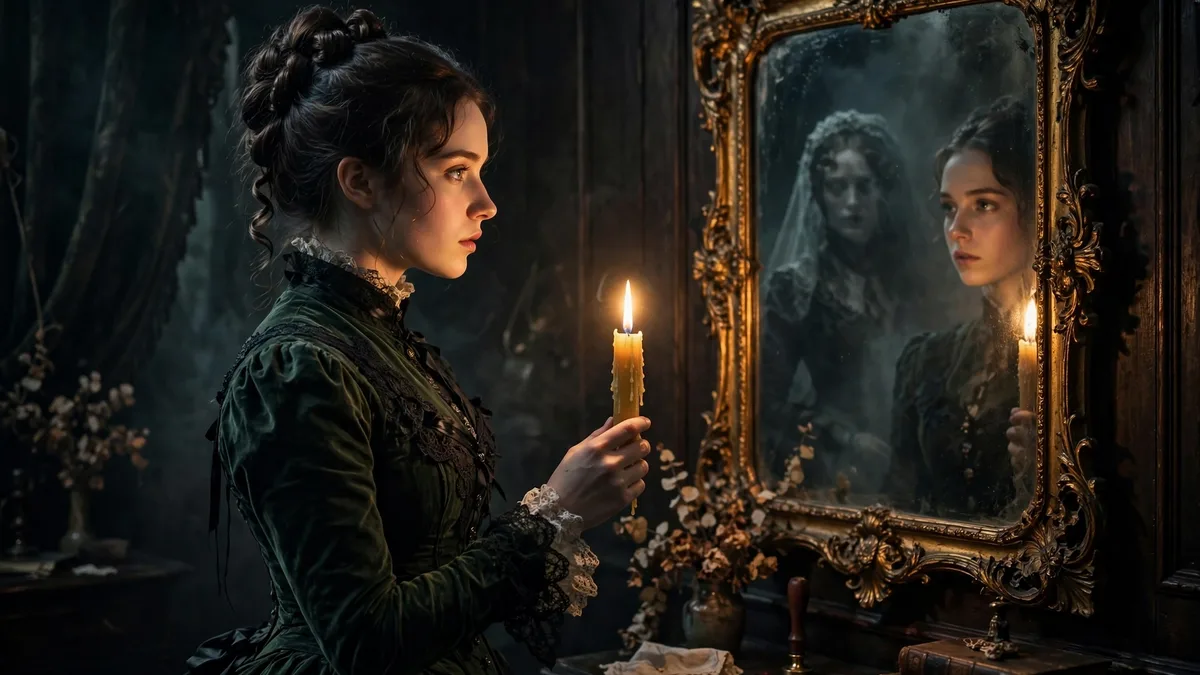
On Halloween night, a young woman could take a candle into a dark room. She held an apple and combed her hair before a mirror. Then she ate the apple while staring at her reflection. If all went well, she saw her future husband’s face over her shoulder. But there was a warning. If a skull appeared instead, she would die before marrying. The mirror was seen as a door between worlds. On the one night that wall grew thin, a face from the future just might appear.
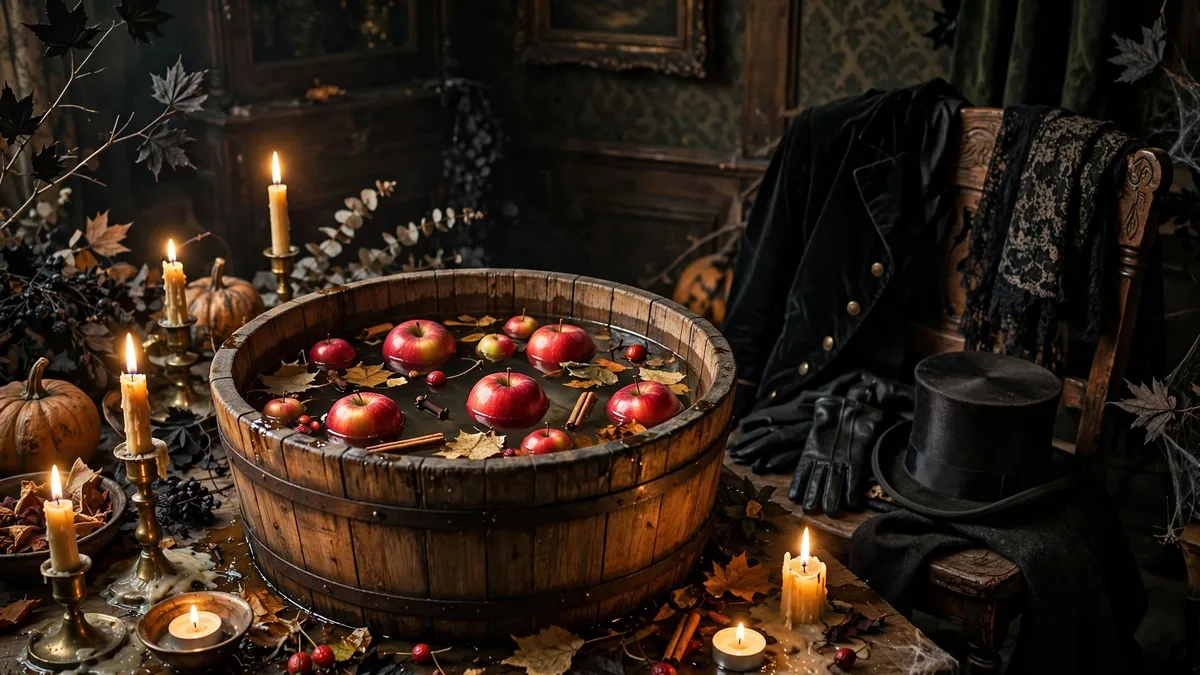
Bobbing for apples began as a serious fortune-telling ritual. The custom traces back to the Roman festival of Pomona, goddess of fruit. Celtic people later folded it into their autumn rites. By Victorian times it was a Halloween party staple, as told in the history of Halloween. A tub was filled with water and apples floated on top. Players grabbed one with their teeth, hands behind their backs. The first to bite an apple would marry next. The shape they landed in was said to reveal a future spouse’s first letter.
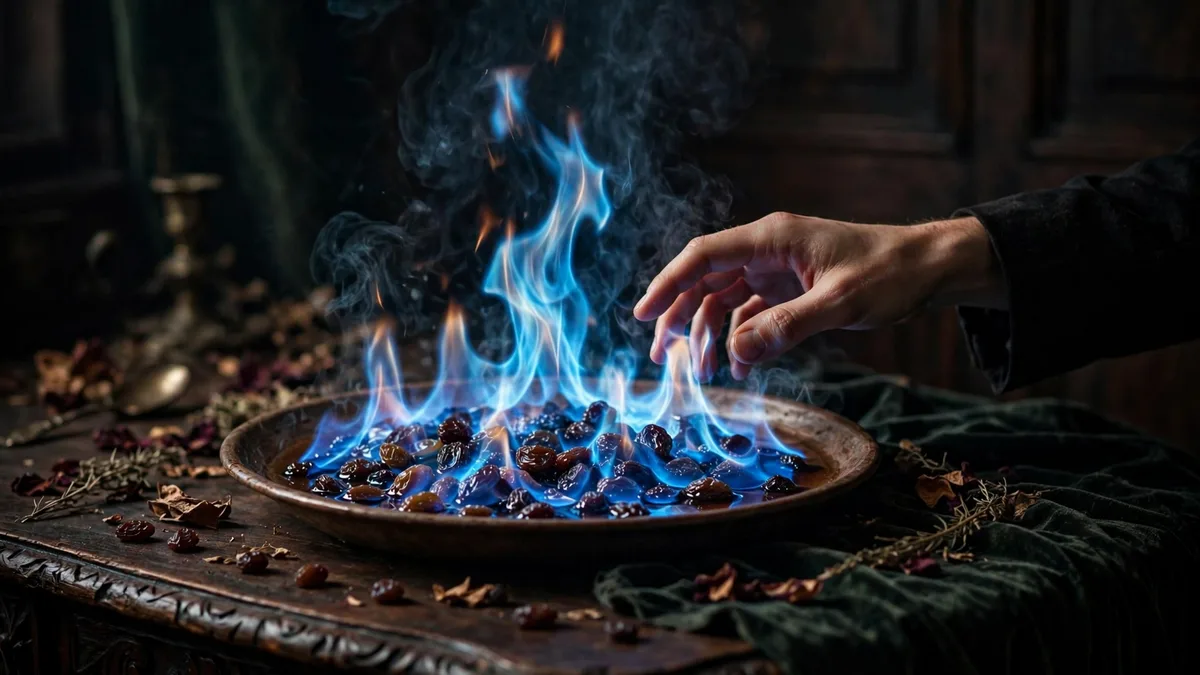
Snapdragon was a parlor game with real fire. Warm brandy went into a wide, shallow dish. Raisins, figs, or sugared almonds were tossed in. The host lit the brandy, and the lamps went low. Guests plunged bare fingers into the blue flames to snatch fruit and eat it. Whoever grabbed the most would meet their true love within a year. The game dates to the 1500s and stayed big at Victorian Christmas and Halloween parties alike.
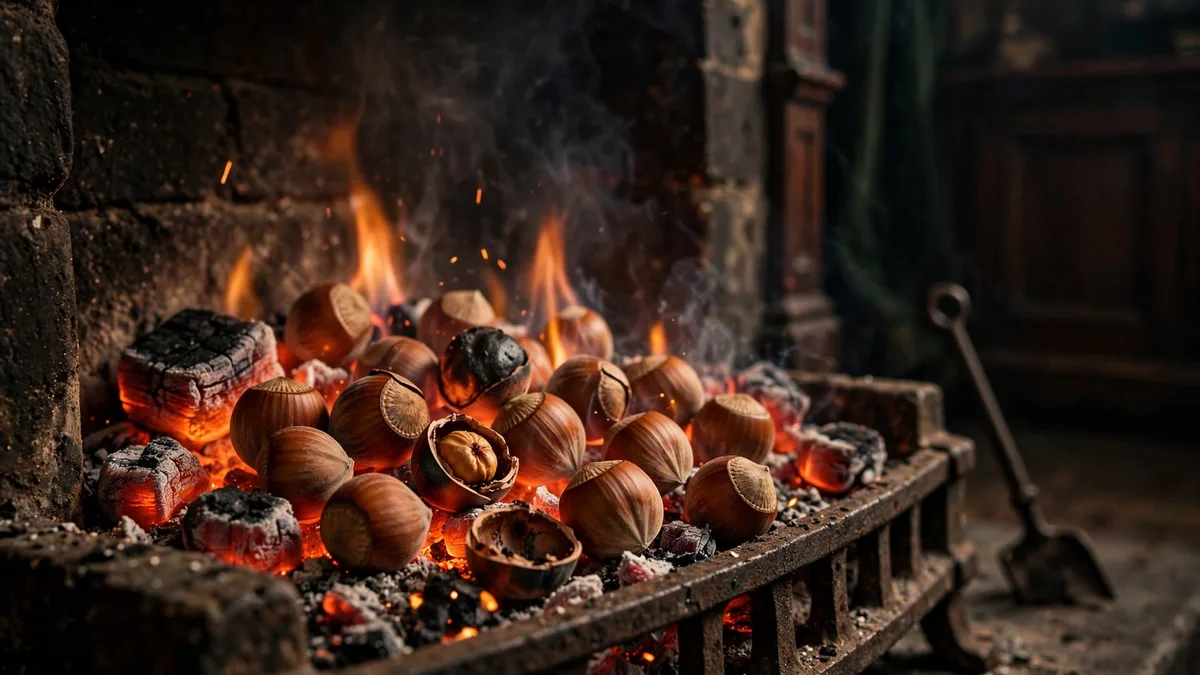
In northern England, Halloween was called Nutcrack Night. Young couples placed two hazelnuts in the fire, one named for each lover. Everyone watched what happened next. If the nuts burned steadily side by side, the match would last and end in marriage. But if one popped, cracked, or jumped away, trouble lay ahead. A nut that burst apart was the worst sign of all. Robert Burns wrote about this game in his 1785 poem Halloween.
At midnight, young people walked into the garden blindfolded. Each pulled up a cabbage by its stalk. The stalk’s shape was said to reveal a future spouse’s body. Tall and straight meant a tall, handsome partner. Short and crooked meant the opposite. Then came the taste test. A sweet root meant a kind husband or wife. A bitter root warned of a sour temper. Blindfolded friends stumbled about, hunting their destiny among the plants.
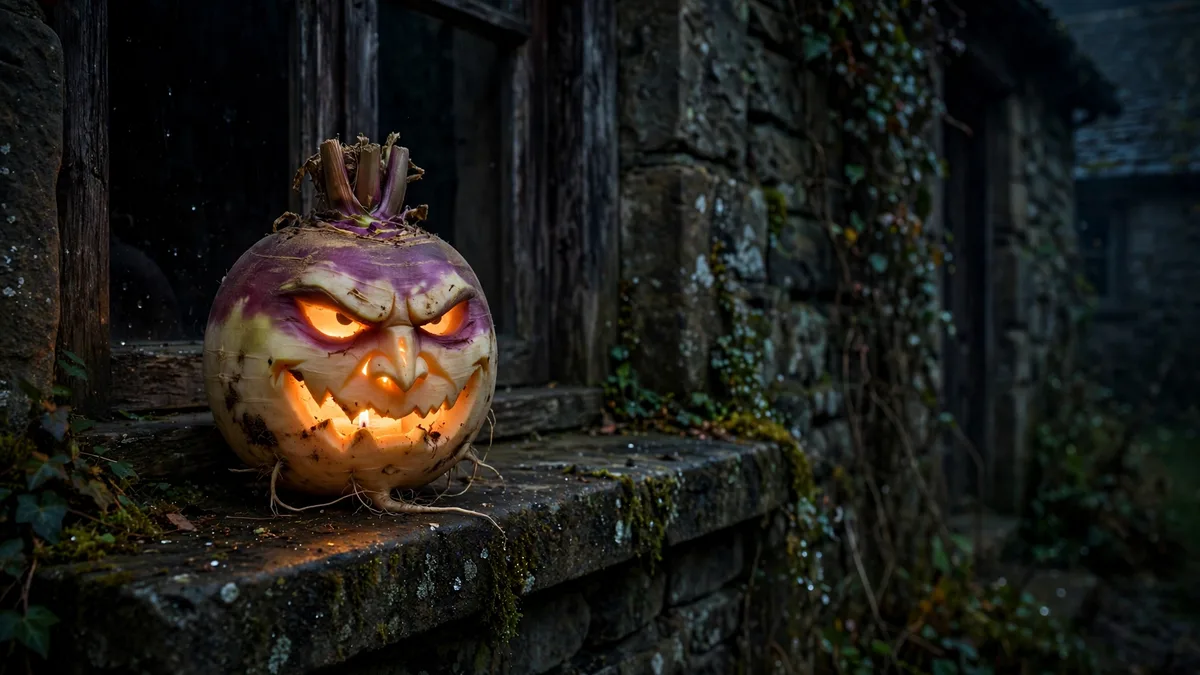
Long before pumpkins, Halloween lanterns were carved from turnips. In Britain and Ireland, people hollowed out large turnips and carved crude, scary faces. A candle went inside, and the glowing head sat in a window. The light told wandering spirits the house was already haunted, so they should move on. Irish immigrants in America found pumpkins bigger and softer. The pumpkin won, and the turnip faded, though its roots lie in Samhain.
A dumb supper was a meal in total silence, and the guests of honor were dead. Families set an extra place for loved ones who had passed. Everyone ate without speaking a word. Talking might scare the spirits away. A flickering candle, a sudden chill, or a moving shadow was taken as proof a ghost had joined the meal. Like the Mexican Day of the Dead, the custom honored lost loved ones. For one night, the living and the dead shared dinner, and no one dared break the quiet.
This one was simple and deeply creepy. A person threw a ball of yarn into a dark cellar or empty room. Then they slowly wound it back up. As the ball shrank, they waited for something to hold the other end. The belief was that a future lover’s spirit would grab the thread. The ritual was sometimes linked to dark forces, so not everyone approved. Pranksters ruined it by tugging the yarn from the dark.
Finding a ring in your dinner meant wedding bells. Cooks hid small objects inside Halloween food. A ring baked into cake or buried in mashed potatoes was the top prize. Whoever found it would marry next. Coins meant coming wealth. A thimble warned of a life spent single. In Ireland, the fruit bread barmbrack carried the same hidden charms. Each guest cut a slice and checked it. The objects were tiny, so finding one felt like a small miracle. Every bite could change your future,
Victorians loved a ghost story, and Halloween was the perfect night. Families gathered in dark parlors lit only by candles. Then someone told a tale of hauntings or strange visitors. The best stories were set in old houses, like the ones listeners sat in. A floorboard creak at the right moment could make the whole room jump. The tradition turned fear into fun. It is the great-grandparent of every horror movie marathon today, and of tales from the most haunted places in the world.
Not every ritual was about love. Some were about health. Each family member picked a perfect ivy leaf on Halloween night. The leaf went into a bowl of water and floated until morning. At dawn, everyone checked their leaf. If it was still fresh and spotless, they would stay healthy for twelve months. Spots or dark marks told a darker story. They hinted at sickness in the coming year. The ritual was quiet and simple. Just a leaf, a bowl of water, and a nervous wait for sunrise.
This was called oomancy, fortune-telling with eggs. A raw egg white was dropped into a glass of warm water. As it set, it formed strange shapes. The shapes were read like tea leaves. Some said they showed a future husband’s trade or face. Others believed a shroud shape warned of death. It sounds odd now, but the logic felt real then. Halloween was the night hidden things could be seen, and even an egg could speak.
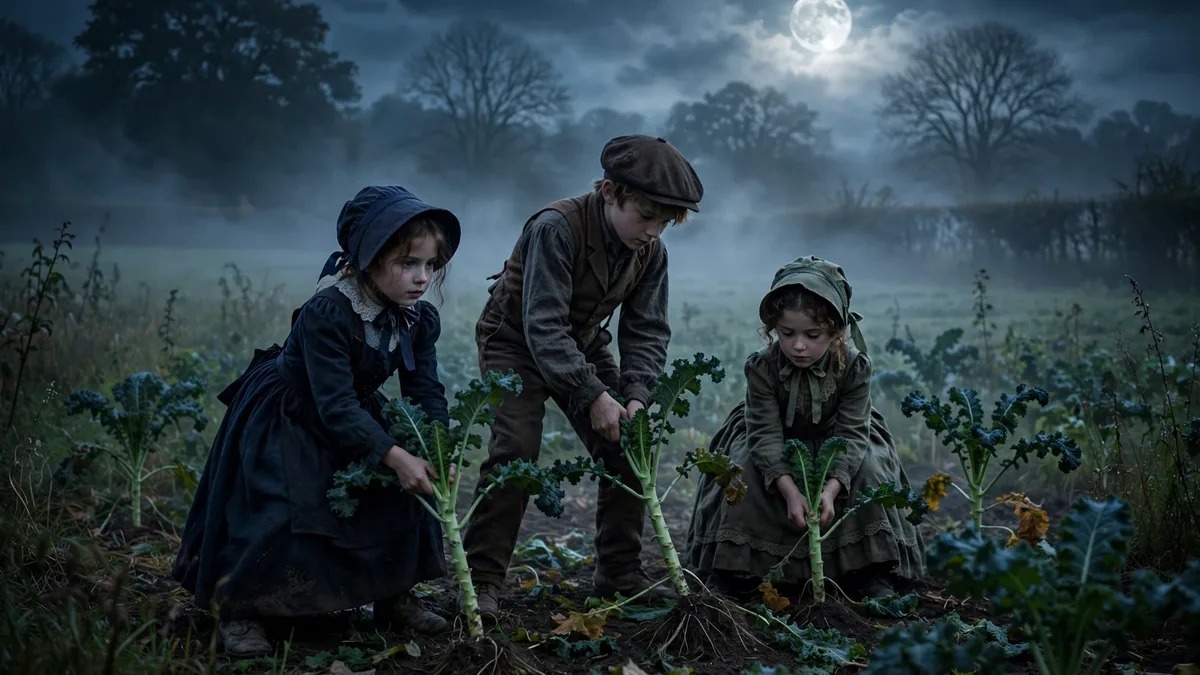
In Scotland, the kale yard replaced the garden for this midnight ritual. Young people went out with eyes shut. Each pulled the first kale stalk their hands found. The stalk’s size hinted at a future spouse’s size. Tall meant tall. Short meant short. The leaves gave more clues. Thick, healthy leaves meant wealth. Thin, withered ones warned of hard times. Then the stalk was hung over the door at home. The first person to walk under it the next day revealed the spouse’s name.
This Scottish game needed three bowls and a blindfold. One held clean water. One held dirty water. The third was empty. A young person was blindfolded, spun around, and led to the bowls. They dipped a hand into one. Clean water meant marriage to a worthy partner. Dirty water meant a troubled match, perhaps to a widow or widower. The empty bowl was the worst draw. It meant dying unmarried. But no one wanted to draw the empty dish.
In Wales, Halloween had its own monster: the hwch ddu gwta, the tail-less black sow. As bonfires died down, people feared this ghostly pig would appear. An old rhyme warned everyone to run home first. The last one home would be caught. Some said the sow was winter itself, chasing away autumn’s last warmth. Bonfires were lit partly to keep it back. Unlike the playful love games, this was pure fear. Read more Welsh Halloween lore at Museum Wales. It reminded everyone that Halloween was not just about the future. It was about surviving the night.
| Tradition | What You Did | What It Predicted |
|---|---|---|
| Mirror divination | Ate an apple before a candlelit mirror | Spouse’s face, or death if a skull appeared |
| Apple bobbing | Bit a floating apple, no hands | Who would marry next |
| Snapdragon | Grabbed raisins from burning brandy | Who would meet true love that year |
| Nut divination | Burned two hazelnuts named for lovers | Whether the couple would marry or part |
| Cabbage-stalk oracle | Pulled a stalk blindfolded at midnight | Spouse’s looks and temper |
| Turnip lanterns | Carved a face into a hollowed turnip | Warded off wandering spirits |
| Dumb supper | Ate in silence with a seat for the dead | Signs a ghost joined the meal |
| Yarn divination | Wound yarn back from a dark room | A future lover’s spirit held the thread |
| Hidden rings and coins | Ate food with charms baked inside | Marriage, wealth, or a single life |
| Ghost stories | Told chilling tales by candlelight | Shared thrills and Halloween spirit |
| Ivy-leaf divination | Floated an ivy leaf overnight | Health for a year if it stayed spotless |
| Egg white in water | Read shapes in a glass of water | Spouse, death warnings, or children |
| Pulling kale stalks | Pulled a stalk blindfolded at midnight | Spouse’s size and future wealth |
| Three dishes | Dipped a hand into one blindfolded bowl | Happy, troubled, or no marriage |
| Cutty black sow | Raced home before bonfires died | The last home was caught by the sow |
If you enjoyed this one, keep going with why we wear costumes on Halloween and candy corn facts.
Mirror divination, apple bobbing, nut burning, and snapdragon topped the list. They were party games that doubled as fortune-telling, mostly asking: who will I marry?
They believed the wall between the living and the spirit world grew thin on October 31. Spirits could then help reveal the future.
Yes. In Britain and Ireland, people carved faces into hollowed turnips with candles inside. Pumpkins took over only after Irish immigrants found them easier to carve in America. See the HISTORY Halloween timeline.
A dumb supper was a silent meal with an extra place set for dead loved ones. Flickering candles or sudden chills were seen as signs a ghost had joined the table.
Very. Players plunged bare fingers into burning brandy to grab raisins. Burns were common, and by the early 1900s the game was seen as too risky.
Apple bobbing survives at some parties, and ghost stories remain a Halloween staple. The jack-o’-lantern is the direct child of the turnip lantern.