Physical Address
4676 Railroad Street Marquette
MI 49855
Physical Address
4676 Railroad Street Marquette
MI 49855

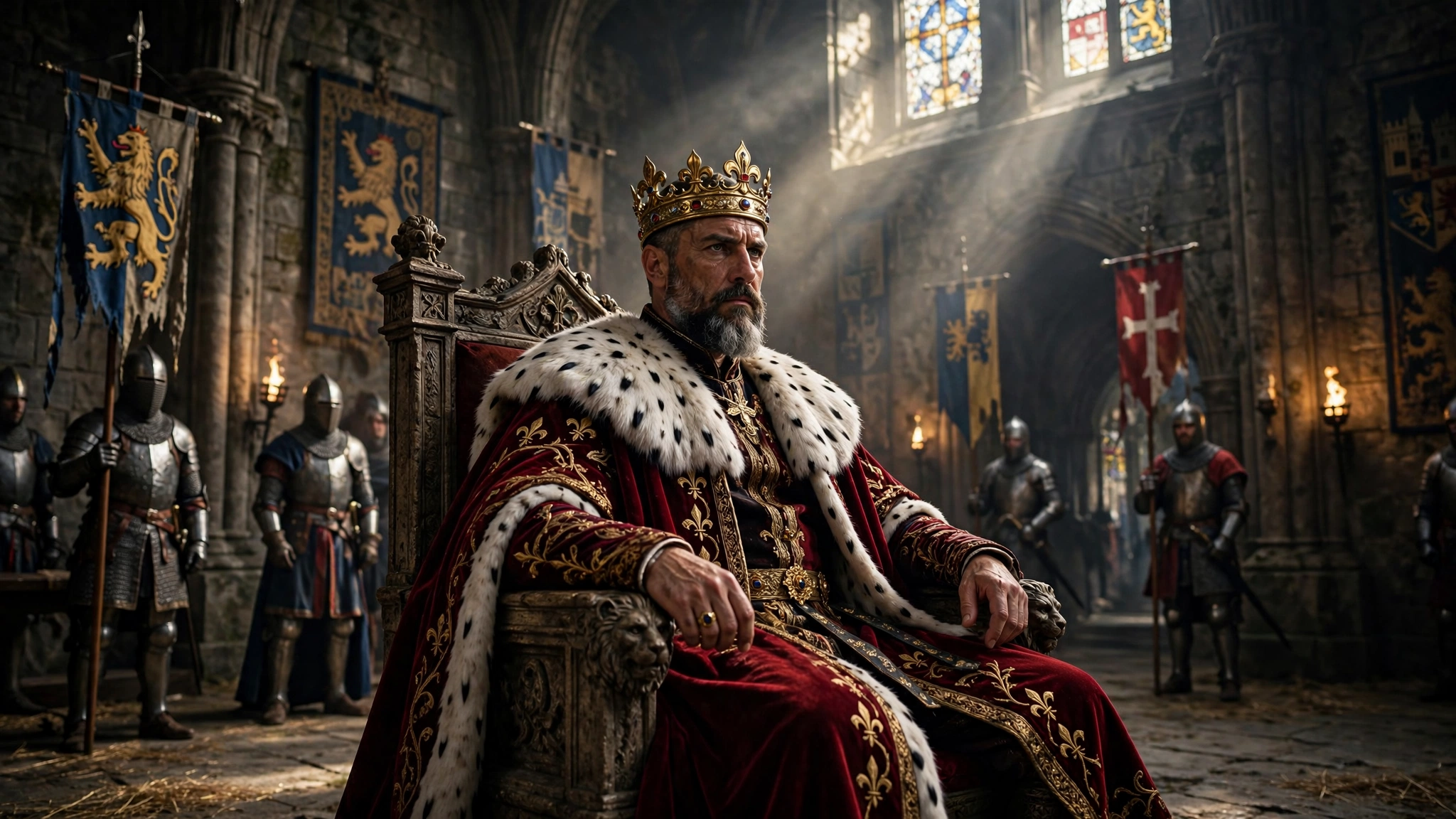
Charles the Great — Charlemagne — did something no one had managed since ancient Rome: he united most of Western Europe under one ruler. Starting as King of the Franks in 768, he spent decades conquering Lombardy, Saxony, and northern Spain, building an empire stretching from France to Germany to Italy.
On Christmas Day in the year 800, Pope Leo III placed a crown on Charlemagne’s head in Rome, proclaiming him Emperor. It was a deliberate revival of the Roman Empire in the West — and the moment the medieval idea of a Christian empire was born. Charlemagne established schools, standardized writing (the clear script that became the basis of modern lowercase letters), and issued laws. When he died in 814, he was buried at Aachen, in the cathedral he built — a building you can still visit today.
In the 870s, Viking armies had conquered nearly all of England. Only the small kingdom of Wessex held out, and even its king was once forced to hide in the marshes. That king was Alfred — the only English monarch called “the Great.”
Alfred rebuilt Wessex’s defenses with fortified towns called burhs, created a standing army and navy, and finally defeated the Viking leader Guthrum at the Battle of Edington in 878. The resulting treaty divided England: the Vikings kept the Danelaw in the north and east, while Alfred ruled the south. He then promoted learning, translated books into English, and began the legal and administrative traditions that would become the Kingdom of England. Without Alfred, England as we know it might never have existed.
William, Duke of Normandy, changed England forever in a single day: October 14, 1066. When the English king Harold Godwinson died without a clear heir, William claimed the throne, sailed across the Channel, and defeated Harold at the Battle of Hastings — the most famous date in English history.
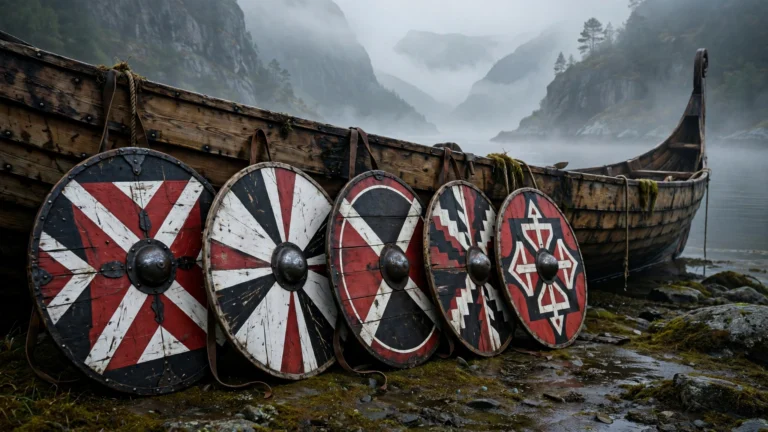
William replaced the entire English aristocracy with his Norman followers, built castles across the country (including the Tower of London), and commissioned the Domesday Book in 1086 — a survey of every piece of land in England, so detailed it was said no “ox, cow, or pig” escaped recording. His invasion fleet and tactics owed much to Viking seafaring traditions — see how the Viking shield and shield wall shaped the warfare of the age. Norman French fused with Old English to create the English language we speak today. Words like “beef,” “justice,” and “parliament” all arrived with William.
Richard I earned his nickname through legendary bravery. He spent barely six months of his ten-year reign in England — the rest was devoted to the Third Crusade, trying to recapture Jerusalem from the great Muslim leader Saladin.
Richard won stunning victories at Acre and Arsuf, but could not take Jerusalem. On his way home, he was captured in Austria and held for a ransom so enormous it nearly bankrupted England. His people paid it — a sign of his extraordinary reputation. He died at 41 from a crossbow wound while besieging a minor French castle, having never truly governed the kingdom he symbolized. For the story of an earlier great siege, see our article on the true story of the Trojan Horse. For another vanished world of legend, read about the lost city of Atlantis.
Edward I was a towering figure — literally, at 6’2″, and politically. He conquered Wales, building the great ring of castles (Caernarfon, Conwy, Harlech) that still dominate the Welsh landscape, and made his infant son the first English Prince of Wales — a title still used today.
Edward’s attempts to dominate Scotland earned him the nickname “Hammer of the Scots” — and made him the villain of Scottish legend. He defeated William Wallace (of Braveheart fame) at Falkirk in 1298, but Scotland’s resistance continued under Robert the Bruce. Edward died in 1307 while marching north for another campaign, reportedly asking that his bones be carried into battle against the Scots.
Henry V reigned only nine years, but they were among the most dramatic in English history. Renewing the Hundred Years’ War with France, he invaded in 1415 with a small, disease-weakened army — and at Agincourt on October 25, his outnumbered English archers destroyed a far larger French force.
The English longbowmen at Agincourt fired so rapidly that the French knights, bogged down in mud, were slaughtered. English losses were counted in the hundreds; French dead numbered in the thousands, including much of France’s nobility. Shakespeare later immortalized Henry’s St. Crispin’s Day speech in Henry V. Henry went on to conquer Normandy and was recognized as heir to the French throne — but died of dysentery at 35, two months before he could inherit it.
Canute (Cnut) proves the medieval world was more connected than we imagine: a Danish Viking prince who became King of England, Denmark, and Norway simultaneously, ruling a North Sea empire. The famous story of Canute “commanding the tide” is misunderstood — he was actually demonstrating to his flatterers that even a king cannot stop the sea, a lesson in humility, not arrogance.
Frederick I, called Barbarossa (“Red Beard”), ruled the Holy Roman Empire for nearly 40 years, trying to restore imperial power in Germany and Italy. He drowned in 1190 while leading his army on the Third Crusade — crossing a river in Anatolia in full armor. German legend says he sleeps inside a mountain, waiting to return in his country’s hour of need.
| King | Reigned | Greatest Achievement | Famous For |
|---|---|---|---|
| Charlemagne | 768–814 | United Western Europe, crowned Emperor 800 | “Father of Europe,” schools and laws |
| Alfred the Great | 871–899 | Saved Wessex from Vikings | Burhs, navy, English identity |
| William the Conqueror | 1066–1087 | Norman Conquest of England | Hastings, Domesday Book, castles |
| Richard the Lionheart | 1189–1199 | Third Crusade | Chivalry, ransom, legend |
| Edward I | 1272–1307 | Conquered Wales | Castles, “Hammer of the Scots” |
| Henry V | 1413–1422 | Victory at Agincourt | Longbow triumph, Shakespeare’s hero |
| Canute the Great | 1016–1035 | Ruled England, Denmark, Norway | North Sea empire, tide legend |
| Frederick Barbarossa | 1155–1190 | Restored imperial power | Third Crusade, sleeping-king myth |
Medieval kingship was personal — there were no prime ministers or parliaments as we know them. A king led armies in person, judged disputes, and embodied the kingdom. The best combined military skill with lawmaking and patronage of learning. The worst lost their thrones — or their heads.
What did being a king actually feel like? The reality was less glamorous than the legends.
A king’s day began with chapel prayers, followed by council meetings where barons and bishops argued over taxes, wars, and land disputes. Petitioners queued for hours hoping for justice — the king was the highest court in the land. Henry II famously tried to reform this system, creating traveling royal judges who became the foundation of English common law.
Afternoons belonged to hunting — not just sport but military training and a display of power. Deer parks were jealously guarded; poaching a king’s deer could cost a hand. When war came, the king rode at the head of his army. Richard the Lionheart and Henry V both fought in the front ranks, and Edward I campaigned into his sixties.
Behind many great kings stood formidable queens. Eleanor of Aquitaine — wife of Henry II and mother of Richard the Lionheart — ruled vast French territories, went on crusade, and dominated European politics for decades. Queens managed estates, acted as regents, and brokered the royal marriages that redrew the map of Europe. The medieval period’s story is not only about kings.
Historians often name Charlemagne for his empire-building and cultural impact, but Alfred the Great, William the Conqueror, and others have strong claims. “Greatest” depends on whether you value conquest, law, or legacy.
Roughly 500 to 1500 AD — from the fall of Rome to the Renaissance. It is usually divided into the Early, High, and Late Middle Ages.
He is the only English king with that title, earned by saving Wessex (and eventually England) from Viking conquest, plus his promotion of learning, law, and naval defense.
Probably very little. He was raised speaking French, spent almost his entire reign outside England, and is said to have spoken no English — yet he became England’s most romanticized king.
On October 14, 1066, William of Normandy defeated King Harold Godwinson, who was killed in battle (traditionally by an arrow in the eye). It was the last successful invasion of England.
A survey commissioned by William the Conqueror in 1086 recording every landholding in England — who owned what, and what it was worth. It remains one of history’s most remarkable administrative documents.
His outnumbered army (roughly 6,000 vs. 20,000+ French) used English longbowmen firing from behind wooden stakes, with muddy terrain crippling the French knights’ charge. It became the most famous English military victory of the Middle Ages.
No — the story is inverted. Canute staged the tide demonstration to prove to flattering courtiers that a king’s power has limits. It was an act of humility, recorded by chroniclers who admired him.