Physical Address
4676 Railroad Street Marquette
MI 49855
Physical Address
4676 Railroad Street Marquette
MI 49855

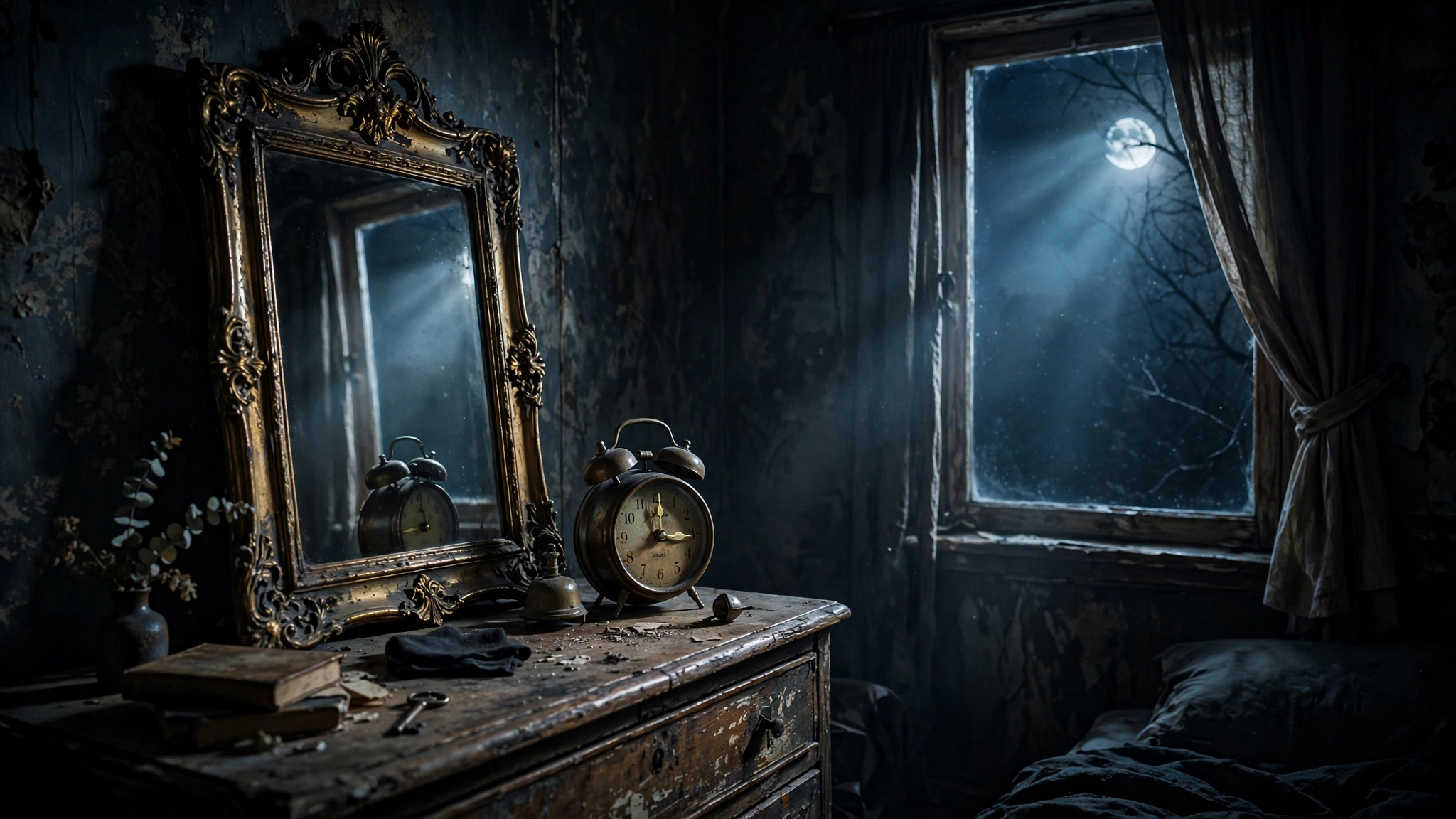
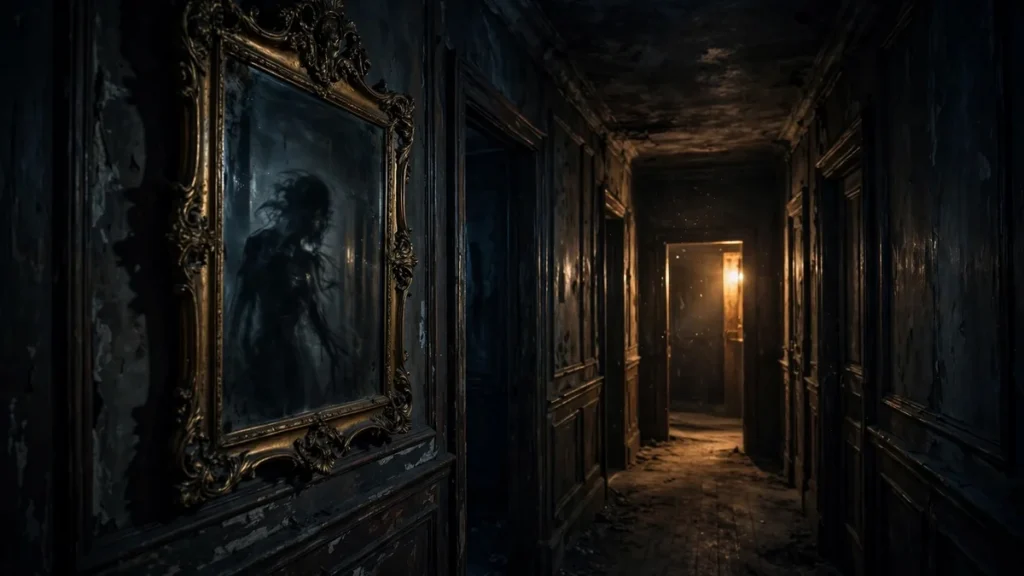
Three in the morning has a dark reputation across many cultures, and the mirror superstition is built on top of it.
In Christian folklore, 3 AM is sometimes called the devil’s hour because it mocks the Holy Trinity. Just as 3 PM is traditionally associated with the crucifixion, 3 AM is its dark inversion, the hour when evil forces are said to be strongest.
This idea appears in horror films, ghost stories, and paranormal investigations. Television shows about hauntings almost always feature activity spiking at 3 AM. Whether or not you believe in the supernatural, the cultural association is powerful enough to make the hour feel wrong.
The older term is the “witching hour,” originally midnight, which later drifted to 3 AM in popular culture. Shakespeare referenced the witching hour in Hamlet, describing it as the time “when churchyards yawn and hell itself breathes out contagion.”
Historical witch trials added fuel. Accused witches were said to hold their sabbaths at night, and interrogators asked about activities in the darkest hours. The association between deep night and evil became embedded in Western folklore centuries ago.
The fear of 3 AM is not purely cultural. Your biology makes this hour genuinely strange.
Around 3 AM, most people are in their deepest slow-wave sleep. Core body temperature hits its daily low. Melatonin peaks. If you wake up suddenly at this hour, you experience sleep inertia, a state of grogginess, confusion, and impaired judgment that can last for minutes.
Your brain is not fully online. The prefrontal cortex, responsible for rational thought, lags behind the emotional centers as you wake. This is why everything feels more frightening at 3 AM. Your fear system is awake before your logic system.
Many people report waking at 3 AM regularly, often with anxiety. There is a physiological reason. Cortisol, the stress hormone, begins rising in the early morning hours to prepare the body for waking. In stressed individuals, this rise can start too early, jolting them awake with a surge of unease.
Combine this with darkness, silence, and a mirror showing a distorted reflection, and you have a recipe for terror that requires no ghosts at all.
Mirrors at 3 AM are uniquely disturbing because of how vision works in low light.
As documented by psychologist Giovanni Caputo, staring into a mirror in dim light for about a minute causes your reflection to distort. Faces appear to melt, age, or transform into strangers or monsters.
At 3 AM, lighting is at its worst. A single hallway bulb or phone screen provides exactly the dim, uneven illumination that triggers the effect most strongly. Your half-awake brain, already primed by folklore to expect something wrong, interprets the distortion as supernatural.
Pareidolia is the brain’s tendency to see faces in random patterns. It is why people see faces in clouds, toast, and wall stains. In a dark room with a mirror, your visual system strains to make sense of shadows and partial reflections.
The result is that you may genuinely “see” a face in the mirror that is not yours. It is your brain assembling a face from noise, the same way it assembles the man in the moon. At 3 AM, exhausted and anxious, you will believe it.
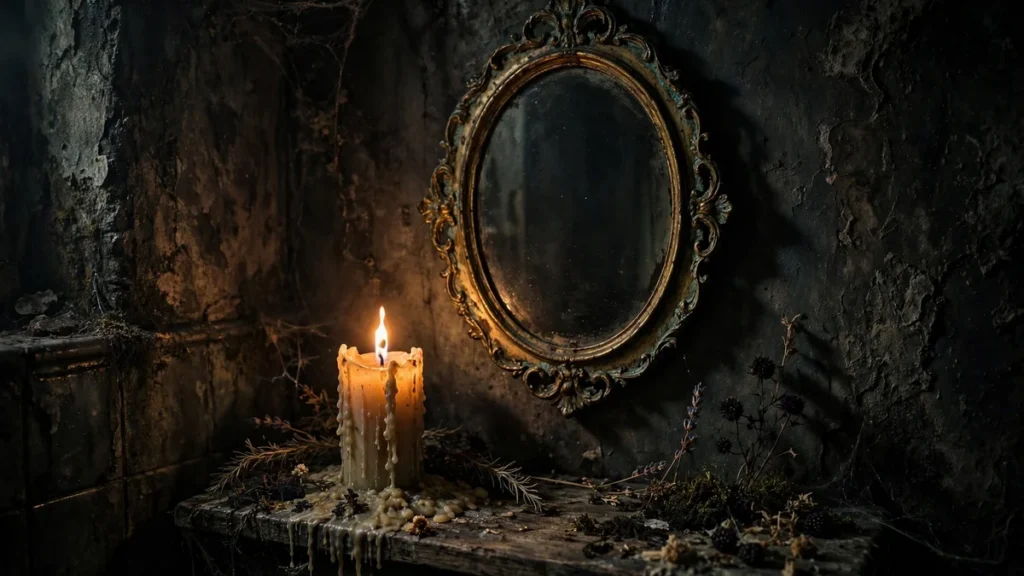
Specific traditions warn against mirrors after dark, not just at 3 AM.
In many Asian, African, and European folk traditions, mirrors are considered spiritually active at night. The belief is that reflective surfaces become doorways when darkness falls, allowing entities to cross into the physical world.
Some traditions advise covering mirrors before sleep every night, not just at 3 AM. The 3 AM version is simply the most concentrated form of a much older and broader fear.
The Bloody Mary ritual is almost always performed at night, often specified as midnight or 3 AM. The darkness is essential to the legend because the strange-face illusion requires low light to work. Children who try the ritual in a bright bathroom see nothing scary. In the dark, the effect is almost guaranteed.
This creates a feedback loop. The legend says the mirror is dangerous at night. The darkness makes the mirror genuinely disturbing. The experience confirms the legend.
People who are awake at 3 AM staring into mirrors are often sleep-deprived, which adds another layer of genuine weirdness.
After 24 hours without sleep, the brain begins to misfire. Microsleeps intrude into waking consciousness. The boundary between dreaming and reality blurs. Visual hallucinations become common, starting with simple geometric patterns and shadows.
After 48 to 72 hours, hallucinations become complex and vivid. People see figures, hear voices, and lose the ability to distinguish real from imagined. None of this requires a haunted mirror. It only requires exhaustion.
Who is awake at 3 AM looking into mirrors? Usually people who cannot sleep: the anxious, the grieving, the stressed, teenagers at sleepovers, paranormal enthusiasts deliberately seeking scares. Every one of these groups is psychologically primed for a frightening experience.
Expectation shapes perception. If you approach a mirror at 3 AM expecting to see something wrong, your brain will work hard to deliver.
Modern psychology offers a complete explanation for why 3 AM feels evil, and it has nothing to do with demons.
Human mood follows a daily cycle. Alertness and optimism peak in the late morning and early evening. The lowest point of the cycle, the circadian trough, falls between 3 and 5 AM. This is when the body is coldest, sleepiest, and most vulnerable.
Studies of shift workers show that errors, accidents, and poor decisions cluster in these hours. Emotional regulation is at its weakest. Sadness feels heavier. Worries feel larger. Problems that seem manageable at noon feel catastrophic at 3 AM. The ancient world called it the devil’s hour. Modern science calls it the circadian trough. The experience is identical.
During the day, ambient noise masks small sounds. At 3 AM, the world goes quiet, and every creak becomes loud. Your auditory system, evolved to detect predators in the dark, goes on high alert. The house settling sounds like footsteps. The wind sounds like whispering.
This heightened vigilance is a survival mechanism. Your ancestors who woke at strange sounds lived longer than those who slept through them. But in a modern home with a mirror nearby, the vigilance has nowhere useful to go, so it attaches to the strangest available stimulus.
The fear is not new, and historical records show it is not purely modern either.
Medieval monks followed strict prayer schedules that included waking for the night office, often around 2 or 3 AM. Monastic writings are full of accounts of demonic visions, oppressive dread, and temptations during these hours.
Modern scholars believe the monks were experiencing a combination of chronic sleep deprivation, the circadian trough, and the psychological weight of their beliefs. They woke in the darkest hour, in cold stone cells, primed by theology to expect evil. It is no surprise they found it.
Gothic literature is obsessed with the deep night. Ann Radcliffe’s novels, the penny dreadfuls, and later horror writers all set their scariest scenes between midnight and dawn. The pattern trained generations of readers to associate these hours with danger.
When film arrived, it kept the tradition. The Exorcist, Paranormal Activity, and countless others use 3 AM timestamps on screen to signal that something is wrong. Each generation inherits the fear and passes it on, reinforced by media that profits from it.
| Claim | Reality |
|---|---|
| Spirits emerge from mirrors at 3 AM | No evidence; folklore with no scientific support |
| Your reflection will distort | True, via the strange-face illusion in dim light |
| You will feel intense fear | True, from sleep inertia, cortisol, and expectation |
| Something will follow you out | No evidence; but anxiety can persist after the experience |
| 3 AM is biologically strange | True, deepest sleep, lowest body temperature, cortisol rising |
If the 3 AM mirror superstition bothers you, the fixes are simple and physical.
The strange-face illusion needs dim light. A well-lit bathroom produces a normal reflection. If you must use the mirror at night, turn on full lights and the effect vanishes.

Knowing that your brain wakes up in stages helps. The grogginess, confusion, and heightened fear at 3 AM are chemical, not supernatural. They pass within minutes as your prefrontal cortex comes online.
The illusion requires sustained gazing, usually a minute or more. Glance, do what you need, and look away. Short exposures do not trigger the distortion.
In Christian folklore, 3 AM mocks the Holy Trinity as an inversion of 3 PM, traditionally associated with the crucifixion. Horror media has reinforced the idea that supernatural activity peaks at this hour.
In dim light, the strange-face illusion distorts your reflection within about a minute. Combined with sleep inertia and anxiety, this creates a genuinely frightening experience with no supernatural cause.
Feng shui tradition advises against it, claiming it disrupts sleep energy. Psychologically, waking to see movement or shapes in a mirror can trigger startle responses, especially in low light.
Cortisol begins rising in the early morning to prepare for waking. In stressed people, this rise can start early, causing 3 AM wake-ups accompanied by anxiety. Sleep disorders and schedule disruptions also contribute.
Yes. After 24 hours without sleep, visual misfires begin. After 48 to 72 hours, complex hallucinations of figures and voices are common. The brain blurs the line between dreaming and waking.
A documented phenomenon where staring at your reflection in dim light causes your face to appear to melt, age, or transform. Psychologist Giovanni Caputo demonstrated that healthy volunteers reliably experience it within about a minute.
There is no scientific evidence for spirits or interdimensional doorways. The belief appears in many folk traditions that treat reflections as spiritually significant, especially after dark.
Use bright lighting, avoid sustained staring, and remember that the fear comes from biology: sleep inertia, cortisol, the strange-face illusion, and cultural expectation. Understanding the mechanisms removes their power.
*Interested in mirror lore? Read our creepy facts about mirrors and the strange history of the Ouija board.*
Related: Scary Facts About Brain
Related: Creepy Facts About Death